PDRN & polynucleotides,
explained.
Polynucleotides, the ingredient behind the “salmon DNA facial,” are offered by most Korean dermatologists who use skin boosters.14 This guide covers what they are, what the research shows, and how we use them in Brickell: as an optional topical serum added to a SkinPen or Morpheus8 session, never as an injection.
Evidence review · updated September 27, 2026📍 1501 South Miami Avenue #201, Brickell🔬 25 cited sources · peer-reviewed studies & FDA🗓️ Reviewed 2026
A popular ingredient with early, encouraging evidence
PDRN and polynucleotides are purified DNA fragments, usually from salmon or trout. In lab and wound-care research they act on pathways that help skin recover from injury, and in small trials injected polynucleotides improved wrinkles, texture and elasticity with few side effects.2,4,7
For a topical serum used with microneedling, the evidence is earlier. Two small randomized trials applied polynucleotides after RF microneedling: one found faster early improvement in eye-area wrinkles, the other found no added benefit for melasma.15,16 That’s why we offer it as an optional extra to a proven base treatment, not as a treatment on its own.
PDRN vs polynucleotides: the same family, different lengths
PDRN (polydeoxyribonucleotide) and polynucleotides (PN) are both chains of DNA building blocks. The two names are often used interchangeably, which causes real confusion. One proposed rule draws the line at molecular size: shorter chains are PDRN, longer chains are PN.1 Researchers also describe them doing slightly different jobs.2
PDRN: shorter chains
Studied mainly for how it signals to cells, through the adenosine A2A receptor, and for supplying building blocks cells can reuse.2
Polynucleotides: longer chains
Described as supporting the skin’s supporting framework (extracellular matrix) and hydration. Most injectable products are PN.2
The takeaway
PDRN and polynucleotides are the same family of DNA-derived ingredient in different lengths. What matters most is the product, its source, and how it’s used.
The “salmon DNA facial,” decoded
“Salmon DNA facial” (sometimes called the salmon sperm facial) is the social-media name for treatments using polynucleotides purified from salmon DNA.1,12 The name covers two very different things: injections given in clinics abroad, and topical serums used with microneedling.
The version most people see online is injected. Brands such as Rejuran are widely used in South Korea and elsewhere, where polynucleotides are injected into the skin in many tiny points.14 None of these injectables is FDA-approved in the US.25
What we offer is the topical version: a professional polynucleotide serum applied during or after SkinPen microneedling or Morpheus8. The microneedling does the main work; the serum is an optional extra on freshly treated skin.
The takeaway
If you’re in the US and want a salmon DNA treatment, the topical serum with microneedling is the version available. It’s a different treatment from the injections in most online videos.
What the lab research suggests
Most of what we know about how PDRN works comes from lab, animal and wound-care research. In those studies it binds to the adenosine A2A receptor, a signal linked to cell growth, new blood vessels and calmer inflammation. It also supplies nucleotide building blocks that cells can recycle.2,3,4 Reviewers call this mechanism promising for use after procedures like microneedling.5
The takeaway
The biology is plausible and well studied in the lab, but a lab mechanism isn’t the same as a visible result on your face.6
What studies actually show
The research falls into two groups, and they shouldn’t be mixed up. Most published results are for injections. Far fewer studies test a serum applied with a procedure, which is what we offer.
Injectable polynucleotides (not offered here)
A 2025 systematic review found 9 studies with 219 patients. Injected polynucleotides improved wrinkles, texture and elasticity, and side effects were mild and short-lived.7 A 2026 review of 7 randomized trials (183 people) found similar benefits, with no serious adverse events.8 The authors rate most studies as low to moderate quality: small, short and often industry-funded.
Topical PN / PDRN with a procedure
Two double-blind split-face trials, 30 people each, applied polynucleotides to one side of the face after RF microneedling and saline to the other. For eye-area wrinkles, the polynucleotide side improved faster at two months.16 For melasma, it did no better than saline.15 Separately, a topical PDRN eye cream outperformed retinol over 28 days in a 31-person trial.17 No trial has yet tested a serum with standard microneedling like SkinPen, or tested the specific cocktails we use.5
The takeaway
Early, small studies suggest a polynucleotide serum after microneedling is well tolerated and may speed early improvement for some concerns. Results were mixed, and there are no large or long-term studies yet.
Why we don’t inject polynucleotides
If you’ve searched for Rejuran, Plinest or Nucleofill, those are injectable polynucleotide brands. None appears in FDA’s device or drug approval databases, and polynucleotides aren’t on FDA’s list of approved dermal fillers.25 Because of that, we don’t offer polynucleotide injections. Even experts who use them say the evidence base “remains limited.”13 If your goal is an FDA-approved injectable for skin quality, SkinVive is the option we offer.
Mesotherapy, mesoneedling, microneedling: what’s the difference?
Mesotherapy is an umbrella term. Traditionally it means many tiny injections of a vitamin or active mix into the skin, which we don’t offer. Mesoneedling skips the injections: it’s microneedling with a professional serum applied during or after the session. That’s how we use polynucleotides. We don’t offer mesotherapy for hair loss or fat dissolving.
| Technique | How it’s done | What’s applied | Here? |
|---|---|---|---|
| Mesotherapy (traditional) | Many tiny injections into the skin | Vitamin, acid or polynucleotide mixes | Not offered here |
| Mesoneedling | Microneedling with a serum applied during or after the session | Professional topical serums, such as polynucleotide cocktails | Yes, as an add-on to SkinPen or Morpheus8 |
| Microneedling alone | Fine needles create controlled micro-channels in the skin | A glide serum only | Yes: SkinPen |
An add-on, not a treatment on its own
The polynucleotide serum is an optional extra on top of a SkinPen or Morpheus8 session. Pairing polynucleotides with energy-based treatments is common practice: in one survey, 79% of Korean dermatologists who inject polynucleotides also combine them with lasers, light or RF treatments.14 Here’s how it fits into a plan.
- Foundation. Daily broad-spectrum SPF and a simple routine. No treatment makes up for daily sun damage.
- The base treatment. SkinPen for texture, fine lines and acne scars, or Morpheus8 when firmness is also a goal. This is where most of the result comes from.
- Optional add-on. A professional polynucleotide serum applied during or after the session. Current prices are on our pricing page.
- Combination plans. A series of sessions spaced several weeks apart, sometimes alternating with a HydraFacial for hydration between treatments.
- What to skip. Expecting injection-trial results from a serum, or buying “PDRN” skincare expecting the same thing. Labels vary widely in source and strength.1
Not sure whether SkinPen or Morpheus8 is right for you, or whether the add-on is worth it for your skin? A skin analysis is the place to start.
The options, side by side
| Treatment | Role | Evidence highlight | Caveat |
|---|---|---|---|
| SkinPen microneedling | Base treatment for texture, acne scars and fine lines | FDA-cleared for facial acne scars and neck wrinkles | Usually a series of sessions; redness for a day or two |
| Morpheus8 (RF microneedling) | Base treatment when tightening is also a goal | Both topical polynucleotide trials used RF microneedling as the base procedure | A medical procedure; FDA has warned about burns and scarring with misuse |
| Topical PDRN / polynucleotide serum (add-on) | Optional serum applied during or after SkinPen or Morpheus8 | Two small split-face trials: one faster early wrinkle improvement, one no added benefit | Salmon or trout source: tell us about any fish or seafood allergy |
| Topical exosome serum (add-on) | Optional serum applied after microneedling | Small early studies alongside lasers and microneedling | No exosome product is FDA-approved |
| Injectable polynucleotides (Rejuran, Plinest) | Not offered here: not FDA-approved in the US | Small, low-to-moderate-quality trials; most of the published research | Results from injections don't apply to a topical serum |
| SkinVive (HA skin booster) | Injectable for cheek smoothness and glow | FDA-approved for improving cheek skin smoothness in adults over 21 | A hyaluronic acid injectable, not a polynucleotide |
Common effects are minor — the procedure matters more than the serum
Common, short-lived
- Redness and mild swelling, usually settling within a day or two
- Tightness, dryness or flaking as the skin recovers from microneedling
- Tenderness during the session (average pain 2.2 out of 10 in one RF microneedling trial)
Tell us first / who should wait
- Fish or seafood allergy: tell us first. It hasn't been studied, and we may not recommend the serum
- Pregnancy or breastfeeding
- Active infection, cold sores or an acne flare in the area
- Bleeding disorders or blood thinners
- A history of keloid or raised (hypertrophic) scarring
The rare one that matters
RF microneedling is a medical procedure, not a cosmetic treatment. FDA has received reports of burns, scarring, fat loss and nerve damage with certain uses, so settings and technique matter far more than which serum is applied.23
Exosomes are a different product
Exosome serums are often mentioned alongside PDRN, but they’re a separate product: tiny cell-derived vesicles in a topical serum, not DNA fragments. There are no FDA-approved exosome products.24 Small studies have tested topical exosomes after lasers and microneedling, with short-term results that look encouraging but remain early.19,20 We offer an exosome serum as a separate optional add-on and can help you choose between them at your consultation.
What we know — and what we don’t
What the evidence supports
- Polynucleotides are widely used and well tolerated. Across the published studies, side effects were mild and brief.
- Injected polynucleotides improved wrinkles, texture and elasticity in small trials. That's why interest in the ingredient is high.
- Applied after RF microneedling, one trial found faster early improvement in eye-area wrinkles.
What’s still uncertain
- Whether a topical serum adds anything to microneedling. The two trials we have disagree.
- Whether results from injections carry over to serums. They are different treatments, and we don't assume they do.
- How long any added effect lasts. No study of the topical add-on followed patients long term.
What we do, given that
We treat SkinPen or Morpheus8 as the main treatment and offer the polynucleotide serum as an optional extra. We never offer it on its own, and we won't promise a result the studies don't show.
When PDRN isn’t what you’re looking for
If you want to restore lost volume, dermal fillers are the tool. For an injectable that improves cheek smoothness, see SkinVive. For deep acne scars, start with our acne scars guide. At-home “PDRN” skincare is a different product category from a professional add-on. And a spot or mole that’s changing needs a dermatologist, not a facial.
How we use it in Brickell
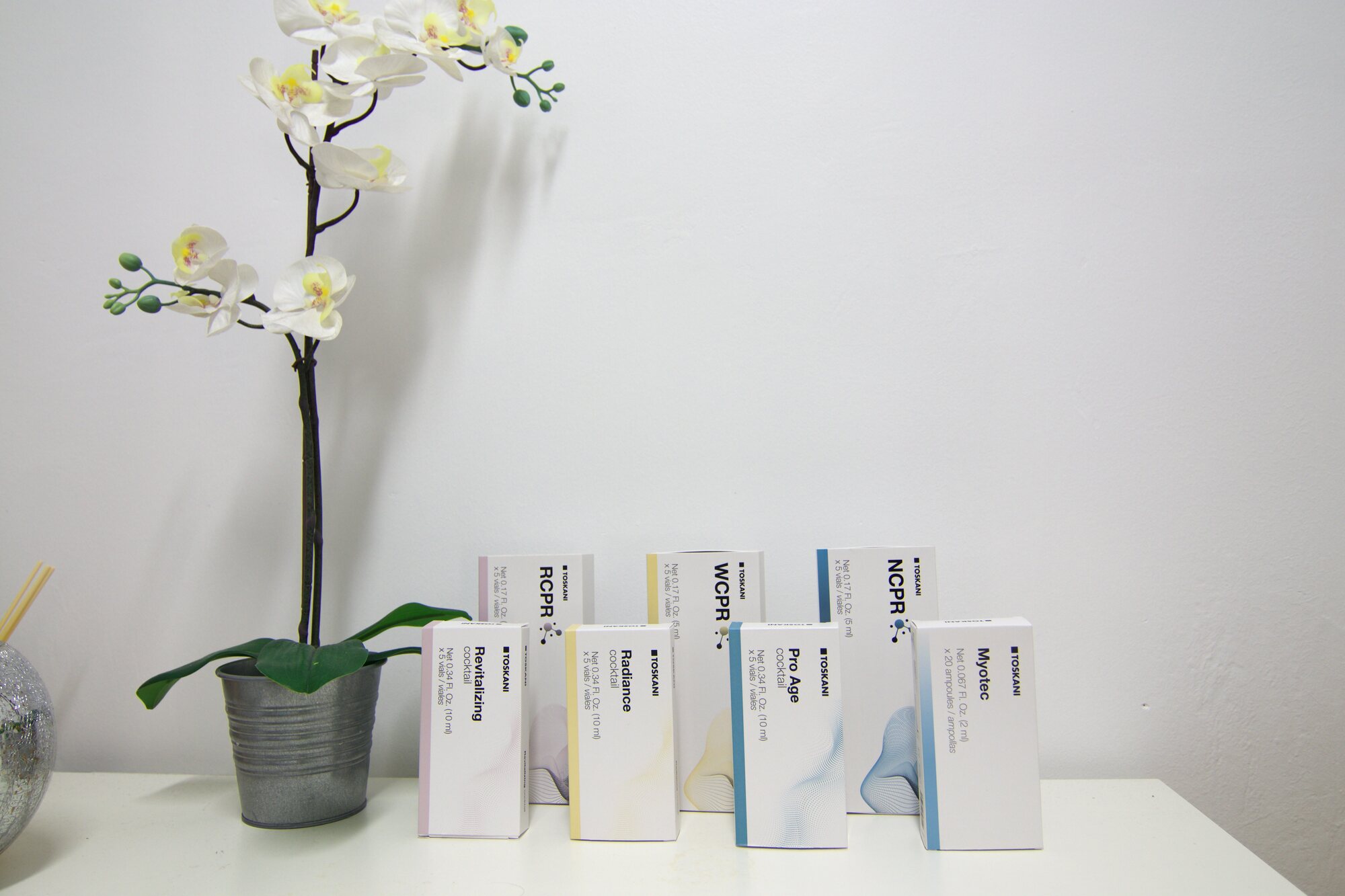
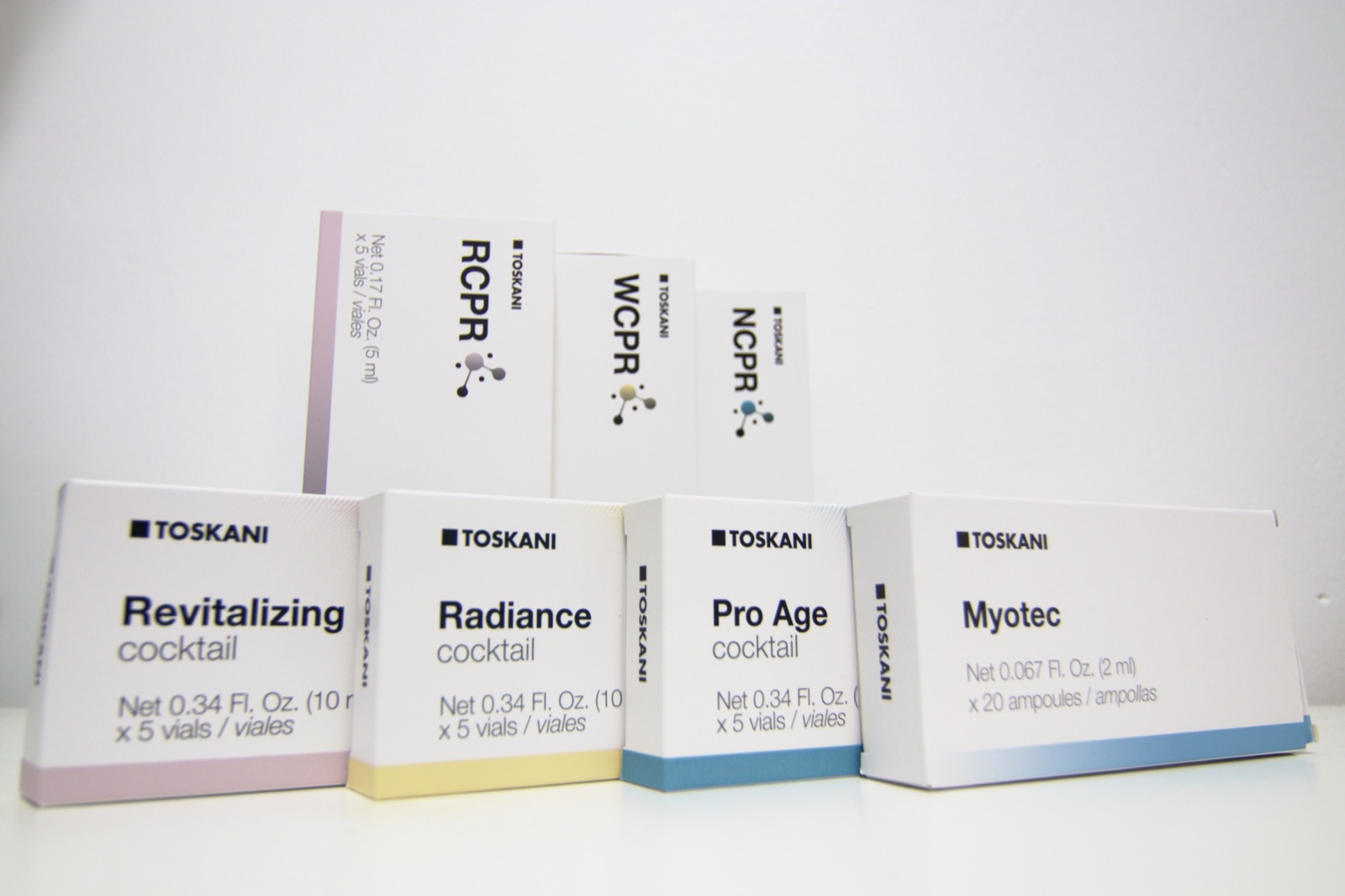
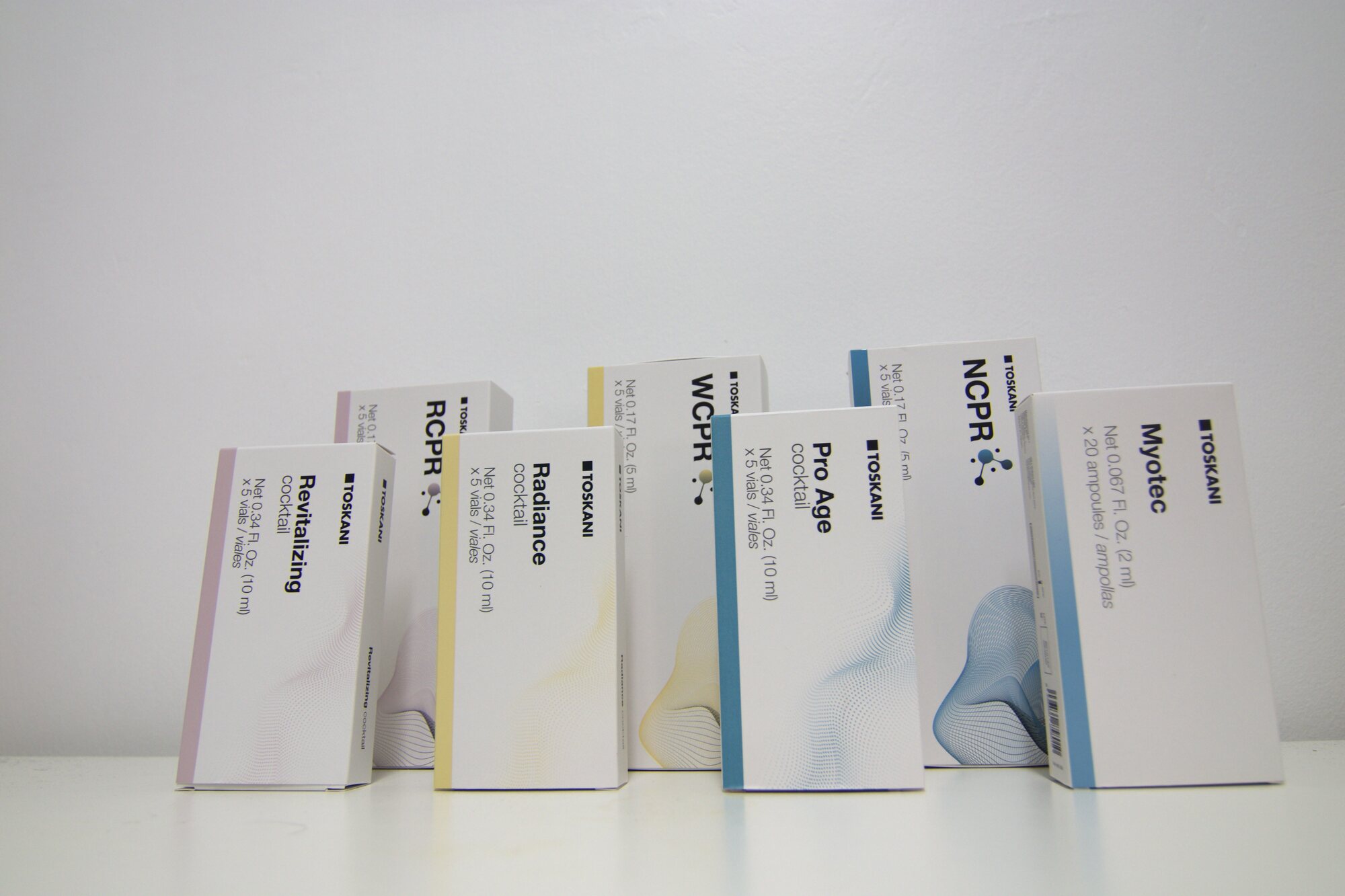
Every plan starts with a skin analysis. Your provider picks the base treatment, SkinPen or Morpheus8, and talks through whether the polynucleotide serum is worth adding for your skin and goals. We use Toskani professional cocktails, and your provider picks the one that fits your plan. And we’ll ask about fish or seafood allergies before anything is applied.
Frequently asked questions
PDRN (polydeoxyribonucleotide) and polynucleotides are purified fragments of DNA, usually taken from salmon or trout. They're the same family of ingredient. PDRN usually refers to shorter chains and polynucleotides to longer ones. Both are used in skincare serums and, outside the US, in injectable treatments.1,2
No. No polynucleotide or PDRN product appears in FDA's device or drug approval databases, and none is on FDA's list of approved dermal fillers. That's why we don't inject them. Topical serums are sold as cosmetics.25
Most of the research is on injections. For serums, the evidence is early. When polynucleotides were applied after RF microneedling, one small trial found faster improvement in eye-area wrinkles and another found no added benefit for melasma. A topical PDRN eye cream also outperformed retinol over 28 days in one study. We see it as a promising extra, not a proven one.5,15,16,17
Yes. We apply a professional polynucleotide serum during or after a SkinPen or Morpheus8 session as an optional add-on. FDA has not approved microneedling devices for delivering products into the skin, so we don't claim the needles push the serum in. It is applied to freshly treated skin.21
It hasn't been studied. Because most polynucleotides come from salmon or trout, some trials exclude people with fish allergies. Tell us about any fish or seafood allergy before your appointment, and we may recommend skipping the serum.12
That depends on the base treatment. SkinPen and Morpheus8 are usually done as a series spaced several weeks apart. No study has measured how long any added effect of a topical polynucleotide serum lasts. Your treatment plan is set at your consultation.
Sources & further reading
Sources include systematic reviews, randomized controlled trials, expert reviews and FDA pages, checked against PubMed. Links open in a new tab.
- Marques C, Porcello A, Cerrano M, et al. From PDRNs to PNs: Bridging the Gap Between Scientific Definitions, Molecular Insights, and Clinical Applications. Biomolecules. 2025;15(1):148. https://doi.org/10.3390/biom15010148
- Kim ST. Comparison of Polynucleotide and Polydeoxyribonucleotide in Dermatology: Molecular Mechanisms and Clinical Perspectives. Pharmaceutics. 2025;17(8):1024. https://doi.org/10.3390/pharmaceutics17081024
- Veronesi F, Dallari D, Sabbioni G, et al. Polydeoxyribonucleotides (PDRNs) From Skin to Musculoskeletal Tissue Regeneration via Adenosine A2A Receptor Involvement. J Cell Physiol. 2017;232(9):2299-2307. https://doi.org/10.1002/jcp.25663
- Galeano M, Pallio G, Irrera N, et al. Polydeoxyribonucleotide: A Promising Biological Platform to Accelerate Impaired Skin Wound Healing. Pharmaceuticals (Basel). 2021;14(11):1103. https://doi.org/10.3390/ph14111103
- Flores Rodríguez JC, Toledo Avelar LE, Yi K, et al. Polydeoxyribonucleotide (PDRN) in Post-procedure Recovery in Aesthetic Medicine: A Narrative Review. Cureus. 2026;18(5):e108886. https://doi.org/10.7759/cureus.108886
- Barbosa AP. Regeneration in Aesthetic Medicine: Mechanisms, Evidence, and Clinical Boundaries. J Cosmet Dermatol. 2026;25(1):e70669. https://doi.org/10.1111/jocd.70669
- Lampridou S, Bassett S, Cavallini M, et al. The Effectiveness of Polynucleotides in Esthetic Medicine: A Systematic Review. J Cosmet Dermatol. 2025;24(2):e16721. https://doi.org/10.1111/jocd.16721
- Alhussain AM, Albusayys STM, Alfhadi MA, et al. Polynucleotides and Polydeoxyribonucleotides for Skin Rejuvenation, Postoperative Scar Prevention, and Wound Healing: A Systematic Review of Randomized Controlled Trials. Cureus. 2026;18(7):e112403. https://doi.org/10.7759/cureus.112403
- Kream EJ, Anooshiravani N, Hosking AM, et al. Global Trends and Evidence Evaluation: A Systematic Review of Polynucleotide and Polydeoxyribonucleotide Therapy in Dermatology. Dermatol Surg. 2026. https://doi.org/10.1097/DSS.0000000000005155
- Lee YJ, Kim HT, Lee YJ, et al. Comparison of the effects of polynucleotide and hyaluronic acid fillers on periocular rejuvenation: a randomized, double-blind, split-face trial. J Dermatolog Treat. 2022;33(1):254-260. https://doi.org/10.1080/09546634.2020.1748857
- Araco A, Araco F. Preliminary Prospective and Randomized Study of Highly Purified Polynucleotide vs Placebo in Treatment of Moderate to Severe Acne Scars. Aesthet Surg J. 2021;41(7):NP866-NP874. https://doi.org/10.1093/asj/sjab125
- Ziade G, Keyrouz E, El Maalouf J, et al. Prospective Observational Study of Polynucleotide Injections for Periorbital Rhytides. J Cosmet Dermatol. 2026;25(2):e70736. https://doi.org/10.1111/jocd.70736
- Rho NK, Chilukuri S, Chan G, et al. Expert Perspectives: Evidence-Based Applications of Polynucleotides in Aesthetic Medicine and Dermatology. Clin Cosmet Investig Dermatol. 2026;19:557226. https://doi.org/10.2147/CCID.S557226
- Rho NK, Han KH, Cho M, Kim HS. A survey on the cosmetic use of injectable polynucleotide: The pattern of practice among Korean Dermatologists. J Cosmet Dermatol. 2024;23(4):1243-1252. https://doi.org/10.1111/jocd.16125
- Gulfan MCB, Wanitphakdeedecha R, Wongdama S, et al. Efficacy and Safety of Using Noninsulated Microneedle Radiofrequency Alone Versus in Combination with Polynucleotides for the Treatment of Melasma: A Pilot Study. Dermatol Ther (Heidelb). 2022;12(6):1325-1336. https://doi.org/10.1007/s13555-022-00728-8
- Yogya Y, Wanitphakdeedecha R, Wongdama S, et al. Efficacy and Safety of Using Noninsulated Microneedle Radiofrequency Alone Versus in Combination with Polynucleotides for the Treatment of Periorbital Wrinkles. Dermatol Ther (Heidelb). 2022;12(5):1133-1145. https://doi.org/10.1007/s13555-022-00729-7
- Ye R, Wang Q, Du L, et al. Topical medium-length PDRN enhances dermal extracellular matrix repair in photodamaged skin. PLoS One. 2026;21(7):e0350905. https://doi.org/10.1371/journal.pone.0350905
- Wu Y, Guénin S, Fung E, et al. Real-World Cases Using Phyto PDRN Serum. J Drugs Dermatol. 2026;25(9). https://doi.org/10.36849/JDD.15491
- Kwon HH, Yang SH, Lee J, et al. Combination Treatment with Human Adipose Tissue Stem Cell-derived Exosomes and Fractional CO2 Laser for Acne Scars: A 12-week Prospective, Double-blind, Randomized, Split-face Study. Acta Derm Venereol. 2020;100(18):adv00310. https://doi.org/10.2340/00015555-3666
- Flores Rodríguez JC, Toledo Avelar LE, Yi K, et al. Efficacy of Exosome-Based Therapies for Skin Rejuvenation: A Systematic Review of Human Studies. Cureus. 2026;18(2):e104182. https://doi.org/10.7759/cureus.104182
- U.S. Food & Drug Administration. Microneedling Devices. Content current as of 10/15/2025. https://www.fda.gov/medical-devices/aesthetic-cosmetic-devices/microneedling-devices
- U.S. Food & Drug Administration. Is It a Cosmetic, a Drug, or Both? (Or Is It Soap?). https://www.fda.gov/cosmetics/cosmetics-laws-regulations/it-cosmetic-drug-or-both-or-it-soap
- U.S. Food & Drug Administration. Potential Risks with Certain Uses of Radiofrequency (RF) Microneedling: FDA Safety Communication. October 15, 2025. https://www.fda.gov/medical-devices/safety-communications/potential-risks-certain-uses-radiofrequency-rf-microneedling-fda-safety-communication
- U.S. Food & Drug Administration. Consumer Alert on Regenerative Medicine Products Including Stem Cells and Exosomes. July 22, 2020 (updated 04/09/2024). https://www.fda.gov/vaccines-blood-biologics/consumers-biologics/consumer-alert-regenerative-medicine-products-including-stem-cells-and-exosomes
- U.S. Food & Drug Administration. FDA-Approved Dermal Fillers. https://www.fda.gov/medical-devices/aesthetic-cosmetic-devices/fda-approved-dermal-fillers