Laser Tattoo Removal in Brickell, Miami
Pico tattoo removal in Brickell with the Cutera enlighten III — picosecond and Q-switched in one platform. A wide range of skin tones and ink colors, free consultations.
Medically reviewed by Mariana Tolosa, PA-C1501 South Miami Avenue #201, BrickellCutera enlighten III platform
Tattoo removal cost in Miami
How pricing works
Tattoo removal cost is based on the tattoo's size, colors, ink density, and number of sessions needed. We offer per-session pricing or discounted packages since removal is a series. You'll get a clear, itemized quote at your free consultation. See pricing for current rates.
Packages & financing
We offer 4-session packages and complete-removal bundles for the best per-session rate. 24-month financing available through Cherry and Affirm. Permanent makeup removal (eyebrows, microblading) is priced separately and usually needs fewer sessions. Cover-up lightening packages available. Consultations are always free.
Real laser tattoo removal results
Real laser tattoo removal results — black ink, color pieces, cover-up fading, and what an efficient series looks like.
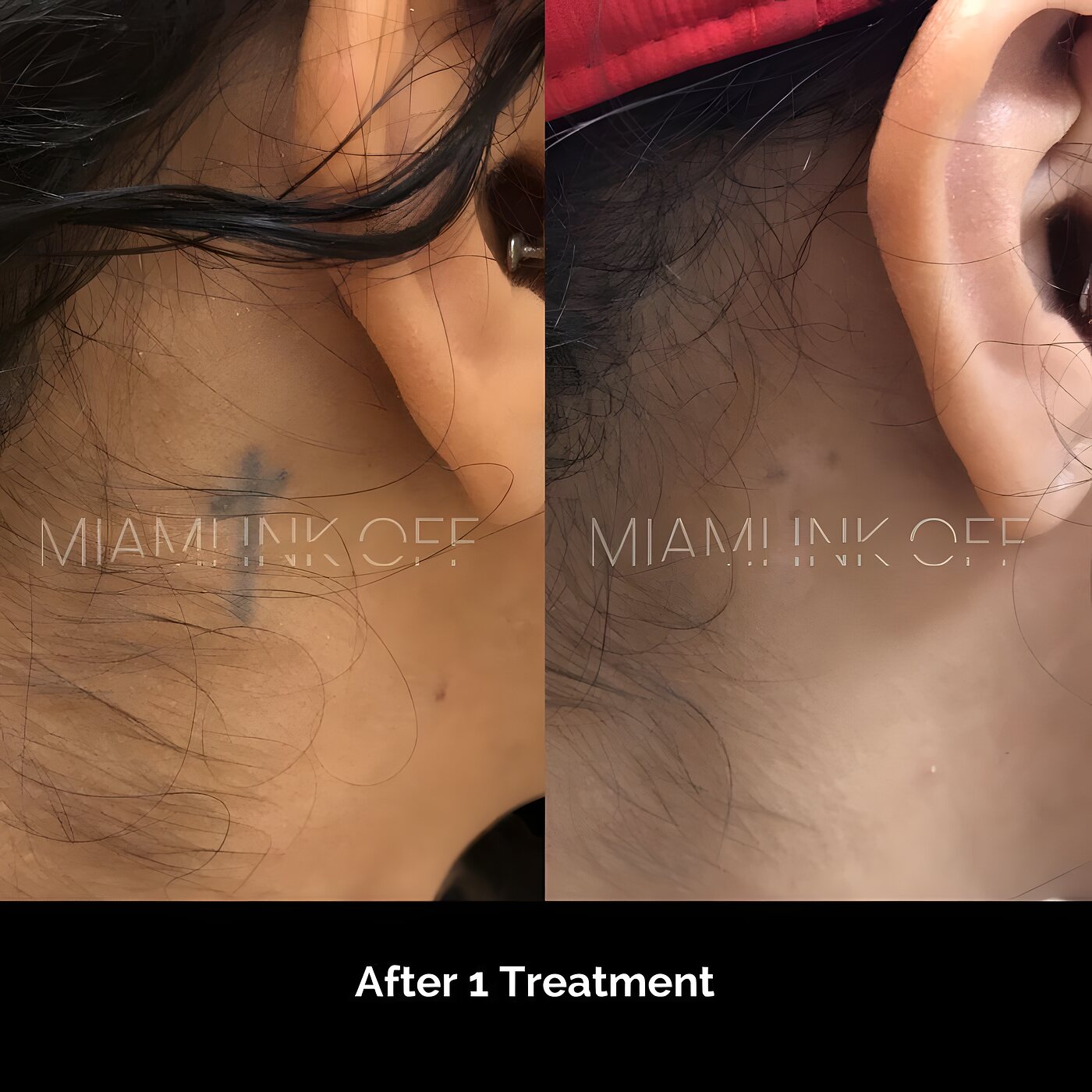 After 1 treatment
Behind the Ear — 1 Session. Single-session result on deeper skin — laser settings tuned safely per skin tone.
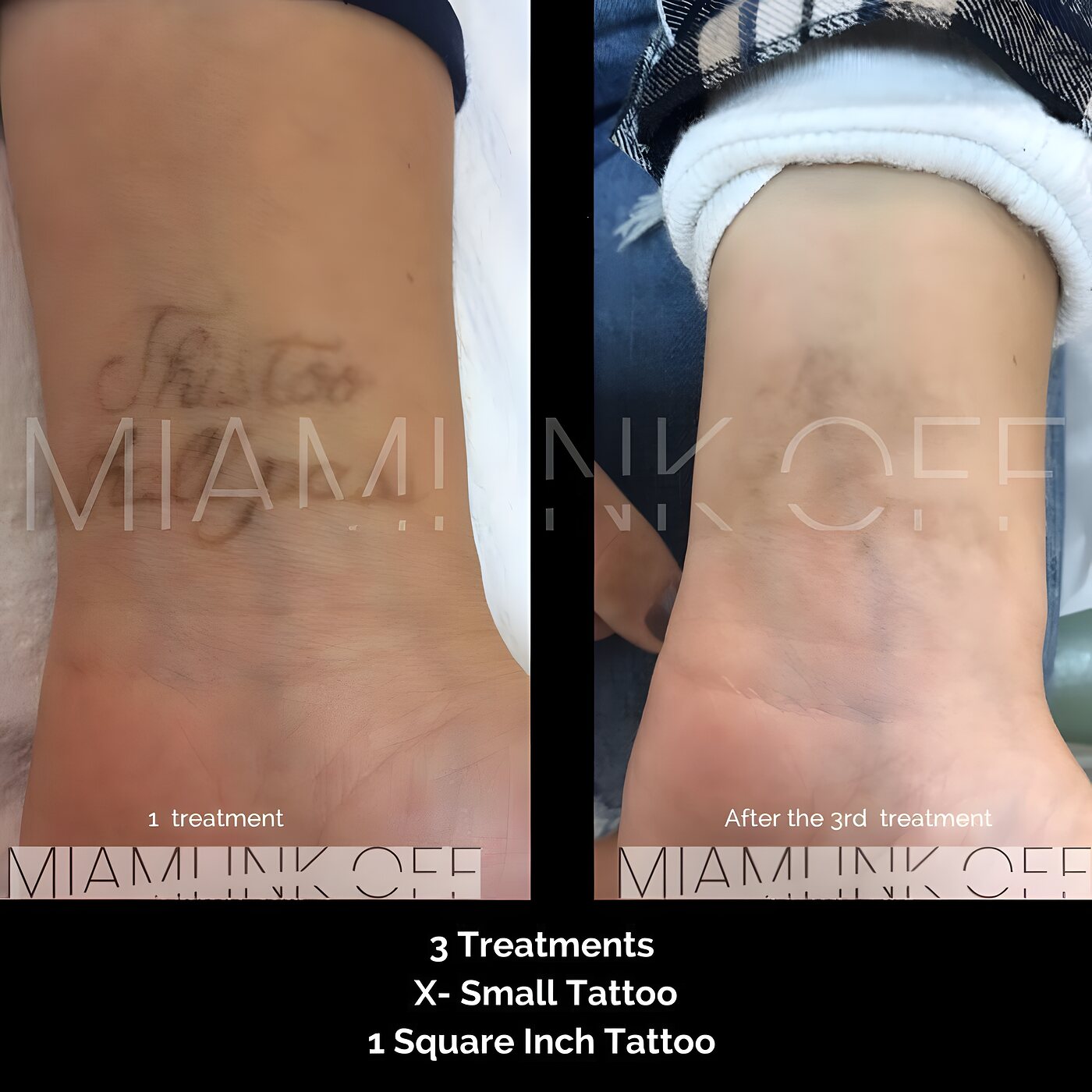 After 3 treatments
Wrist Script — 3 Sessions. Cursive black-ink script faded over three sessions.
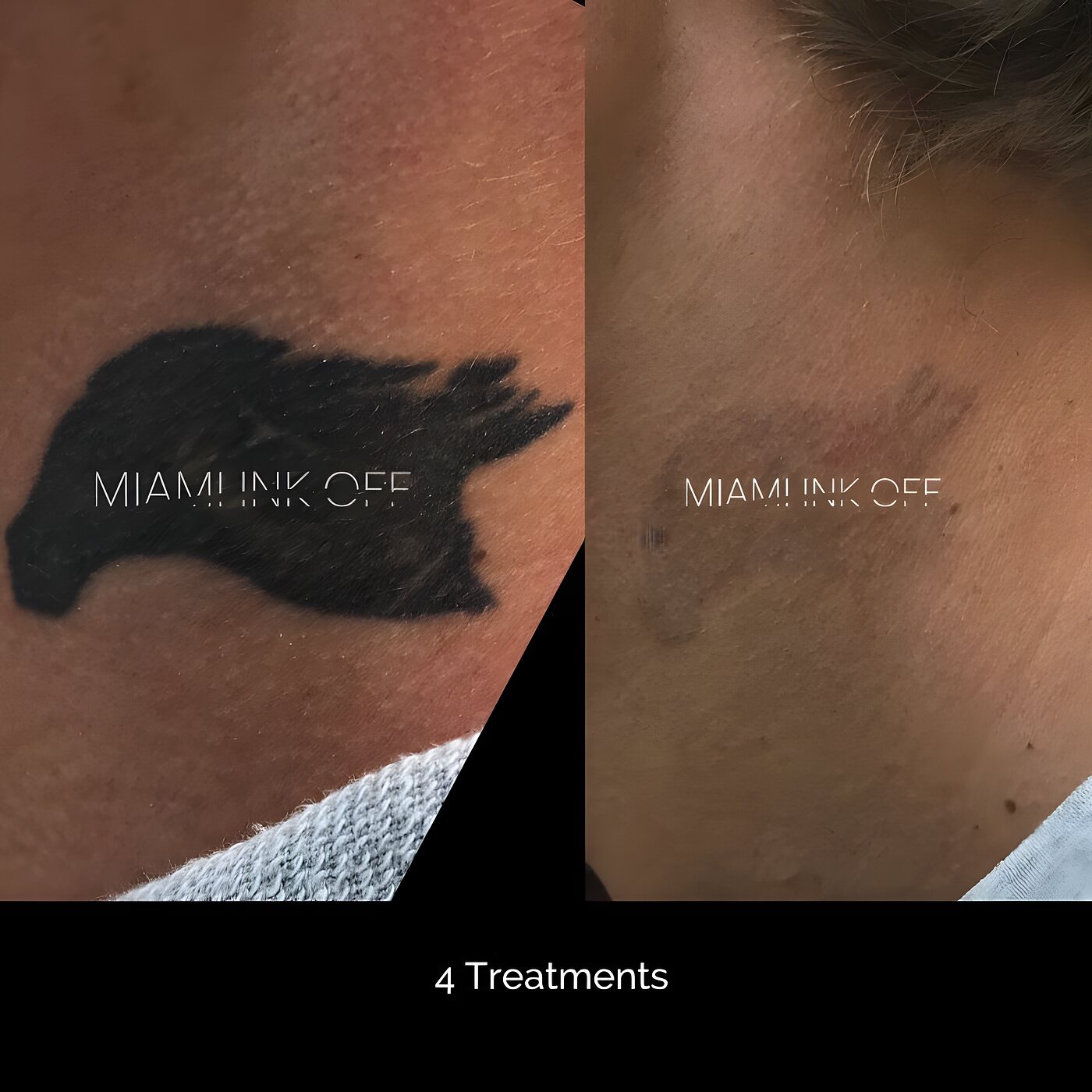 After 4 treatments
Solid Black Bird — 4 Sessions. Heavier solid-black ink on the side of the neck, cleared over four sessions.
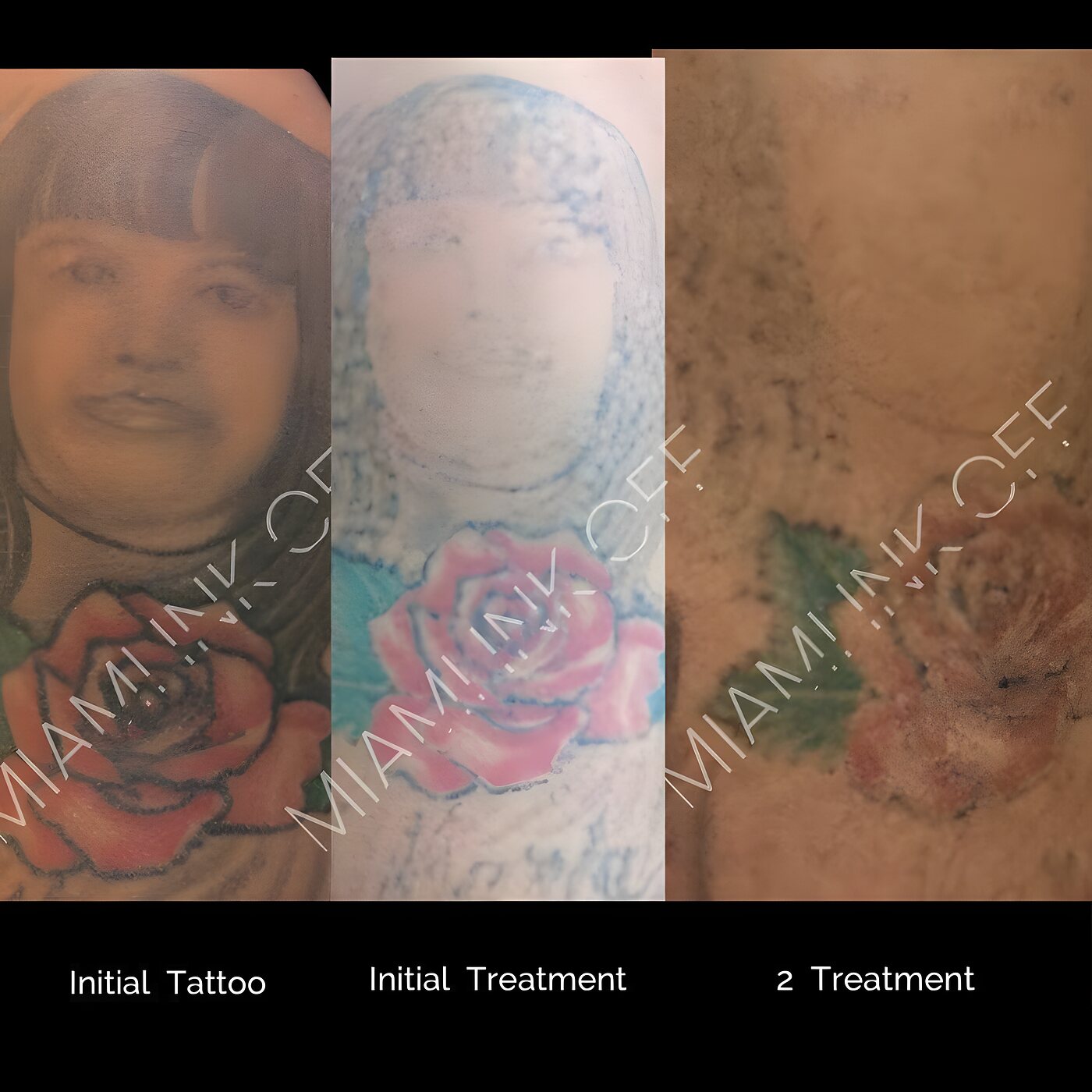 After 2 treatments
Color Portrait + Rose — 2 Sessions. Color portrait gone and rose lightened after two sessions.
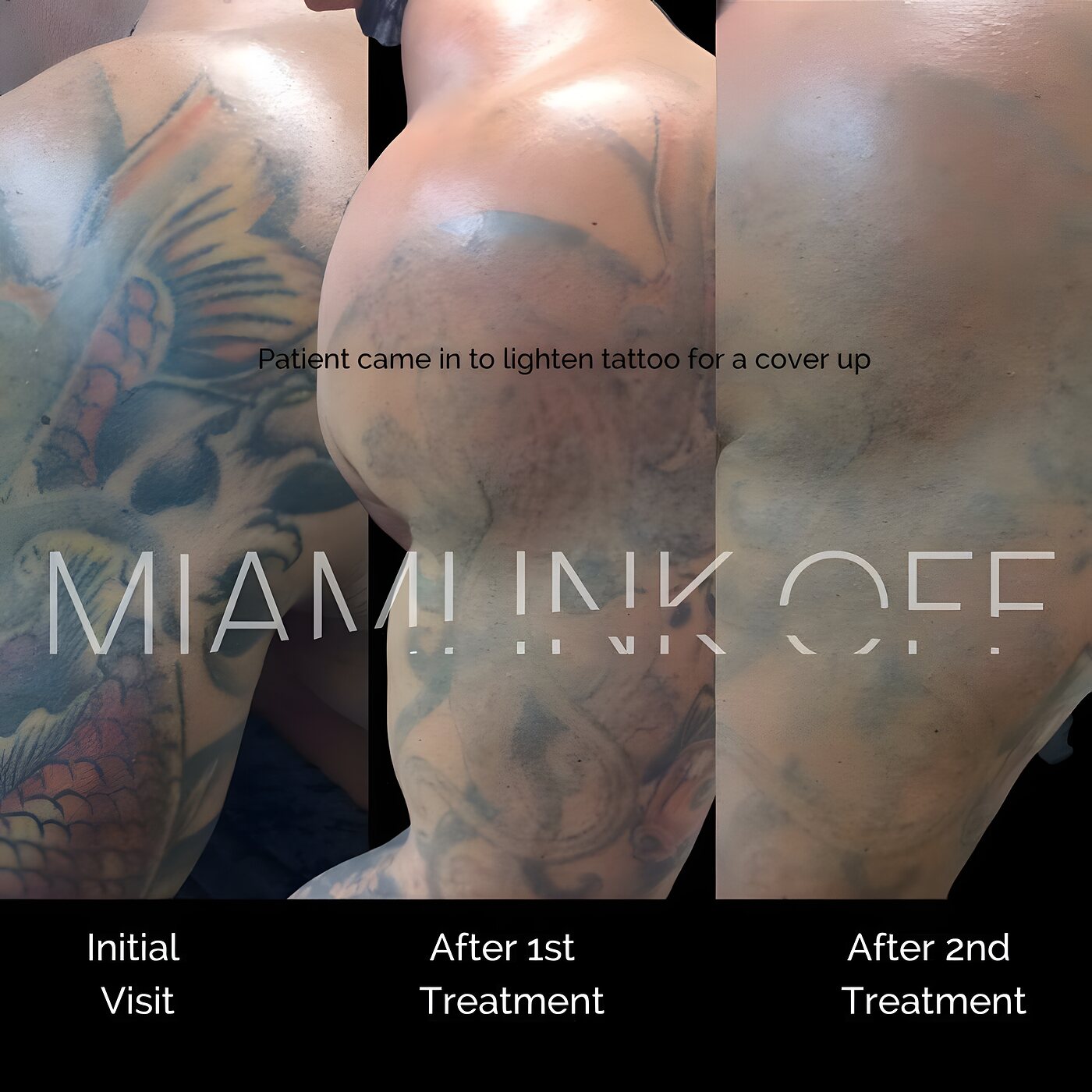 After 2 treatments
Koi Sleeve Lightening — 2 Sessions. Color koi sleeve lightened to prepare for a cover-up.
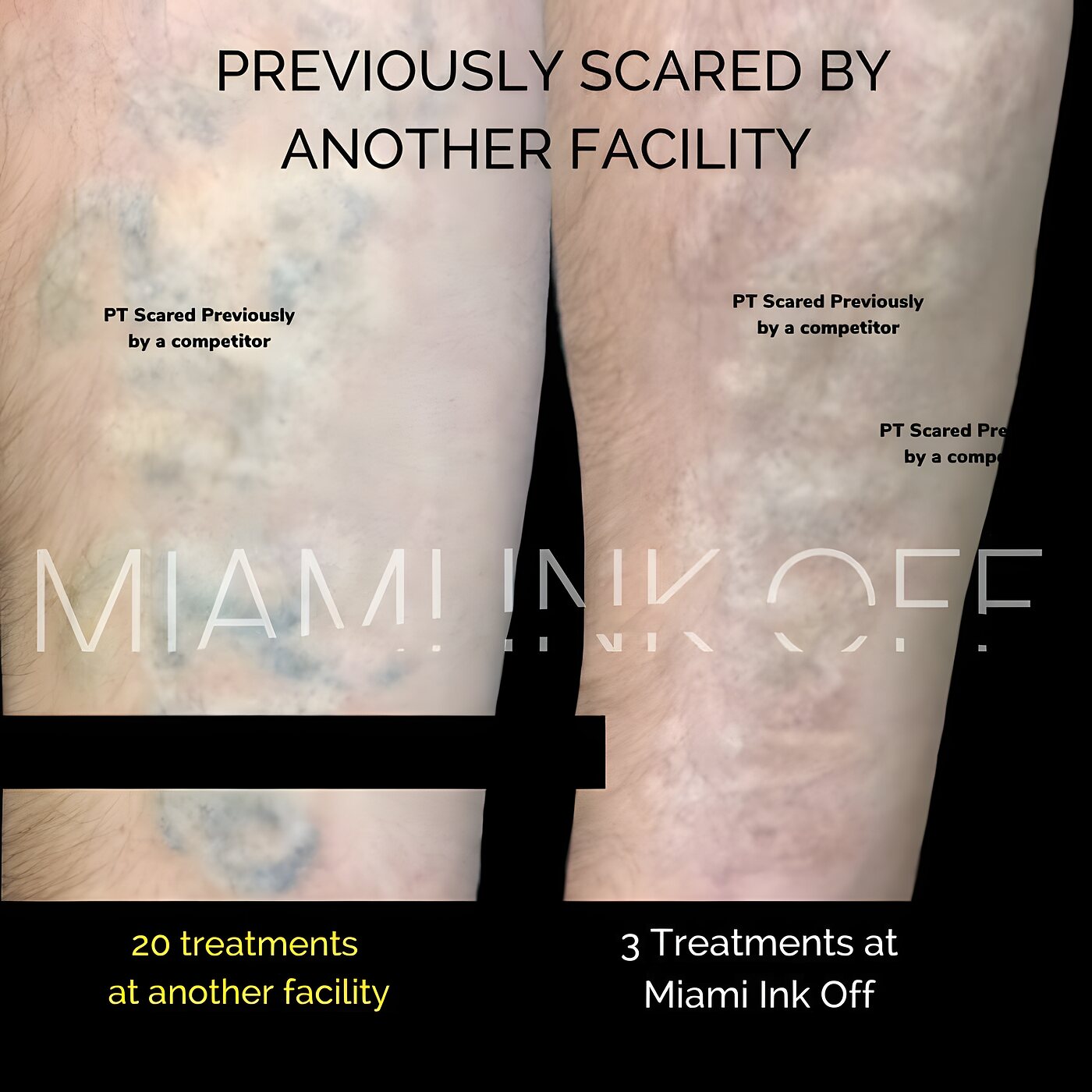 After 3 treatments
3 Sessions vs. 20 Elsewhere. Comparable clearance in three sessions versus twenty at another facility.
Individual results vary depending on ink type, color, depth and number of sessions.
What one session cycle looks like
Everything you'd ask at the consult
The laser shatters the ink — your body does the rest
A tattoo is permanent only because ink particles are too large for your immune cells to haul away. Pico tattoo removal changes that. The Cutera enlighten III fires pulses of light lasting trillionths of a second into the pigment; the energy lands faster than heat can spread, so instead of cooking the skin it generates a photoacoustic pressure wave that cracks the ink into microscopic fragments. Over the following weeks, immune cells carry those fragments out through your lymphatic system — that's the steady fading you watch between visits, and why removal is a planned series rather than a single appointment.
Picosecond and Q-switched in one platform
The enlighten III runs both picosecond and Q-switched (nanosecond) pulse modes alongside three wavelengths — 532, 670 and 1064 nm — so every session is matched to your specific ink and skin rather than forced through a single tool. Pressure-based shattering tends to leave finer fragments than purely thermal breakdown, which is a big part of why pico platforms often clear tattoos in fewer sessions with less heat delivered to the surrounding skin. Read more about the device on our enlighten III platform page.
A wavelength for every pigment
Each ink color absorbs a different slice of the light spectrum, so removing a multicolor tattoo is really a matching exercise — the right wavelength against the right pigment, session by session:
- 1064 nm — black & dark blue. The workhorse. Dark pigments absorb it strongly, making them the fastest colors to clear.
- 532 nm — red, orange & warm tones. Reliable on reds; yellow responds too, just more gradually.
- 670 nm — green & bright blue. A picosecond red wavelength aimed squarely at the pigments that historically resisted removal.
- White & pastel inks. The toughest of all — and white can temporarily darken on a first pass, so we test a small area conservatively before treating.
Safe across Fitzpatrick I–VI
The 1064 nm wavelength is melanin-sparing — it largely bypasses your skin's own pigment on the way to the ink — which is why it is the standard choice for deeper skin tones. For Fitzpatrick IV–VI we lean on 1064 nm, use shorter wavelengths cautiously, and tune both energy settings and session spacing to protect against pigment changes. A wide range of skin tones are treated here; the plan just gets built around yours.
What actually drives your session count
- Ink density & layering — heavy fill and cover-ups carry more pigment per square inch, so they take longer.
- Colors in the piece — black clears fastest; green, yellow and white are the hold-outs.
- Depth of the ink — professional machines place ink deeper and more evenly than hand-poked work.
- Location on the body — areas with strong circulation (torso, upper arms) clear faster than fingers, ankles and feet.
- Age of the tattoo — older ink has already partially broken down, which works in your favor.
- Amateur vs. professional — stick-and-poke pieces often clear in roughly 3–6 sessions; professional multicolor work can run 8–12 or more.
We weigh these factors — the same ones behind clinical tools like the Kirby–Desai scale — to give you a realistic range at your free consultation, not a guess.
How fading unfolds between visits
Each pulse only fragments the ink it can reach, and the visible lightening happens over the 6–8 weeks after a session as your immune system clears the debris. Booking sessions closer together doesn't speed that biology up — it just raises the risk of blistering and pigment changes. Deeper or colored work sometimes benefits from slightly longer gaps.
The first two weeks
Expect a short-lived white frosting right after treatment (gone within minutes), then sunburn-like redness and swelling for a few days. If blisters or scabs form, leave them completely alone — picking is the single biggest avoidable cause of scarring. Keep the area clean, lightly covered with ointment, and skip soaking, saunas and hard workouts until the surface heals, usually within one to two weeks.
Healing in the Miami climate
South Florida's heat, humidity and UV are real variables, so our aftercare is built for them: no sweating at the treated site for about 72 hours, shower promptly after activity, and be strict about sun protection on the area between sessions. It genuinely changes how cleanly you heal here.
Why scarring is uncommon
The laser targets pigment, not your skin's structural collagen — so when settings are matched to your skin type and you follow aftercare, scarring is rare. One honest caveat: if the original tattooing left scar tissue under the ink, clearing the ink can reveal it. We check for that at your consultation so there are no surprises.
Picosecond vs Q-switched
Both laser types are FDA-cleared and effective — the difference is how the energy breaks the ink down. Our enlighten III runs both, so the choice is made per ink and per session, not per device.
| Picosecond | Q-switched (nanosecond) | |
|---|---|---|
| Pulse speed | Trillionths of a second | Billionths of a second |
| Primary mechanism | Pressure — a photoacoustic wave shatters the ink | Heat — thermal energy breaks the ink down |
| Ink fragments | Finer particles, easier for the immune system to clear | Coarser particles, slower clearance |
| Typical series | Often shorter | Often longer |
| Stubborn colors | Strong on green, blue and resistant ink | More limited on hold-out colors |
Not sure what your tattoo needs? Bring it to a free consultation at our Brickell studio. We'll look at the ink, colors and depth, and give you a realistic session range and itemized quote — whether the goal is full removal or fading for a cover-up.
What we treat — and who it's for
What it treats
- Full tattoo removal — black ink, multicolor, amateur and professional
- Tattoo lightening for cover-ups — 3–5 sessions to give your artist a clean canvas
- Permanent makeup removal — eyebrows, microblading, lip liner, eyeliner (1–3 sessions)
- Stubborn colors — blues, greens, and yellows via the 670 nm picosecond wavelength
- A wide range of skin tones — the melanin-sparing 1064 nm wavelength is used on Fitzpatrick IV–VI
Powered by the Cutera enlighten III laser — platform details.
Who it's for
- Anyone searching “tattoo removal near me” from Brickell or greater Miami
- Patients who want full clearance over a planned series
- Those lightening a tattoo ahead of a cover-up
- Patients with skin tones from Fitzpatrick I through VI
Every session is performed by a licensed provider after an individual evaluation, with settings matched to your ink and skin — meet the team.
Frequently asked questions
It depends on ink color, age, density, depth, location, and your skin and immune response. As a ballpark, amateur black tattoos may take 3–6 sessions, while professional multicolor pieces can take 8–12 or more. We give a personalized estimate at your free consultation using factors like the Kirby–Desai scale.
Most people compare it to a hot rubber-band snap, and each session is short — about 15 to 30 minutes. We use topical numbing and cooling to keep it comfortable. Afterward, redness, swelling and brief frosting are normal and resolve quickly.
Scarring is uncommon when laser settings match your skin and ink and you follow aftercare — the laser targets ink, not skin structure. The biggest avoidable cause is picking scabs or popping blisters. Occasionally, scarring from the original tattooing is revealed once the ink clears — we look for that at your consultation.
Cost is based on the tattoo's size, colors, ink density, and the number of sessions needed, usually as per-session pricing or a discounted package. You'll get a clear, itemized quote at your free consultation — see our pricing page for current rates.
Yes — lightening for a cover-up is one of the most common requests we see. It usually takes 3–5 sessions to give your artist a clean canvas, which opens up smaller, lighter and more detailed cover-up designs. Cover-up lightening packages are available, and we can time sessions around your artist's plan.
Yes. Our enlighten III uses three wavelengths (532, 670, and 1064 nm) to target a wide range of colors — including the 670 nm wavelength built for stubborn blues and greens. Green, yellow, and white/pastel inks are the hardest, and complete clearance of every color isn't guaranteed. We'll set realistic expectations for yours.
Usually 6 to 8 weeks minimum. That gap lets your immune system clear the shattered ink before the next session — going sooner doesn't speed results and raises the risk of blistering and pigment changes, especially in darker skin. Colored or deeper tattoos sometimes benefit from a bit longer.
Yes, with the right approach. The 1064 nm wavelength is melanin-sparing and is the safer choice for deeper skin (Fitzpatrick IV to VI), while shorter wavelengths are used more cautiously. Settings and spacing are tailored to protect your skin from pigment changes.
Want the science? Our evidence review covers how laser tattoo removal works, picosecond vs Q-switched mechanisms, session count science (Kirby–Desai), wavelength selectivity by ink color, scarring risk, and 1064 nm safety on darker skin — with 18 cited sources.
Ready to fade the regret?
Bring your tattoo to a free consultation at our Brickell studio. We'll assess the ink, your skin, and your goals — then give you a realistic plan, session estimate and quote. No commitment required.
Miami Skin Spa · Brickell · 1501 South Miami Avenue #201, Miami, FL 33129 · 305-557-1615