Scar treatment in Brickell, Miami.
Smoother, flatter, less-noticeable scars — without surgery. People search for scar removal in Miami, but it's the wrong phrase: a scar is permanent, and real scar treatment in Miami makes it dramatically less visible, not gone. This is your decision hub: how scars form, which type you have (depressed, raised, red or pigmented), what genuinely helps, and when a scar needs a specialist.
Medically reviewed by Mariana Tolosa, PA-C📍 1501 South Miami Avenue #201, Brickell🔬 21 cited sources · consensus, AAD & peer-reviewed🗓️ Reviewed 2026
A healed wound — and how we refine it
A scar is the body's natural repair after the dermis is injured. When healing lays down collagen in a disorganized way, the result is a mark that differs from surrounding skin: atrophic scars are depressed (most acne and chickenpox scars), hypertrophic scars are raised but stay within the wound, keloids are raised and grow beyond it, and newer scars are often red while others heal darker.2,4 The single most useful question is which type you have, because the right treatment is completely different for each.
At Miami Skin Spa in Brickell we refine scars with collagen-building microneedling and Morpheus8 RF microneedling for depressed and textured scars, vascular Lumecca IPL to calm red scars, and pico laser with peels for pigmented marks. Like any scar, the change is permanent, the realistic goal is meaningfully less-noticeable skin, and keloids in particular are recurrence-prone and usually need specialist care.1,19
Reorganize the collagen, even the surface
You can't un-injure the original skin — but the dermis can be prompted to rebuild collagen in a smoother, more organized pattern, and color can be targeted directly. That's what effective scar treatment does, in ways that depend on the scar.3,12
For depressed and textured scars, the tools create controlled micro-injury: microneedling (SkinPen) opens thousands of tiny channels, RF microneedling (Morpheus8) adds radiofrequency heat in the deep dermis, and fractional lasers vaporize microscopic columns. Each triggers fresh, organized collagen that lifts and smooths the scar over months.10,12,13
For raised scars, the strategy shifts to flattening and softening — first-line is at-home silicone, with energy or medical injections for stubborn ones.3,5 For red scars, vascular light such as Lumecca IPL targets the blood vessels behind the color; for brown, pigmented marks, pico laser and peels address the pigment, chosen carefully for skin tone.7,18 One treatment does not fit every scar.
What kind of scar is it?
The treatment depends entirely on the type of scar and how old it is. Pick what best describes yours, and we'll point you to what usually fits — and tell you plainly when a scar needs a specialist or only partial improvement is realistic. This is guidance; your consultation confirms the plan.2,4
1 · What does the scar look like?
2 · How old is it?
Settled depressed scars respond to dermal remodeling — we lead with RF microneedling (Morpheus8) and microneedling to rebuild collagen, sometimes paired with a resurfacing laser. For a tethered scar where focal band-release is the deciding factor, we coordinate a referral to a specialist for subcision and treat the surrounding texture ourselves. Studies put RF microneedling and microneedling on par with fractional laser for atrophic scars. Expect gradual lifting over a series, not a flat erasure.
Two scars we cover in depth elsewhere
If your main concern is acne scarring or stretch marks, we have dedicated hubs with the full plan for each: see acne scars and stretch marks. This page is the broader guide to scars of every kind.
The toolbox, plainly labeled
Some scar tools we offer in Brickell; others — silicone you use at home, and the medical or surgical steps for keloids and thick raised scars — we'll guide you to or co-manage. Here's the full landscape.3,5,7
| Approach | How it works | Best for | Downtime | Sessions |
|---|---|---|---|---|
| RF microneedling (Morpheus8)Here | Microneedles + radiofrequency heat; deep remodeling | Atrophic & textured scars; larger areas | 1–3 days | ~3–4 |
| Microneedling (SkinPen)Here | Collagen induction; FDA-cleared for facial acne scars | Atrophic / acne scars; all skin tones | 1–2 days | 3–6 |
| Pico laser (Pico Genesis / Enlighten)Here | Photoacoustic light; pigment & texture | Pigmented scars (PIH); tone-aware | Minimal–few days | Series |
| Vascular IPL (Lumecca)Here | Intense pulsed light; targets redness | Red / new scars (calms erythema) | Minimal | Series |
| Chemical peel (VI Peel)Here | Controlled exfoliation | Superficial scars & post-inflammatory pigment | Peeling, few days | Series |
| Silicone gel / sheets | At-home barrier; first-line for raised scars | Hypertrophic / keloid prevention & early care | None | Daily, months |
| Steroid / 5-FU injection | Intralesional medicine to flatten raised scars | Hypertrophic & keloid (medical — we refer) | Minimal | Every few weeks |
| Surgical revision / excision | Surgery, often with adjuvant therapy | Select scars; keloids need adjuvant (we refer) | Surgical | As indicated |
Microneedling vs. RF microneedling — for depressed scars
Microneedling (SkinPen)
Collagen-induction with fine needles — no heat, comfortable, and safe across all skin tones. It's FDA-cleared specifically for facial acne scars, and reviews find it effective as monotherapy with improvement by about three sessions. The gentler choice for atrophic and acne scars.8,10
First-line for raised scars is simpler than you'd think
For hypertrophic scars, the international consensus puts silicone gel or sheeting first — inexpensive, low-risk, and best started early. Energy treatments, and medical injections of steroid or 5-FU for thicker scars, layer on from there.3,5
A note for Miami's skin tones
Aggressive ablative resurfacing and deep peels deliver strong results but carry a real risk of hypopigmentation and dyspigmentation in deeper complexions. We favor microneedling and carefully-dosed RF microneedling, with pico-laser and conservative settings for pigment, to protect Fitzpatrick IV–VI skin.18
Different stories, different plans
Where a scar came from shapes the approach and the timing. Here's how we think about the most common ones.3,14
Surgical & C-section scars
Once the incision has fully healed, fractional laser and microneedling can soften texture and flatten a surgical or C-section scar, and vascular light fades redness. Evidence and consensus increasingly favor earlier intervention for better results — we'll advise on timing.14,16
Acne scars
Mostly atrophic, and their own topic: microneedling, RF microneedling and resurfacing per the 2022 energy-device consensus. See our dedicated acne scars hub for the full plan, and our acne treatment page to stop new scars forming.7
Injury & burn scars
Traumatic and burn scars — including raised or tight ones — are increasingly treated with laser therapy, often alongside other care. Significant or contracted scars may need a specialist; we'll tell you and co-manage where it helps.3,6
Pigmented marks & stretch marks
Brown post-inflammatory marks are pigment, not permanent scars — see hyperpigmentation. Stretch marks are a distinct type of scar with their own plan — see stretch marks.1
What the trials actually show
Strong scar treatment produces real, measurable improvement — realistically closer to "about half better" than "gone." Here's a representative randomized trial of energy-based resurfacing on early scars.13
Three takeaways. (1) microneedling is FDA-cleared for facial acne scars, with about 80% of patients noticing improvement after a series;8 (2) these are improvement scores, not erasure — no treatment makes a scar vanish; and (3) the best results come from a series, the right type-matched tool, and often a combination.5,17
What this can't do
Here's the plain truth, so you can decide with clear eyes.1,4
Improvement, not erasure
A scar is permanent. Treatment can make it markedly smoother, flatter and more even in color — but it cannot restore unscarred skin or completely remove a scar.1
Keloids are the hard exception
Keloids grow beyond the wound and recur in roughly 50–80% after excision alone — surgery can even make them worse. They usually need a dermatologist or plastic surgeon and combination care (steroid/5-FU, excision with radiotherapy). We'll refer or co-manage.19,20
Timing and patience matter
We don't treat an open or unstable wound, and collagen remodeling is gradual — most results build over three months and beyond, across a series. Old, deep or wide scars may improve only partially.3,13
Pigment risk is real in deeper skin
Heat- and light-based resurfacing can cause hypo- or hyperpigmentation, especially in Fitzpatrick IV–VI. That's why device choice and conservative settings matter, and why we sometimes choose microneedling over aggressive laser.18
Who should wait, or be assessed first
We defer or modify for: an open, infected or unstable wound (it must heal first); a strong keloid tendency (aggressive treatment can backfire — specialist input first); active infection (including cold sores) in the area; recent tanning or sun exposure; and pregnancy or breastfeeding for certain treatments. Your full history and skin type are reviewed at the consultation.3,4,18
Gradual now, smoother over months
Scar treatment rewards patience and a series. You'll notice a little early, and the real change as new collagen forms and the scar keeps maturing.3,13
Before & after
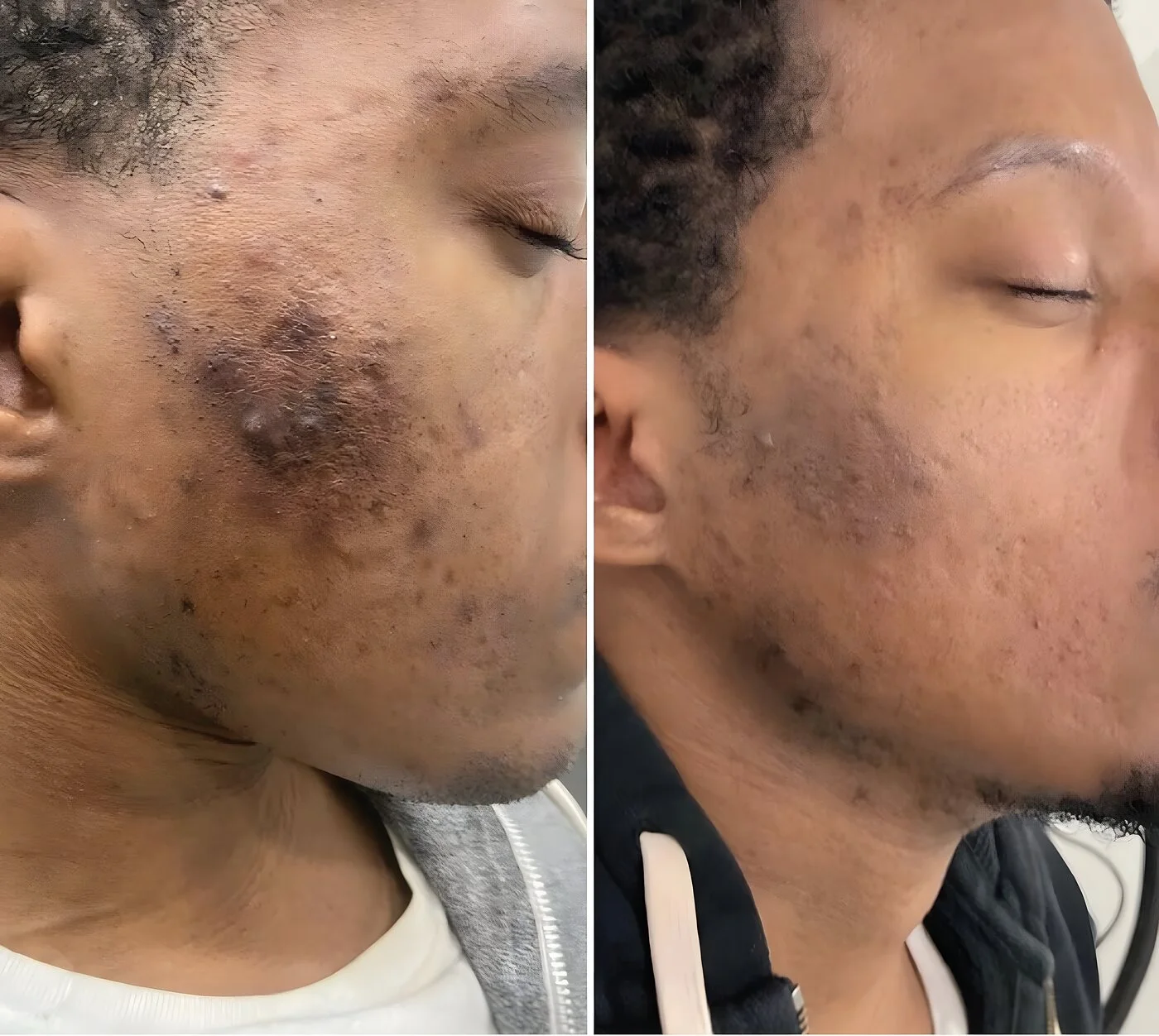 Before → After
Courtesy of the VI Peel provider network
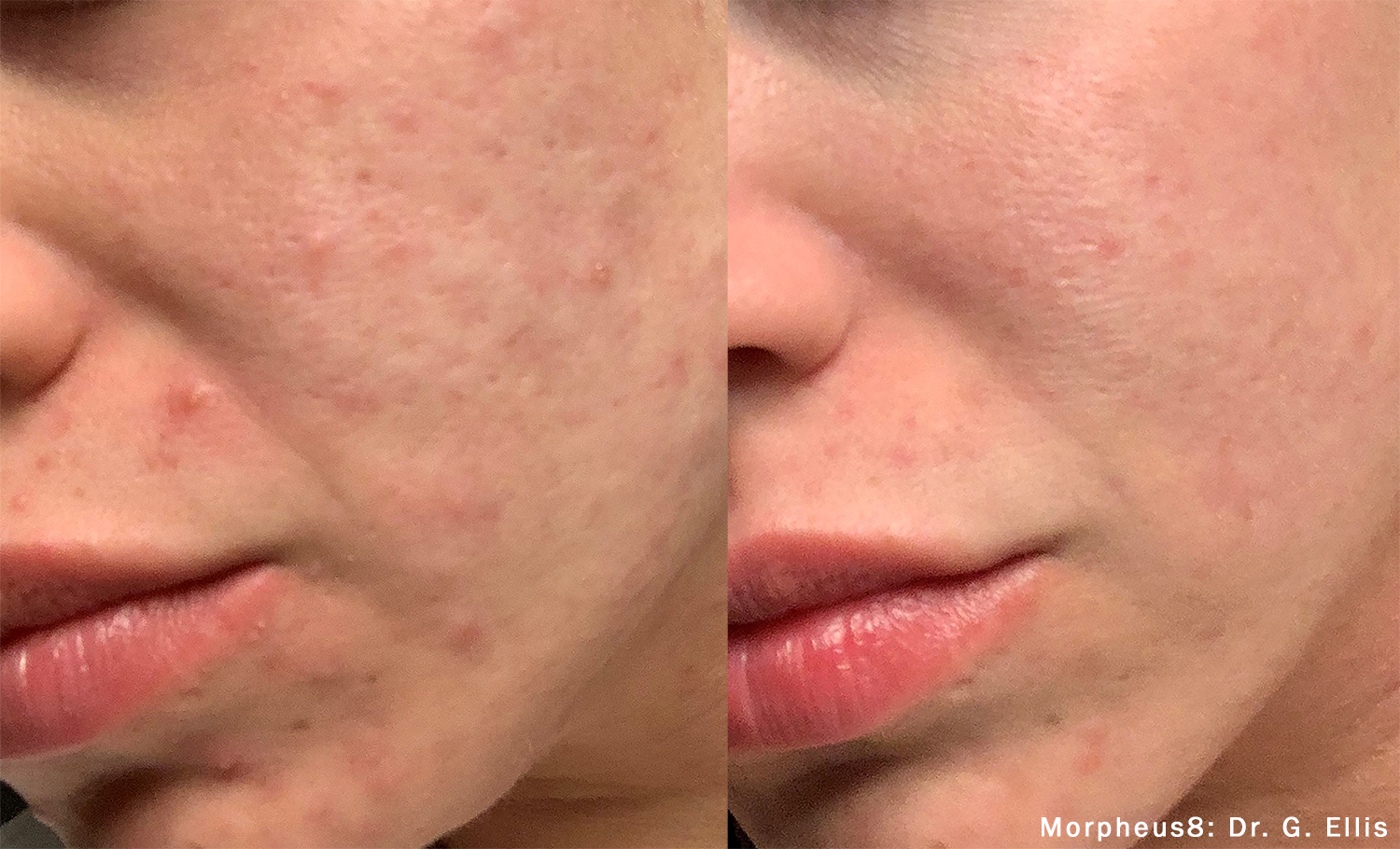 Before → After
Courtesy of Dr. G. Ellis
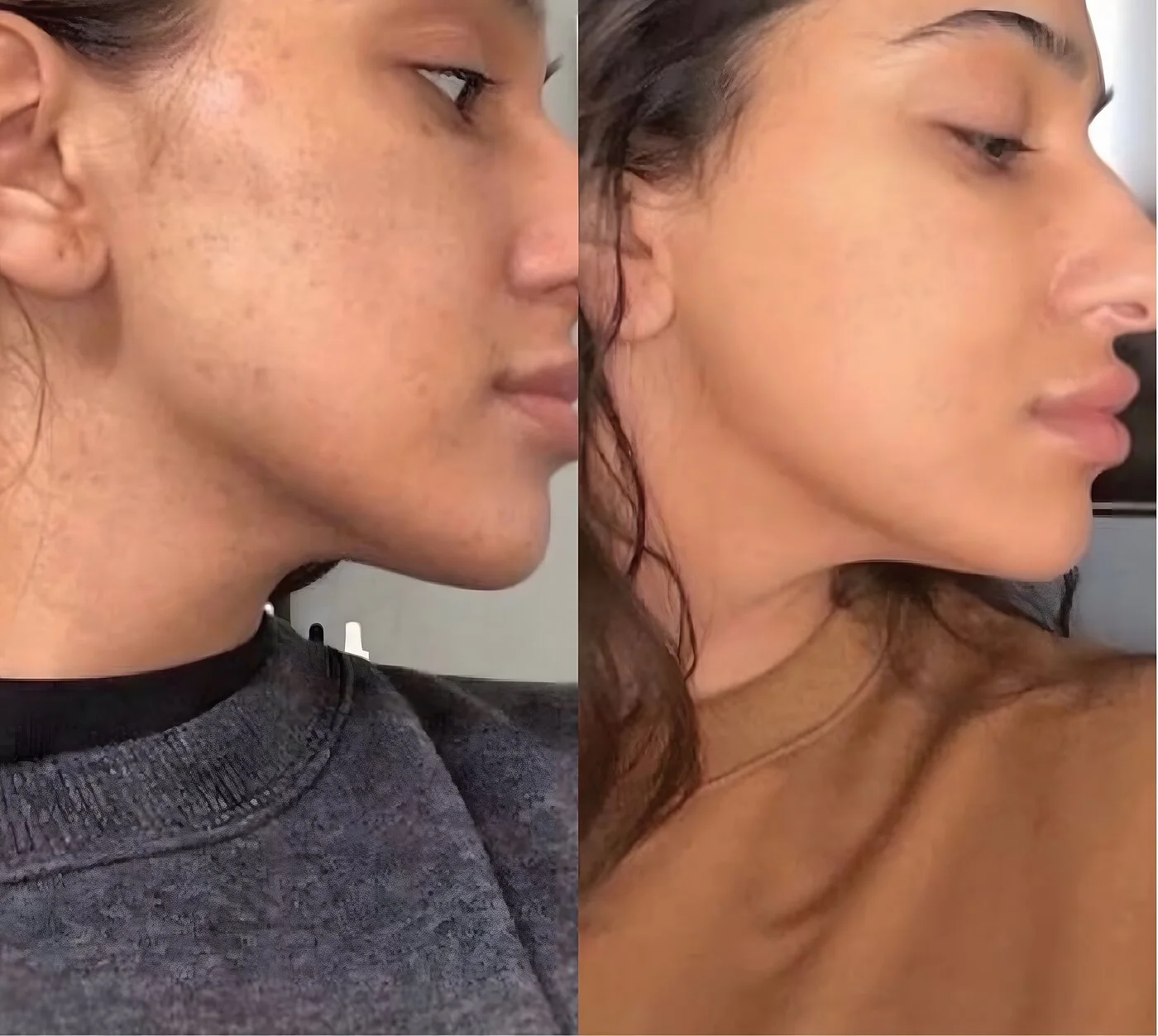 Before → After
Courtesy of the VI Peel provider network
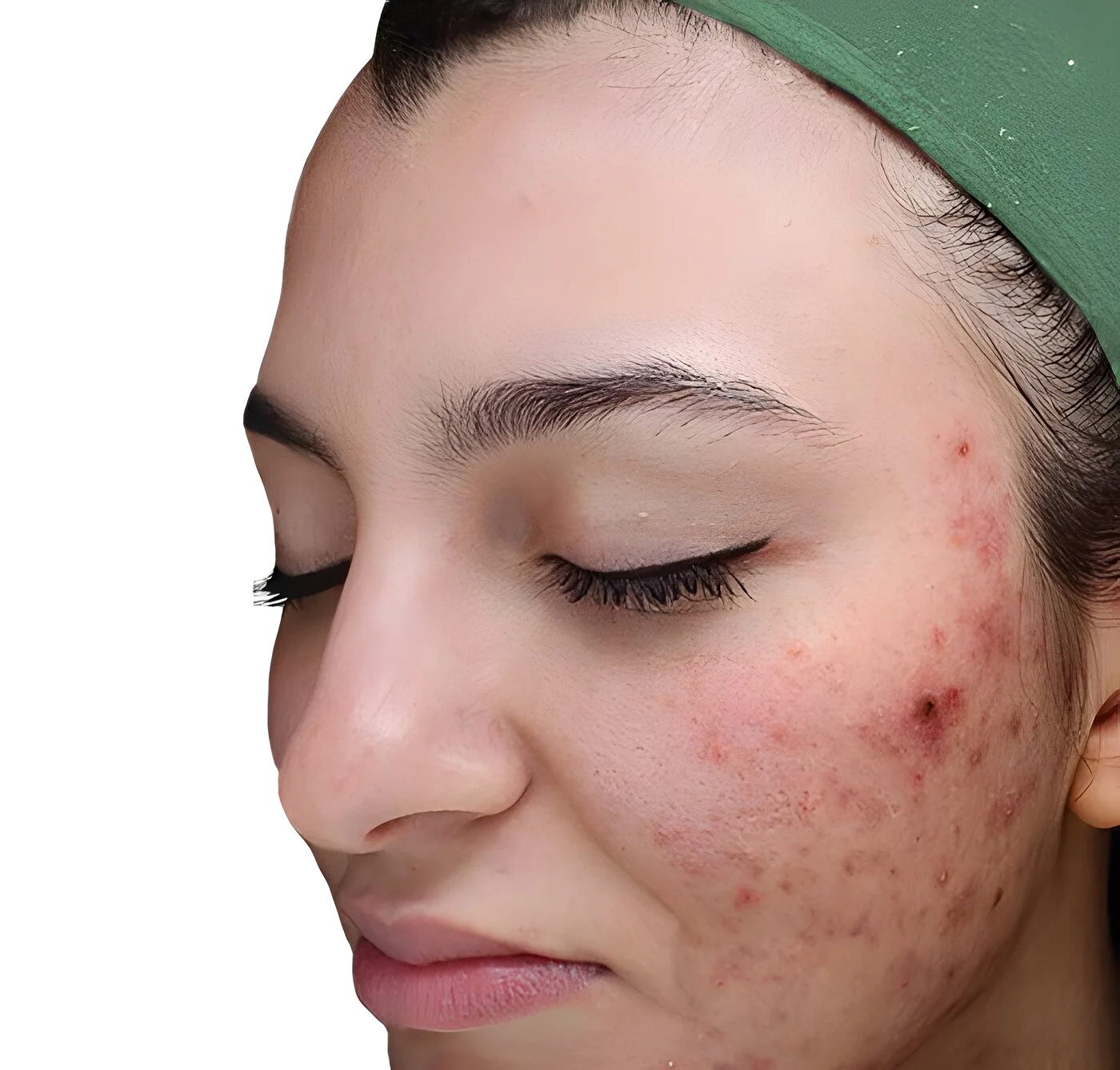
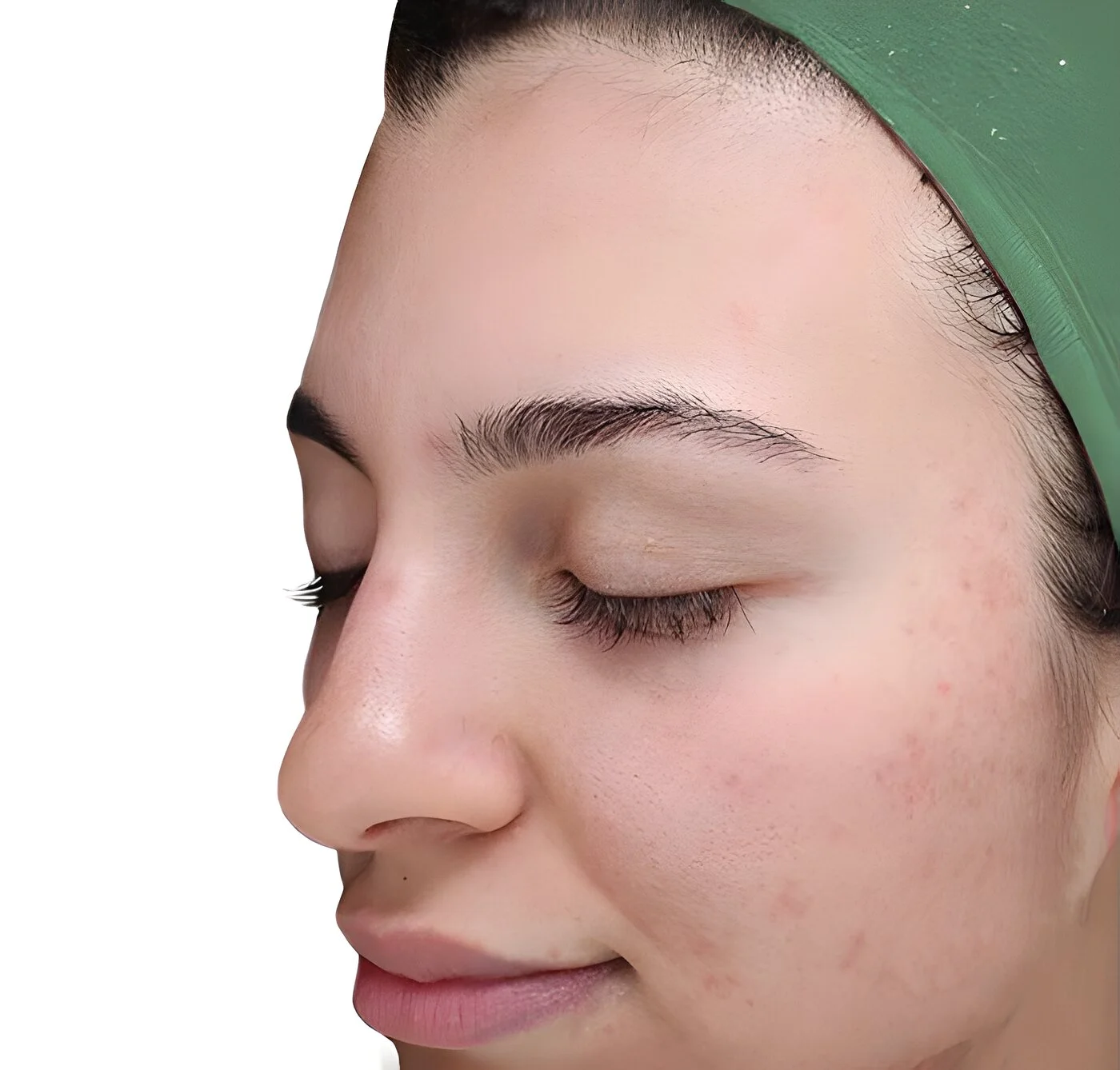 Before / After
Courtesy of the VI Peel provider network
Not sure what type of scar you have? That's the consult.
Our Brickell team identifies the scar type, its age and your skin tone in person, then recommends a tone-safe plan — or tells you when a scar needs a specialist or only partial improvement is realistic.
Miami Skin Spa · Brickell · 1501 South Miami Avenue #201, Miami, FL 33129 · 305-557-1615
A plan, not a single visit
There's no one-and-done scar removal in Brickell — or anywhere. Scar treatment works best as a short series, often combining tools matched to the scar.3,5
Sessions & maintenance
Most plans run 3–6 sessions, about 4–6 weeks apart; RF microneedling is often around 3–4, microneedling a few more. Results build over roughly three months, with the scar continuing to mature afterward.10,13
What it costs
Cost depends on the device, the size and number of scars, and the sessions needed, and treatments are usually offered as packages. We give a clear, itemized quote at your consultation — see pricing and real results.
Combination plans
The best outcomes often layer treatments: RF microneedling or microneedling for texture, Lumecca IPL for redness, and pico laser or peels for pigment — plus silicone at home for raised scars.5,12
The Miami advantage
Scar treatment in Brickell has to be tone-aware. Microneedling and radiofrequency work by depth rather than pigment, making them comparatively safe for the deeper skin tones common across Miami; when we treat scars in Brickell we choose pico-laser and conservative settings for color — protecting against the pigment changes that aggressive lasers can cause.18
One menu, matched to your scar
We treat scars in Miami across every type and skin tone. Because we carry the full range — Morpheus8 and Morpheus8 Body, SkinPen microneedling, Pico Genesis and Enlighten lasers, Lumecca IPL and medical-grade peels — we're not selling a single device. We identify the scar type, its age and your skin tone, recommend what fits, combine when it helps, and refer or co-manage for keloids and scars that need a specialist. Treatments are performed by our experienced Brickell team.
Explore the treatments & related concerns
Frequently asked questions
No. A scar is permanent; treatment can make it markedly smoother, flatter and more even in color, but it can't restore unscarred skin.1 Our goal is meaningfully less-noticeable, especially when we treat early and match the tool to the scar.
There's no single best — it depends on the type. Depressed scars suit microneedling or RF microneedling; raised scars start with silicone and add energy; red scars respond to Lumecca IPL; pigmented marks to pico laser and peels. Our tool above and a consultation match it to you.2,4
Keloids are the hard exception. They grow beyond the wound and recur in roughly 50–80% after excision alone, so they usually need a dermatologist or plastic surgeon and combination care (steroid or 5-FU injections, excision with radiotherapy). We help with supportive measures, and refer or co-manage.19,20
Yes, with the right device. Microneedling and carefully-dosed RF microneedling work by depth rather than targeting pigment, making them comparatively safe in Fitzpatrick IV–VI, while aggressive ablative lasers and deep peels carry more risk of pigment change. Your skin type is always assessed first.18
Sources & further reading
International scar-management consensus statements, dermatology-society guidance, systematic reviews, meta-analyses, primary clinical studies and device/FDA information on scar treatment (atrophic, hypertrophic, keloid and pigmented scars). Where a stable link was available it is included. Links open in a new tab.
- American Academy of Dermatology — Scars and stretch marks (cosmetic). Many scars fade with time and treatment can help, but it is always best to prevent a scar; like any scar, the change to the skin is permanent, and treatment makes it less noticeable rather than removing it. https://www.aad.org/public/cosmetic/scars-stretch-marks
- Mustoe TA, Cooter RD, Gold MH, et al. International clinical recommendations on scar management. Plast Reconstr Surg 2002;110(2):560–571 (PMID 12142678) — an expert-panel, evidence-based framework; many techniques are used widely but few are backed by large controlled trials with long follow-up. https://pubmed.ncbi.nlm.nih.gov/12142678/
- Gold MH, Berman B, Clementoni MT, et al. Updated international clinical recommendations on scar management. Dermatol Surg 2014;40(8):825–831 — laser therapy has moved to the forefront; silicone gel/sheeting is a preferred initial option; 5-fluorouracil with intralesional corticosteroid is supported for hypertrophic scars and keloids; treatment should not begin before the wound has epithelialized. https://laserplast.org/wp-content/uploads/Updated_International_Clinical_Recommendations_on.2.pdf
- Management of keloids and hypertrophic scars. Am Fam Physician 2024;110(6):605–611 — keloids and hypertrophic scars arise from an aberrant wound-healing response with disorganized, excessive collagen; corticosteroid injection is effective for prevention and treatment, alongside silicone gel sheets and pressure therapy. https://www.aafp.org/afp/2024/1200/keloids-hypertrophic-scars
- Layered management of hypertrophic scars and keloids (narrative review, 2025) — evidence most consistently supports early silicone gel/sheets for prevention and early hypertrophic scars; intralesional triamcinolone combined with 5-fluorouracil is a practical pharmacologic backbone; no single modality is uniformly curative, and outcomes vary by site, thickness, skin type and time since injury. https://pmc.ncbi.nlm.nih.gov/articles/PMC12918423/
- Davies CE, et al. A scoping review of the treatment of hypertrophic scars and keloids. Dermatological Reviews 2024 — surveys the major consensus guidelines and algorithms (Ogawa; Gold international panel; laser-treatment consensus) for these abnormal healing responses. https://onlinelibrary.wiley.com/doi/full/10.1002/der2.118
- Salameh F, Shumaker PR, Goodman GJ, et al. Energy-based devices for the treatment of acne scars: 2022 international consensus recommendations. Lasers Surg Med 2022;54(1):10–26 — consensus on lasers and energy devices for acne scarring. https://doi.org/10.1002/lsm.23484
- SkinPen Precision — U.S. FDA De Novo classification DEN160029 (Class II, Reg. 878.4430, code QAI) for improving the appearance of facial acne scars; manufacturer pivotal data report ~80% of patients noticed improvement in acne-scar appearance one month after treatment. https://www.skinpen.com/the-results
- Efficacy of microneedling as monotherapy for atrophic acne scars: a systematic review and meta-analysis. J Am Acad Dermatol 2019 — microneedling is an effective nonablative option for atrophic acne scars with few adverse effects. https://www.jaad.org/article/S0190-9622(19)31743-8/abstract
- Microneedling in the treatment of atrophic scars: a systematic review of randomised controlled trials (PMC8450803) — nine RCTs; microneedling was effective as monotherapy or in combination, with improvement as early as three sessions and outcomes comparable to fractional laser and fractional microneedle radiofrequency. https://pmc.ncbi.nlm.nih.gov/articles/PMC8450803/
- Mujahid N, Shareef F, Maymone MBC, Vashi NA. Microneedling as a treatment for acne scarring: a systematic review (Dermatol Surg 2019; summary) — across studies, microneedling improved atrophic scars; in one cohort 73% of grade-4 scars improved by two Goodman–Baron grades. https://www.dermatologytimes.com/view/studies-support-microneedling-efficacy-acne-scarring
- Efficacy of microneedling and CO2 laser for acne-scar remodelling: a comprehensive review (PMC10978375) — both improve acne scars by different mechanisms (collagen induction vs ablative resurfacing) with different risk profiles; combination can enhance outcomes. https://pmc.ncbi.nlm.nih.gov/articles/PMC10978375/
- Fractional CO2 laser versus hyaluronidase injection in early scar treatment: a randomized controlled study (PMC12178957) — in 60 patients over 4–6 sessions with 6-month follow-up, the CO2 laser arm achieved a ~45.3% reduction in scar volume and a ~52.4% improvement on the Vancouver Scar Scale, both significantly greater than the comparator (~38.9%). https://pmc.ncbi.nlm.nih.gov/articles/PMC12178957/
- Ji C, et al. Fractional CO2 laser to treat surgical scars: a systematic review and meta-analysis on optimal timing. J Cosmet Dermatol 2025 — fractional laser softens and flattens surgical scars, and timing of intervention influences results. https://onlinelibrary.wiley.com/doi/full/10.1111/jocd.16708
- Osman MA, Kassab AN. Fractional Er:YAG laser versus fractional CO2 laser in the treatment of immature and mature scars: a comparative randomized study. Arch Dermatol Res 2024 — both ablative fractional lasers improved post-traumatic and post-surgical scars across scar age. https://pmc.ncbi.nlm.nih.gov/articles/PMC10796705/
- Fractional CO2 laser to improve noticeable facial scars after skin-cancer surgery (PMC8459294) — esthetically disturbing postoperative facial scars were significantly improved as judged by patients, laypersons and experts. https://pmc.ncbi.nlm.nih.gov/articles/PMC8459294/
- Fractional CO2 laser for acne scars — ablative resurfacing review (2025) — by the ECCA scale, ablative laser resurfacing improvement typically ranges from ~40% to as high as ~75%, with greater improvement carrying a greater likelihood of adverse events. https://www.mdpi.com/3042-6774/1/1/2
- Safety and effectiveness of an automated microneedling device in improving acne scarring (JCAD) — aggressive ablative resurfacing and deep peels yield significant improvement but carry downtime and a risk of hypopigmentation and dyspigmentation, especially in higher Fitzpatrick skin types; microneedling carries lower risk across skin tones. https://jcadonline.com/automated-microneedling-acne-scarring/
- Frequency of keloid recurrence after surgical excision: a cohort study (PMC11960156) — keloids extend beyond the original wound margins, and recurrence after surgical excision alone is reported at roughly 50–80%, falling to about 29% with adjuvant radiotherapy. https://pmc.ncbi.nlm.nih.gov/articles/PMC11960156/
- Surgical excision with adjuvant therapies in the management of keloids: a systematic review (Medicina 2026;62(5):916) — 21 studies and more than 8,600 patients; recurrence with intralesional triamcinolone ranged ~6.6–33% and with postoperative brachytherapy ~3.1–15%, and combination therapy consistently outperformed monotherapy. https://doi.org/10.3390/medicina62050916
- Adjuvant radiotherapy following surgical excision of keloids: a review (Medicina 2021;57(7):730) — keloids occur in roughly 5–15% of wound-healing cases, excision alone yields high recurrence, and the international panel regards postoperative radiotherapy plus excision as among the most effective options for serious keloids. https://www.mdpi.com/1648-9144/57/7/730/htm