Acne scar treatment
in Brickell, Miami.
What acne scars are, how clinicians classify them, and exactly how we treat each type in Brickell — SkinPen, Morpheus8, VI peels, Pico Genesis, and Sculptra, sequenced the way the peer-reviewed evidence says combinations should be. The research-grade deep dive is all still here, right after the plan.
Evidence-based📍 1501 South Miami Ave #201, Brickell🔬 35 cited sources · peer-reviewed & FDA🗓️ Reviewed 2026
What the science shows — and what we do about it
Acne scarring is not a single problem with a single fix. It is a family of distinct lesions — ice pick, boxcar, rolling, and the less common raised hypertrophic and keloid scars — each responding to different tools.5,28 Decades of clinical research converge on one principle: treatment is morphology-driven, and combination protocols outperform any single modality.13,28 Our Brickell scar menu is built around exactly that principle.
The four shapes of an acne scar
Accurate diagnosis is the foundation of effective treatment — and even experts find classification challenging.4 Select a scar type below to see how its shape changes the skin and which of our treatments match it. The same selection drives the evidence matrix further down.
Rolling
tetheredWide, shallow, undulating depressions tethered to deeper tissue by fibrous bands that pull the surface downward.27,28
How clinicians grade severity
Validated scales let providers measure progress objectively rather than by impression:
The Goodman & Baron Qualitative scale runs from Grade 1 (flat discoloration) → 2 (mild) → 3 (moderate, visible at conversational distance) → 4 (severe, not flattened by stretching the skin).1 A companion quantitative version (0–84) counts lesions by type, and the ECCA scale weights each subtype by severity.2
Most people have a mix
Few faces show a single scar type. The standardized atrophic subtypes were defined by Jacob and colleagues and are used by roughly three-quarters of acne specialists,3 but real cases blend them — which is why effective plans combine several tools rather than relying on one device. Identifying your dominant pattern is the first job of a consultation.
How we treat each shape at Miami Skin Spa
The evidence says match the tool to the morphology, then combine.28,35 Here is what that looks like on our Brickell menu — and where we'll honestly tell you a referral belongs in the plan.
Rolling scars — the most common pattern
Wide, tethered depressions respond to collagen induction at depth. Our first line is Morpheus8 RF microneedling to remodel the deep dermis — split-face trials show results comparable to ablative CO₂ with milder, shorter downtime20 — with SkinPen sessions building collagen between, and a Sculptra or HA filler spacer lifting the surface while new collagen forms.27,29
Boxcar scars — sharp-walled craters
RF microneedling and fractional laser are first-line for boxcar scars,34 and both live on our menu: Morpheus8 for depth, with resurfacing lasers and Pico Genesis FX — its dedicated scar-revision mode — refining the surface and edges.23
Ice-pick scars — deep and narrow
The most stubborn type: surface resurfacing alone can't reach the base.34 We build a focal plan around VI peel programs and Pico Genesis FX spot work, and when a handful of scars genuinely call for chemical reconstruction (TCA CROSS) or punch techniques, we say so, coordinate that referral, and run the resurfacing series that completes the result.25,26
Red & brown marks — not scars at all
Flat discoloration is post-inflammatory pigment, not a contour change — and it clears differently. VI peels, Pico Genesis and Lumecca IPL fade the marks while daily SPF keeps them from re-darkening.34 See our hyperpigmentation hub for the full protocol.
Raised (hypertrophic / keloid) scars are the opposite problem — too much collagen, not too little — and need a tissue-reducing plan such as intralesional steroids, usually with a dermatologist.7 We assess, co-manage, and make that referral when it's the right call.
Treatments we use for acne scars
Not sure which type you have?
That's the right question — and it's exactly what a consultation answers. Our providers in Brickell assess your scar types and skin tone, then build a combination plan matched to the evidence on this page.
Miami Skin Spa · Brickell · 1501 South Miami Ave #201, Miami FL 33129 · 305-557-1615
What the research actually says
Tap any treatment to expand the evidence. Two caveats apply throughout: many trials are small or split-face (one half of the face vs the other), and the 2016 Cochrane review judged much of this literature moderate-to-low certainty with a meaningful risk of bias.12 Numbers describe study populations — your results depend on your scars, your skin, and your plan.
Microneedling (SkinPen)
Fine needles create thousands of microchannels that trigger collagen induction — with minimal heat or downtime.The first microneedling device FDA-cleared specifically for facial acne scars (De Novo DEN160029, Class II). In its pivotal trial — three sessions, four weeks apart — about 90% of patients showed improvement in scar appearance at six months, with high satisfaction. Because it uses mechanical injury rather than heat, it is well tolerated across skin tones.16,17,5
Offered here as SkinPen Microneedling →RF microneedling (Morpheus8)
Needles deliver radiofrequency heat into the deep dermis, driving more pronounced remodeling than microneedling alone.A 2025 systematic review found RF microneedling an effective monotherapy for facial acne scars and safer for darker skin tones, with mostly transient redness. Split-face trials show efficacy comparable to ablative CO₂ with milder, shorter-lived side effects (about a 46% ECCA reduction in one controlled study). Morpheus8 holds a 2024 FDA 510(k) clearance for soft-tissue coagulation/contraction in dermatologic procedures.18,19,20,21
Offered here as Morpheus8 →Chemical peels (VI Peel)
Controlled medical-grade exfoliation improves tone and surface texture, and clears the post-acne pigment that lasers leave behind.Medium-depth peels improve surface texture and post-inflammatory pigment, and a 2025 meta-analysis found combining microneedling with peels significantly outperforms either alone (odds ratio ~5.7 vs microneedling; ~8.9 vs peels) — which is exactly how we sequence them. The literature also describes TCA CROSS, a focal high-strength-acid technique for deep ice-pick scars (over 70% improvement in roughly 73–80% of patients in pilot studies); when a handful of scars call for it, we coordinate that referral and handle the resurfacing around it.14,25,26,28
Offered here as VI Chemical Peels →Laser resurfacing (Pico Genesis & fractional)
Fractional lasers create microscopic columns of treated tissue; non-ablative and picosecond lasers remodel beneath the surface without vaporizing it.Non-ablative and picosecond lasers deliver meaningful scar improvement with lower pigment risk — better suited to milder scars and richly pigmented skin, where they perform comparably in clinical improvement. Our Pico Genesis FX runs in a dedicated scar-revision mode. Ablative fractional CO₂ remains the most aggressive option in the literature (26–75% improvement, with more downtime and higher pigment risk in deeper skin tones); split-face trials show Morpheus8-style RF microneedling matching it with milder side effects, which is why RF leads our deep-scar plans.23,13,22,20
Offered here as Pico Genesis Laser →Fillers & biostimulators (Sculptra / HA)
Add volume to lift depressed scars and stimulate the skin's own collagen.Poly-L-lactic-acid biostimulators (Sculptra) and hyaluronic-acid fillers lift distensible rolling and shallow boxcar scars while new collagen builds; PLLA studies report ~68–75% improvement in rolling scars lasting 18–24 months. These uses are off-label — common and legal in the practice of medicine — and we walk you through that at consult. For completeness: the one filler FDA-approved specifically for acne scars is PMMA-collagen (Bellafill, 64% response vs 33% control at 6 months); we favor biostimulators and HA because they are reversible or naturally resorbed, and we'll tell you honestly if a permanent filler elsewhere is worth considering for your scars.29,30,28
Offered here as Sculptra Biostimulator →Exosomes (optional add-on)
Cell-signaling vesicles layered onto microneedling or Morpheus8 — an active research frontier.Encouraging early data in skin rejuvenation and scarring, but exosome products are not FDA-approved for treating acne scars and remain investigational. We offer them as an optional add-on to SkinPen and Morpheus8 sessions with exactly that framing — a possible accelerant, not an established standard of care.33
Subcision (via referral)
A needle or cannula is passed beneath a scar to cut the fibrous bands tethering it down.The literature's treatment of choice for tethered rolling scars, usually combined with collagen induction or a filler spacer to hold the released tissue up while new collagen forms. We don't perform subcision in-house: for most rolling scars our Morpheus8-plus-spacer protocol covers the same ground, and when true focal subcision is the better call we say so plainly and coordinate the referral — then run the collagen-building series that completes the result.27,28
Platelet-rich plasma (via referral)
Growth factors concentrated from your own blood enhance healing when added to needling or laser.Adding PRP to microneedling roughly tripled the odds of over-50% improvement (OR 2.97) with faster recovery, though an umbrella review judges overall certainty low. We get the comparable growth-factor effect through our exosome add-on; if you specifically want PRP we'll point you to the right provider.31,32,28
Evidence at a glance
| Treatment | How it works | Representative evidence | Best for | At MSS |
|---|---|---|---|---|
| Microneedling (SkinPen) | Mechanical micro-injury → collagen induction | ~90% improved at 6 mo in pivotal trial17 | Rolling, shallow boxcar; all skin tones | Offered here |
| RF microneedling (Morpheus8) | Needles + radiofrequency heat → deep remodeling | ≈46% ECCA reduction; ≈CO₂ with fewer side effects20 | Deeper boxcar / rolling; safer in skin of color | Offered here |
| VI chemical peels | Controlled medical-grade exfoliation | Peels + microneedling beat either alone (OR ~5.7–8.9)14 | Tone / PIH; surface texture between sessions | Offered here |
| Pico / non-ablative laser | Sub-surface photoacoustic or heat remodeling | Comparable improvement; lower PIH risk23 | Milder scars; richly pigmented skin | Offered here |
| Fillers & Sculptra | Volume + collagen stimulation | PLLA ~68–75% improvement in rolling scars29 | Distensible rolling & boxcar | Offered here |
| Exosome add-on | Cell-signaling vesicles; investigational | Early-stage data only33 | Optional accelerant with SkinPen / Morpheus8 | Optional add-on |
| TCA CROSS (focal) | Focal high-strength acid in deep scars | over 70% improvement in ~73–80% (pilot)25 | Ice-pick scars (focal only) | Via referral |
| Subcision | Cuts fibrous tethers anchoring the scar | Strongest for tethered rolling scars27 | Tethered rolling scars | Via referral |
| Ablative CO₂ laser | Ablative columns → strong dermal remodeling | 26–75% improvement; more downtime & PIH risk22 | Severe scars in lighter skin tones | Via referral |
Which treatment for which scar
Expert reviews recommend a morphology-driven approach: focal reconstruction for ice pick, depth-stratified resurfacing for boxcar, tether-release plus collagen induction for rolling — usually in combination.28,35 Click a scar type to highlight its evidence row (it also updates the cross-section up in section 01). This is a map of the evidence, not a substitute for an in-person assessment.
| Scar type | SkinPen micro-needling | Morpheus8 RF | VI peels / CROSS* | Pico / fractional laser | Subcision* | Sculptra / filler |
|---|---|---|---|---|---|---|
| Ice pickdeep · narrow | limited | adjunct | first-line | adjunct | limited | limited |
| Boxcarsharp walls | adjunct | first-line | adjunct | first-line | limited | adjunct |
| Rollingtethered | first-line | first-line | limited | adjunct | first-line | first-line |
| Hypertrophic / keloidraised | avoid | limited | limited | select | — | — |
The bottom line on "removal"
Significant, often life-changing improvement in smoothness and tone is a realistic goal. Complete removal of deep scars is uncommon with any single treatment, and the highest-quality reviews consistently emphasize combination protocols and realistic expectations over any one "miracle" device.34,13
A protocol, not a one-off
Scar revision rewards sequencing: a deep remodeling tool, a surface tool, and where it helps, a volumizing spacer — delivered as a planned series.13,28
Sessions & cadence
Most evidence-based plans run 3–6 sessions spaced 4–6 weeks apart, with collagen remodeling continuing for 6–12 months after the last session.12 Needling and RF downtime is usually a day or two of redness; give each step four to six weeks before judging it.
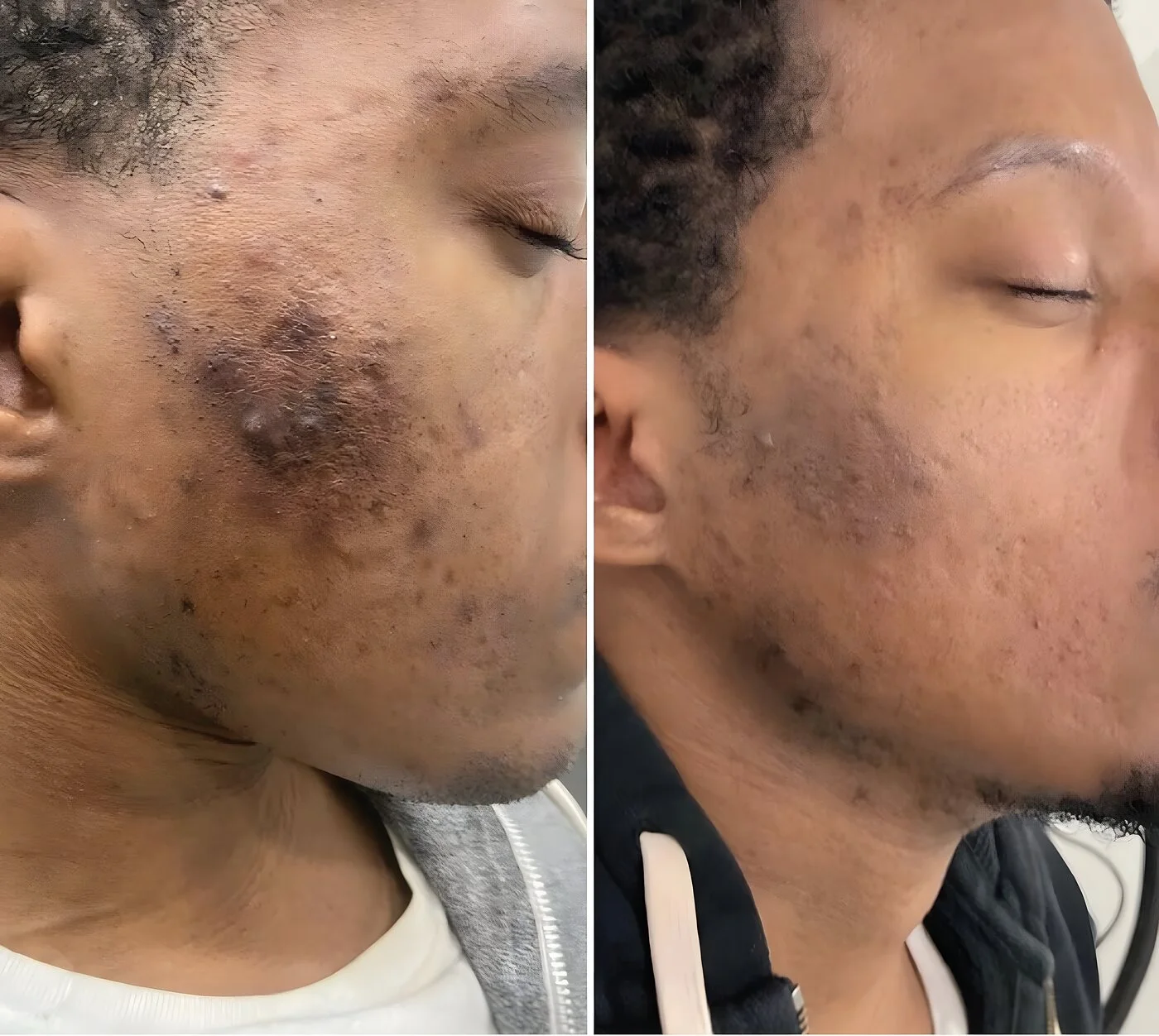
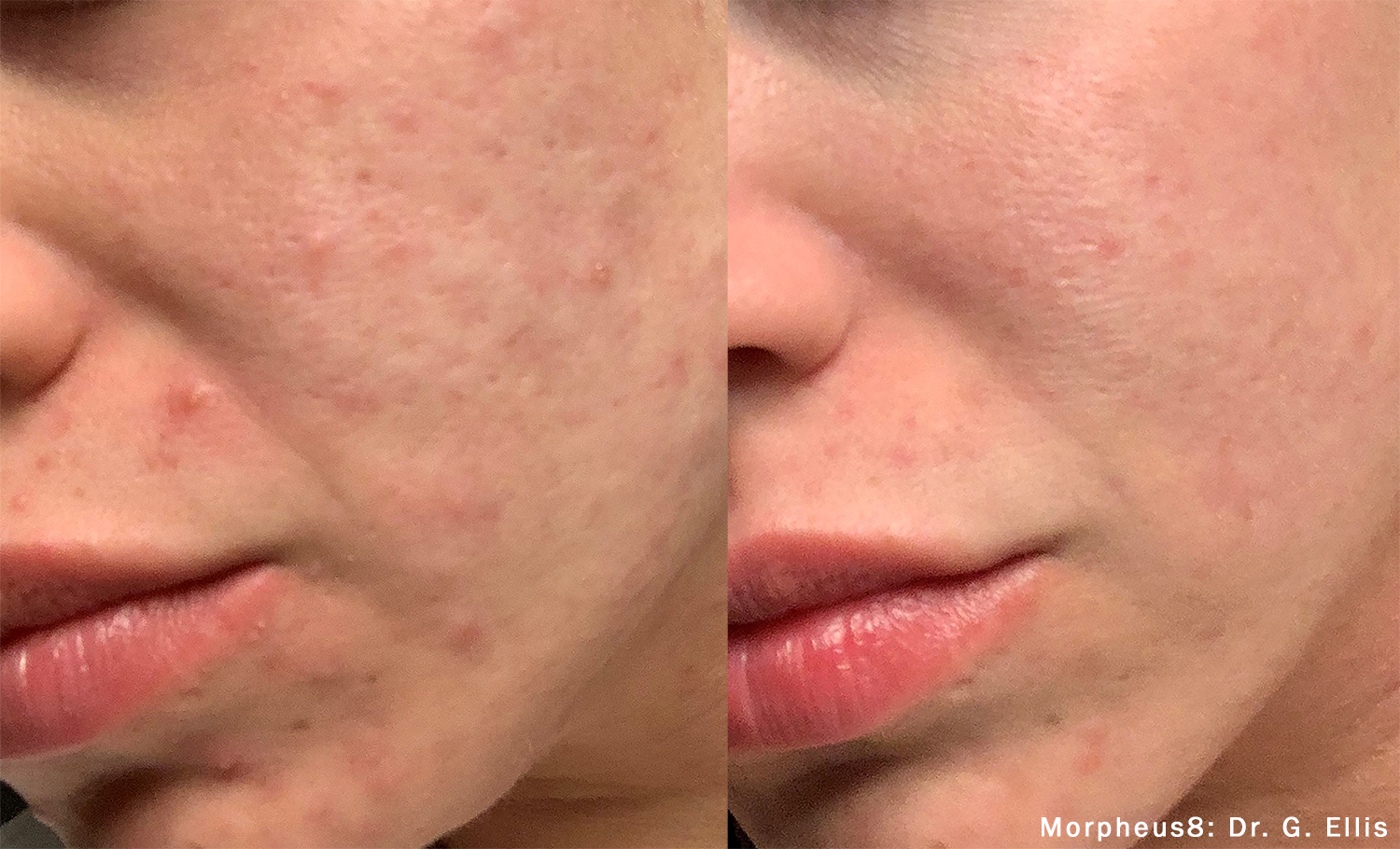
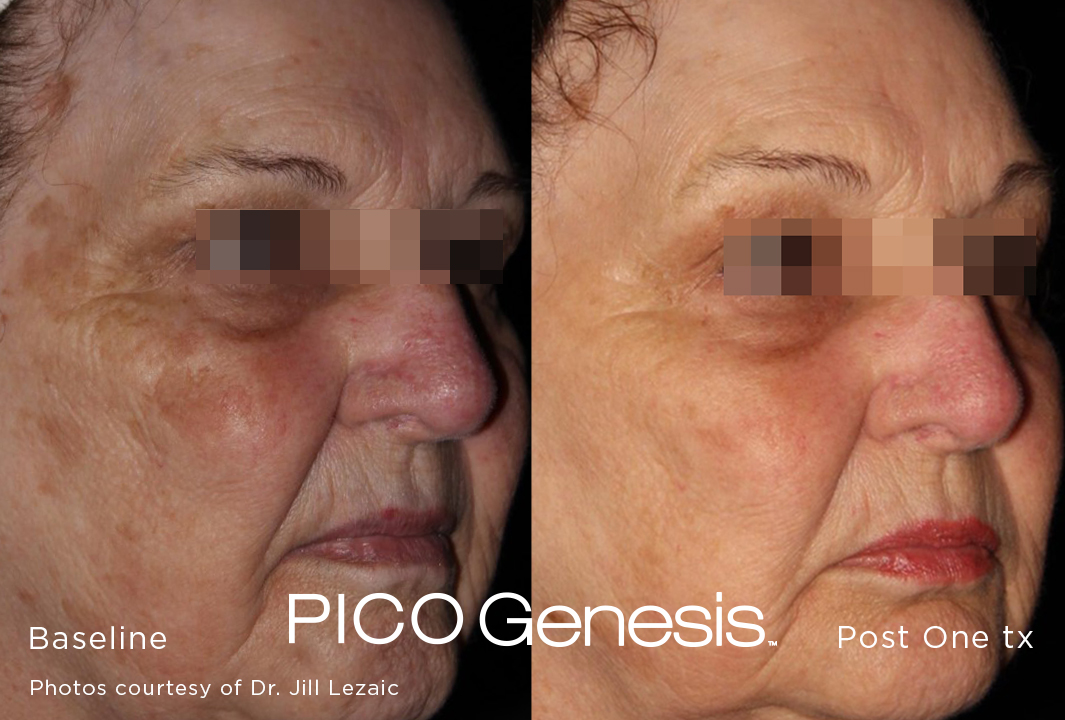
Before & after — treatments we use
Why skin tone changes the plan
In a diverse city like Miami, this is one of the most important parts of scar treatment. Richly pigmented skin (Fitzpatrick III–VI) is more prone to post-inflammatory hyperpigmentation (PIH) — temporary darkening — after aggressive heat-based treatments.28 Choosing the right tool is therefore a safety decision.
Gentler on deeper tones
Microneedling, RF microneedling, and non-ablative / picosecond lasers carry lower pigment risk and are often preferred starting points in skin of color18,23 — which is exactly why SkinPen, Morpheus8 and Pico Genesis lead our plans.
Use with extra care
Ablative CO₂ laser is powerful but carries higher PIH risk in deeper tones — one reason we favor RF microneedling, which matches its results in split-face trials with milder side effects.28,20
Universal aftercare
Strict daily SPF and avoiding sun around treatment reduce pigment complications and protect results across all skin types.5
A note on downtime & expectations
Most evidence-based plans involve 3–6 sessions spaced 4–6 weeks apart, with collagen remodeling continuing for 6–12 months after the last session.12 Side effects from needling / RF are usually limited to a day or two of redness. Give each treatment four to six weeks to show its effect before judging it.
Why acne scars are a medical concern, not a cosmetic afterthought
Acne vulgaris affects roughly 85% of people aged 12–24, and more than 70% of those over 20 continue to experience it.11 Measured in disability-adjusted life years, acne's global disease burden ranks above urticaria, psoriasis, and even melanoma.11 Scarring is one of its most lasting consequences — and the research is clear that it carries real psychological weight.
Post-acne scarring is common. Estimates vary with how scarring is defined, but it is frequent enough that prevention and early treatment are now considered part of good acne care.5 Researchers increasingly treat acne scarring as a distinct condition from active acne, with its own clinical and psychological profile that persists long after breakouts stop.9
A 2025 multicenter study of patients with pigmented skin used validated instruments — the PHQ-9 for depression and the Dermatology Life Quality Index (DLQI). It found 62% reported depressive symptoms and 84% reported diminished quality of life, with scar severity correlating significantly with both.10 A separate cohort found clinical depression in roughly 38% of acne-scar patients.9
The takeaway is not to alarm — it's to validate. If your scars affect how you feel in your own skin, that response is documented, common, and a legitimate reason to seek care.
Prevention is part of treatment
The single most effective scar treatment is preventing scars in the first place: early, adequate control of inflammatory acne and avoiding picking or squeezing lesions are central to limiting scarring.5 Daily SPF and nightly retinoids support this. Once scars are established, topical care alone rarely resolves contour change — that's where procedural treatment comes in.5 If you're still breaking out, start with our acne treatments hub.
How a breakout becomes a scar
What causes acne scars? A scar is the visible record of a wound-healing process that didn't return the skin to baseline — and the biology is the same whether you call it an acne scar or a pimple scar. It also explains why effective treatments all share one strategy: controlled re-injury to rebuild collagen.
Acne begins in the pilosebaceous unit, where excess sebum, abnormal keratin buildup, Cutibacterium acnes, and an inflammatory cascade combine.6 When that inflammation is intense or prolonged, it ruptures the follicle and damages the surrounding dermis.7
The driver of the damage is enzymatic. Inflammatory signaling activates transcription factors (notably NF-κB and AP-1), which switch on inflammatory cytokines and matrix-degrading enzymes called matrix metalloproteinases (MMPs).8 MMPs break down the collagen scaffold of the dermis. Whether the result is a depression or a raised lesion comes down to the balance between MMPs and their inhibitors during repair:7
Too little net collagen rebuilt → an atrophic (depressed) scar — roughly 80–90% of acne scars.7
Too much collagen laid down → a raised hypertrophic scar or, beyond the wound borders, a keloid — more common on the chest, back, and jaw.7
This is also why early scars look red or brown: those flat marks are post-inflammatory erythema and hyperpigmentation (PIE/PIH), a color change rather than a contour change — and they're treated differently from true scars.34
Why this maps to our toolkit
Almost every effective atrophic-scar treatment works the same way: a controlled micro-injury that triggers wound healing and lays down fresh, organized collagen.5 What separates the tools is how deep they reach — which is the structural reason our plans pair a deep remodeler (Morpheus8 or SkinPen) with a surface tool (VI peels or Pico Genesis) and, where scars are distensible, a Sculptra or filler spacer.5,28
What happens when you pool every trial
A 2025 network meta-analysis pooled 68 randomized controlled trials covering 4,480 patients — the broadest synthesis to date. It ranked treatments using SUCRA scores (a 0–100% ranking probability). The headline reinforces everything above: combinations win.13
What Cochrane concluded
The 2016 Cochrane review (24 RCTs) found moderate support for injectable fillers and limited support for lasers, peels, RF and needling — and could not crown a single best treatment, largely because trials were small and at risk of bias.12 Newer meta-analyses since then strengthen the case for combination therapy specifically.13,14
What this means for your plan
The evidence doesn't point to one universal "best" treatment — it points to the right combination for your scars and skin, delivered over a series of sessions. Pairing a deep remodeling tool with a surface or volumizing one is the most evidence-aligned strategy, and it's exactly how we build a plan.13,28
Build your scar plan in Brickell
Significant, often life-changing improvement is a realistic goal — and it starts with identifying your scar mix. Our providers assess your scar types and skin tone, then build a combination plan from the tools on this page.
Miami Skin Spa · Brickell · 1501 South Miami Ave #201, Miami FL 33129 · 305-557-1615
Frequently asked questions
An acne scar means the skin's structure changed while healing a breakout — a lasting texture change (a pit or a bump), not just a leftover mark.7 Patients often say pimple scars; clinicians say acne scarring — it's the same thing. About 80–90% are atrophic depressions from collagen loss, classified by shape as ice pick, boxcar, or rolling, with raised hypertrophic and keloid scars less common.7 Flat red or brown spots are usually post-inflammatory marks (PIE/PIH) — a color change, not a scar.
Most evidence-based protocols involve 3–6 sessions spaced about 4–6 weeks apart, with continued improvement as collagen remodels over the following 6–12 months.12 Deeper or mixed scarring, and combination plans, may run on the higher end. Your provider sets the number at your consultation.
Significant, often dramatic improvement in smoothness and tone is realistic. Complete erasure of deep scars is uncommon with any single treatment — which is why clinicians emphasize combination approaches and realistic expectations.34,13 The goal is skin you feel confident in, not an impossible zero.
It depends on morphology, and most people have a mix. In brief: rolling scars respond best to our collagen-building tools — Morpheus8 or SkinPen — with a Sculptra or filler spacer; boxcar scars to Morpheus8 and Pico Genesis / fractional laser; ice-pick scars to focal VI peel work and Pico Genesis FX (with a coordinated referral for TCA CROSS or punch techniques where a few scars need it); and pigment marks to peels and Pico Genesis.28,34 We map the combination at your consultation.
Yes, with the right tool. Microneedling, RF microneedling, and non-ablative / picosecond lasers have lower risk of post-inflammatory hyperpigmentation and are often preferred in Fitzpatrick III–VI skin — which is exactly why SkinPen, Morpheus8 and Pico Genesis lead our plans; ablative CO₂ is used more cautiously.18,28 Matching device and settings to your skin tone is central to safe treatment.
Yes — the best scar treatment is preventing scars. Early, effective control of inflammatory acne and not picking lesions are the most important steps, supported by daily SPF and nightly retinoids.5 If you currently have active acne, start with our acne treatments hub — treating breakouts well now reduces future scarring.
The strongest predictors are depth and duration of inflammation: deep, painful lesions like nodules and cysts, breakouts that linger for weeks, and anything picked or squeezed carry the highest scar risk.5 Once it heals, a fingertip test helps — if you feel a dent or a bump, that's a true scar; if it's flat but discolored, it's more likely a temporary mark.5
Those flat marks are usually post-inflammatory erythema (red) or hyperpigmentation (brown) — a color change, not a contour change — and they often fade with time, sun protection, and pigment-focused treatments like peels and Pico Genesis, separately from true scar treatment.34
Sources & further reading
Peer-reviewed journals, systematic reviews and meta-analyses, and primary regulatory sources. Where a stable link was available it is included; all entries give a full citation. Links open in a new tab.
- Goodman GJ, Baron JA. Postacne scarring: a qualitative global scarring grading system. Dermatol Surg. 2006;32(12):1458–1466. https://www.semanticscholar.org/paper/Postacne-Scarring%3A-A-Qualitative-Global-Scarring-Goodman-Baron/11008d1aba3a67a9e6c5e912e77812f682075f1f
- Dréno B, Khammari A, Orain N, et al. ECCA grading scale: an original validated acne scar grading scale for clinical practice. Dermatology. 2007;214(1):46–51.
- Jacob CI, Dover JS, Kaminer MS. Acne scarring: a classification system and review of treatment options. J Am Acad Dermatol. 2001;45(1):109–117.
- Tan J, et al. Objective volumetric grading of postacne scarring. J Am Acad Dermatol. 2016. https://www.jaad.org/article/S0190-9622(16)01499-7/fulltext
- Acne scarring—pathophysiology, diagnosis, prevention and education: Part I. J Am Acad Dermatol. 2023. https://www.sciencedirect.com/science/article/abs/pii/S0190962222006776
- Acne-induced pathological scars: pathophysiology and current treatments. Burns Trauma. 2024;12:tkad060. https://academic.oup.com/burnstrauma/article/doi/10.1093/burnst/tkad060/7641199
- Fabbrocini G, et al. Acne Scars: Pathogenesis, Classification and Treatment. Dermatol Res Pract. 2010;2010:893080. https://www.ncbi.nlm.nih.gov/pmc/articles/PMC2958495/
- Kang S, et al. Inflammation and extracellular matrix degradation mediated by NF-κB and AP-1 in inflammatory acne lesions in vivo. Am J Pathol. 2005;166(6):1691–1699. https://pmc.ncbi.nlm.nih.gov/articles/PMC1602424/
- Mahajan S, Sawant NS, Mahajan S. Depression, body image and quality of life in acne scars. Ind Psychiatry J. 2023;32(2):282–287. https://pmc.ncbi.nlm.nih.gov/articles/PMC10756596/
- Assessing the Psychosocial Impact of Acne Scars on Individuals With Pigmented Skin: A Multicenter Observational Study. Dermatol Res Pract. 2025. https://www.ncbi.nlm.nih.gov/pmc/articles/PMC12496151/
- Beyond the Surface: A Deeper Look at the Psychosocial Impacts of Acne Scarring. Clin Cosmet Investig Dermatol. 2023. https://www.dovepress.com/beyond-the-surface-a-deeper-look-at-the-psychosocial-impacts-of-acne-s-peer-reviewed-fulltext-article-CCID
- Abdel Hay R, Shalaby K, Zaher H, et al. Interventions for acne scars. Cochrane Database Syst Rev. 2016;(4):CD011946. https://www.ncbi.nlm.nih.gov/pmc/articles/PMC10334917/
- Optimal treatment options for acne scars: a systematic review and network meta-analysis (68 RCTs; 4,480 patients). 2025. https://pmc.ncbi.nlm.nih.gov/articles/PMC12515001/
- Chemical peeling in combination with microneedling vs monotherapy for acne scars: systematic review & meta-analysis. Adv Dermatol Allergol. 2025. https://pmc.ncbi.nlm.nih.gov/articles/PMC12866538/
- Microneedling versus chemical peels for atrophic acne scars: a systematic review and meta-analysis. Cureus. 2025. https://www.cureus.com/articles/487914-microneedling-versus-chemical-peels-for-atrophic-acne-scars-a-systematic-review-and-meta-analysis.pdf
- U.S. FDA. De Novo classification DEN160029 — SkinPen Precision System (Class II), for improving the appearance of facial acne scars. https://www.skinpen.com/about-skinpen
- SkinPen Efficacy on Acne Scars on the Face and/or Back. ClinicalTrials.gov NCT02646917. https://clinicaltrials.gov/study/NCT02646917
- Niaz G, Ajeebi Y, Alshamrani HM, et al. Fractional radiofrequency microneedling as monotherapy for facial acne scarring: systematic review. 2025. https://www.dermatologytimes.com/view/fractional-radiofrequency-microneedling-is-a-safe-monotherapy-for-acne-scarring
- Rattananukrom T, et al. Microneedle fractional radiofrequency + topical insulin for facial atrophic acne scars: split-face RCT. J Cosmet Dermatol. 2025. https://www.ncbi.nlm.nih.gov/pmc/articles/PMC11838817/
- Non-insulated microneedle fractional radiofrequency vs ablative fractional CO₂ laser for facial atrophic acne scarring: split-face RCT. 2025. https://pmc.ncbi.nlm.nih.gov/articles/PMC12228042/
- Morpheus8 secures FDA 510(k) clearance for soft-tissue contraction (fractional RF microneedling). InMode, July 2024. https://www.healio.com/news/dermatology/20240719/fda-clears-first-fractional-radiofrequency-microneedling-tool-for-soft-tissue-contraction
- CO₂ fractional laser vs Er:YAG fractional laser for atrophic acne scars: meta-analysis & systematic review. 2024. https://pubmed.ncbi.nlm.nih.gov/38733085/
- Fractional picosecond laser for atrophic acne scars: a meta-analysis. J Cosmet Dermatol. 2023. https://onlinelibrary.wiley.com/doi/full/10.1111/jocd.15862
- Comparative clinical trials of ablative and non-ablative laser therapies for atrophic, hypertrophic and keloid scars: systematic review. Lasers Med Sci. 2025. https://link.springer.com/article/10.1007/s10103-025-04519-3
- Bhardwaj D, Khunger N. Efficacy and safety of CROSS technique with 100% TCA in ice pick acne scars. J Cutan Aesthet Surg. 2010;3(2):93–96. https://www.ncbi.nlm.nih.gov/pmc/articles/PMC2956965/
- TCA CROSS (chemical reconstruction of skin scars). DermNet, 2024. https://dermnetnz.org/topics/tca-cross
- Combined subcision, PRP and CROSS in atrophic acne scars: prospective split-face study. Clin Dermatol. 2021. https://www.sciencedirect.com/science/article/abs/pii/S0738081X21001334
- Advances in the treatment of acne scars. Front Med (Lausanne). 2025;12:1643035. https://www.frontiersin.org/journals/medicine/articles/10.3389/fmed.2025.1643035/full
- Dermal Fillers in the Treatment of Acne Scars: A Review. Ann Dermatol. 2023. https://pmc.ncbi.nlm.nih.gov/articles/PMC10733075/
- PMMA-collagen (Bellafill) for acne scars — the only FDA-approved filler for this indication (FDA approval Dec 2014); pivotal RCT 64% vs 33% at 6 mo. JCAD. https://jcadonline.com/june-2018-supplement/
- Kang C, Lu D. Combined effect of microneedling and PRP for acne scars: a meta-analysis. Front Med. 2022;8:788754. https://www.ncbi.nlm.nih.gov/pmc/articles/PMC8882957/
- Platelet-rich plasma for acne scars: an overview of systematic reviews (low-certainty evidence). 2023. https://pubmed.ncbi.nlm.nih.gov/37677095/
- Estupiñan B, Ly K, Goldberg DJ. Adipose MSC-derived exosomes vs PRP for photoaged facial skin: split-face non-inferiority trial. J Cosmet Dermatol. 2025;24:e70208. https://onlinelibrary.wiley.com/doi/10.1111/jocd.70208
- Acne Scars: An Update on Management. Skin Therapy Lett. 2023. https://www.skintherapyletter.com/acne/acne-scars-management/
- Advanced Techniques in Facial Scar Management. Springer Reference. 2026. https://link.springer.com/rwe/10.1007/978-3-031-36962-9_340-1