How laser tattoo removal works — sessions, safety & science
A cited, medically reviewed guide to how picosecond and Q-switched lasers shatter tattoo ink, how many sessions to remove a tattoo by ink type, wavelength selectivity for colored ink, tattoo removal scarring mechanisms, and safety on darker skin. For the Miami Skin Spa Brickell treatment page, see Laser Tattoo Removal in Miami.
Medically reviewed by Mariana Tolosa, PA-C18 cited sources · FDA & peer-reviewedReviewed June 2026
Shatter the ink, let your body clear it
Laser tattoo removal works by selective photothermolysis: ultra-short pulses of light are absorbed by the ink (not the surrounding skin) and deliver energy so fast that a tiny pressure wave shatters the pigment into microscopic fragments — the photoacoustic effect. Your immune system's macrophages then carry those fragments away through the lymphatics over the following weeks.1,2,3 That's why removal takes a series of sessions spaced weeks apart, not one visit.
We use the Cutera enlighten III — one of the most capable platforms made, combining picosecond and nanosecond pulses with three wavelengths (532, 670 and 1064 nm) to handle everything from easy black to stubborn green and blue, across skin tones.8,9 Some colors are tougher, complete clearance isn't guaranteed for every tattoo, and how you heal — especially under the Miami sun — matters as much as the laser.16
Key facts
- Lasers use selective photothermolysis — the ink absorbs the pulse, the skin mostly does not.1
- Picosecond pulses generate a photoacoustic effect that shatters ink into finer fragments than nanosecond lasers, often reducing session count.2,5
- Sessions are spaced 6–8 weeks minimum so macrophages can clear ink fragments; going sooner raises scarring and pigment-change risk.12
- Black ink clears fastest (1064 nm absorption); green and yellow are the most stubborn; white can paradoxically darken.7,8
- The 1064 nm wavelength is melanin-sparing — the safer choice for Fitzpatrick IV–VI skin types, per the FDA clearance for the enlighten III.8
- According to the AAD, spacing closer than 6 weeks raises the risk of blistering, scarring, and hyperpigmentation, especially in darker skin.12
Three steps: absorb, shatter, clear
A tattoo is permanent because ink particles are too big for your immune cells to remove. The laser fixes that — it breaks the particles down to a size your body can finally carry away.2,3
Absorb. A specific wavelength of light is chosen so the ink absorbs it strongly while the surrounding skin largely doesn't — the principle of selective photothermolysis.1
Shatter. The pulse is so brief (billionths or trillionths of a second) that energy lands faster than heat can spread, creating a photoacoustic pressure wave that fractures the ink into tiny fragments.2,5
Clear. Macrophages engulf those fragments and route them through the lymphatic system over the following weeks — which is the fading you see between sessions.3,7
Why it takes time
Each session only fragments the ink the laser can reach; your body then needs ~6–8 weeks to clear it before the next pass. Removal is a gradual, biological process — patience is built in.12
Why picosecond matters
For decades the standard was the Q-switched (nanosecond) laser. Picosecond lasers pulse a thousand times faster, shattering ink more by pressure than heat — finer fragments, often fewer sessions, and gentler on skin. It's the engine behind Pico tattoo removal in Miami, and our enlighten III does both.4,6,9
| Picosecond (ps) | Q-switched / nanosecond (ns) | |
|---|---|---|
| Pulse length | Trillionths of a second (ps) | Billionths of a second (ns) |
| Main effect | Photoacoustic — shatters ink | Photothermal — heats ink |
| Fragment size | Finer 'dust' → easier to clear | Larger → slower to clear |
| Sessions | Often fewer | Often more (6–10+) |
| Heat & comfort | Less thermal injury | More heat to the skin |
| Tough colors | Better on green/blue/resistant | More limited |
Our platform: Cutera enlighten III
It pairs picosecond + nanosecond pulses with three wavelengths — 532, 670 and 1064 nm — including the 670 nm, the first true red wavelength in the picosecond domain, made for resistant blue and green ink. Matching the right wavelength and pulse to each color and skin type is what drives efficient, safer clearance.8,9,10
The pico fine print
Both picosecond and Q-switched lasers are FDA-cleared and effective, and the science isn't pure marketing — one study found no fragment-size difference for black ink, with photoacoustic energy and correct wavelength choice doing much of the work.18 The practical edge of picosecond shows most on multicolored and stubborn tattoos.4
Why black clears fast and green fights back
Every ink color absorbs a different wavelength of light — color tattoo removal is really about matching the laser to the pigment. Tap a color to see which enlighten wavelength targets it, how stubborn it tends to be, and the skin-tone note.7,8
A realistic session range
No one can promise an exact number — but the main drivers are well known (clinicians use tools like the Kirby–Desai scale). Pick two big factors for a ballpark; your consultation gives the real estimate.12
Tattoo type
Color palette
What actually changes your number
Ink color and density, tattoo age, depth and layering (cover-ups have more ink), location on the body (better circulation clears faster), your skin type, and your overall health and immune response — even smoking can slow clearance. Pre-existing scarring from the original tattooing also matters.7,12
What healing looks like between sessions
What it feels like — and healing in Miami
Most people find it very manageable, and the session is quick. How you care for the skin afterward — especially in South Florida's sun and humidity — is what protects your result and your skin.13,16
The Miami factor
South Florida's heat, humidity and UV raise the risk of post-inflammatory hyperpigmentation and infection, so our aftercare is climate-adjusted: avoid sweating at the treated site for ~72 hours, shower right after any activity, and be strict with sun protection. It genuinely changes how cleanly you heal here.16
Will it scar?
Tattoo removal scars are uncommon when settings match your skin and ink and aftercare is followed — the laser targets ink, not the skin's structure. Most scarring traces back to picking or over-aggressive settings. One thing to know: if the original tattooing caused scarring under the ink, removing the ink can reveal it — we look for that at your consultation.16
Ready to start fading the regret?
Bring your tattoo to a consultation at our Brickell studio. We'll assess the ink, your skin, and your goals — then give you a realistic plan, session estimate and quote.
Miami Skin Spa · Brickell · 1501 South Miami Ave #201, Miami FL 33129 · 305-557-1615
What it costs — and what to expect
Because every tattoo is different, pricing is individualized — and so are results. Here's how pricing works and what realistic outcomes look like.
How pricing works
Cost is based on the tattoo's size, colors, ink density and the number of sessions needed, and removal is usually offered as per-session pricing or a discounted package since it's a series. You'll get a clear quote at your consultation — see our pricing and results.
Realistic results
Most tattoos can be significantly faded or fully removed over a series, but complete clearance isn't guaranteed for every ink — some colors (white, certain greens/yellows) can leave a faint shadow. Fading is also great if you just want to lighten for a cover-up. We'll tell you which outcome is realistic for yours.4,8
Before & after
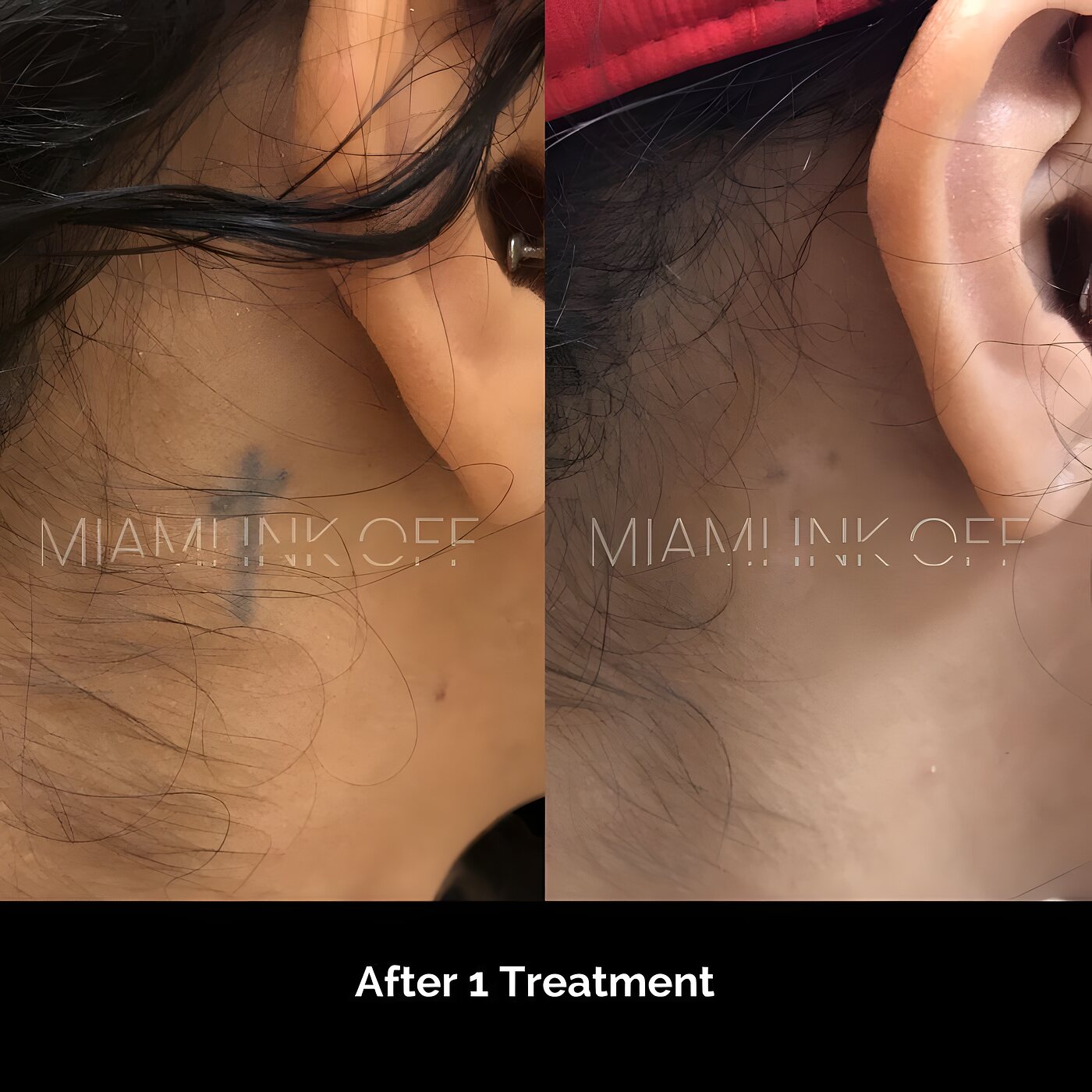
Behind the Ear — 1 Session. Single-session result on deeper skin — laser settings tuned safely per skin tone. After 1 treatment · Courtesy of Miami Ink Off.
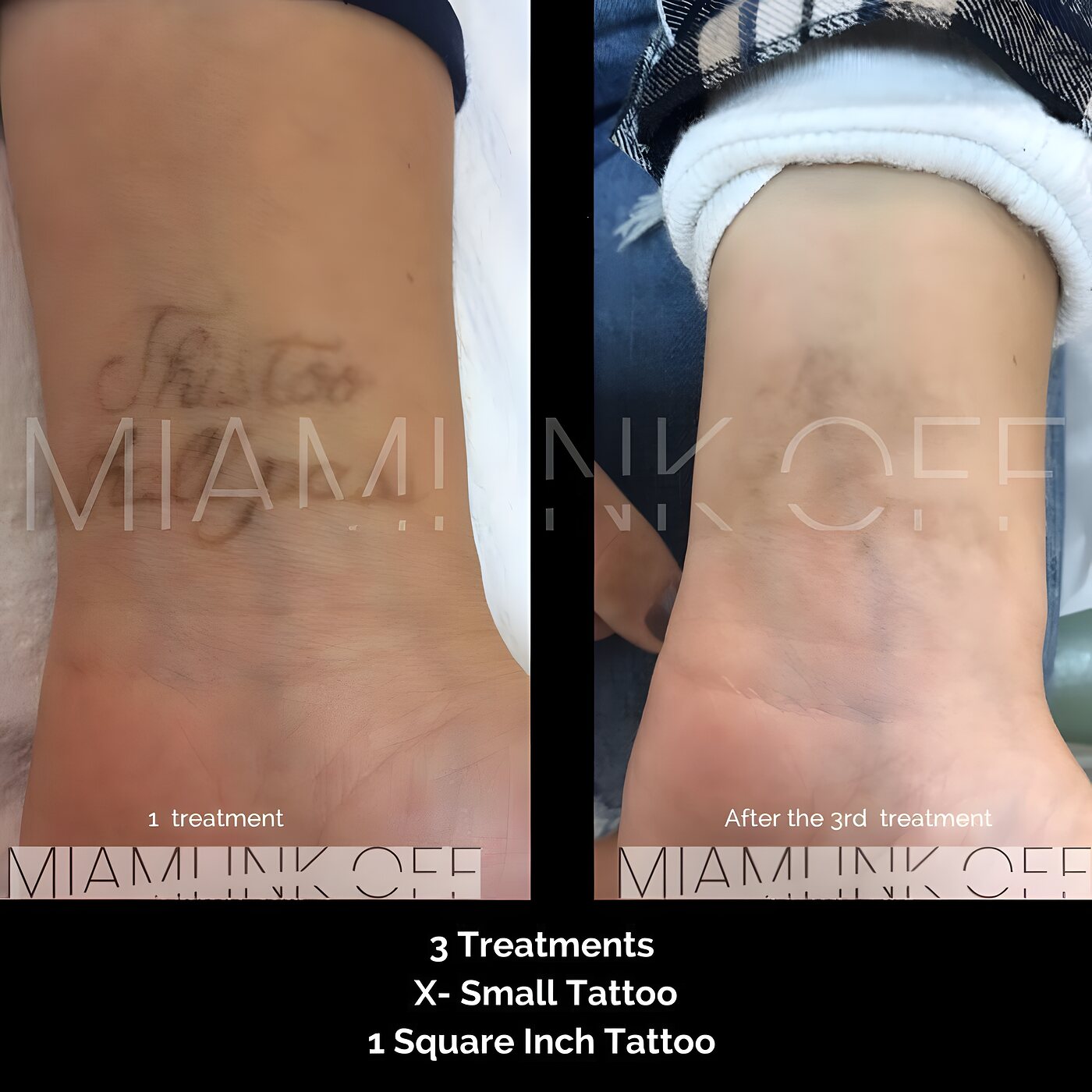
Wrist Script — 3 Sessions. Cursive black-ink script faded over three sessions. After 3 treatments · Courtesy of Miami Ink Off.
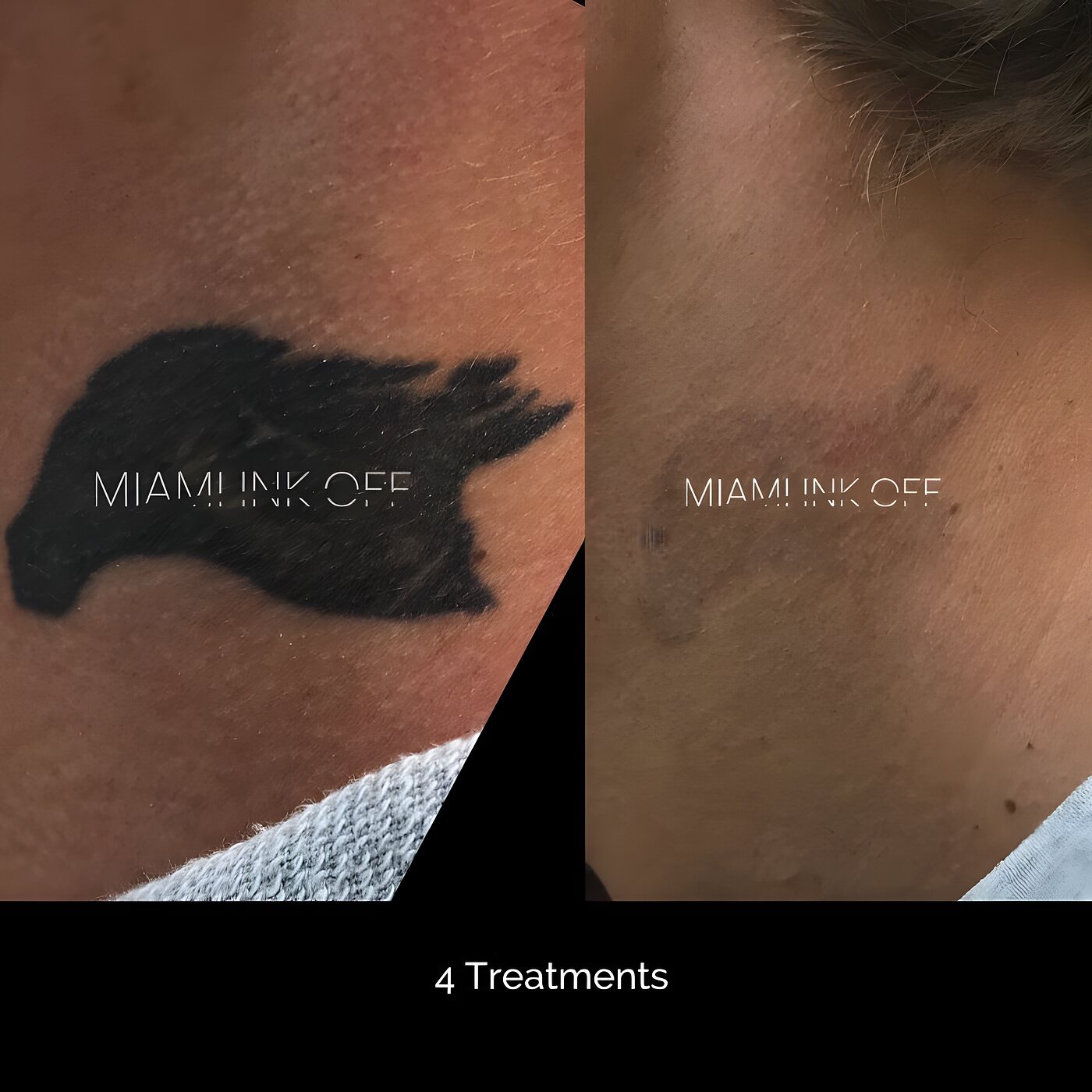
Solid Black Bird — 4 Sessions. Heavier solid-black ink on the side of the neck, cleared over four sessions. After 4 treatments · Courtesy of Miami Ink Off.
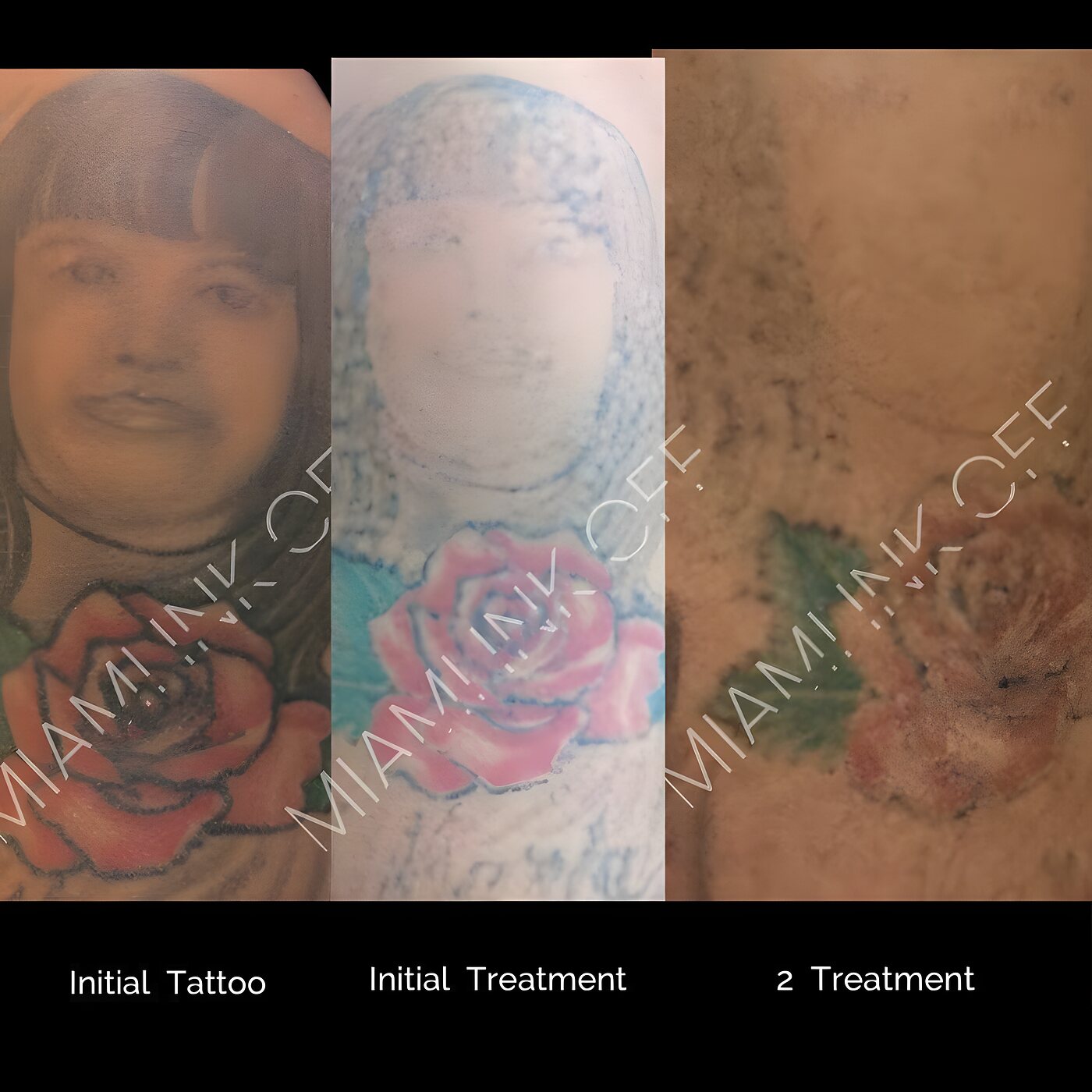
Color Portrait + Rose — 2 Sessions. Color portrait gone and rose lightened after two sessions — realistic expectations on color. After 2 treatments · Courtesy of Miami Ink Off.
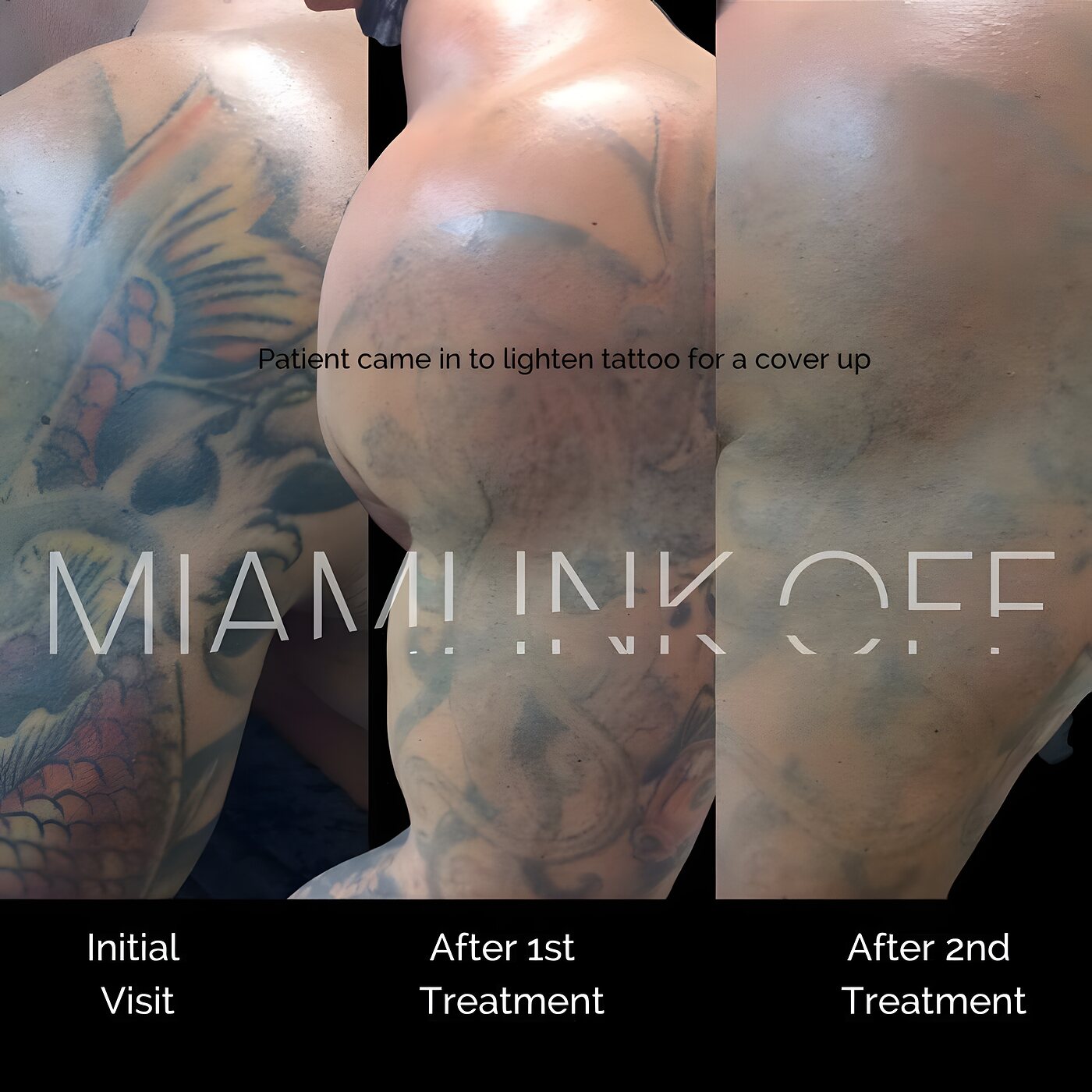
Koi Sleeve Lightening — 2 Sessions. A color koi sleeve lightened over two sessions to prepare for a cover-up. After 2 treatments · Courtesy of Miami Ink Off.
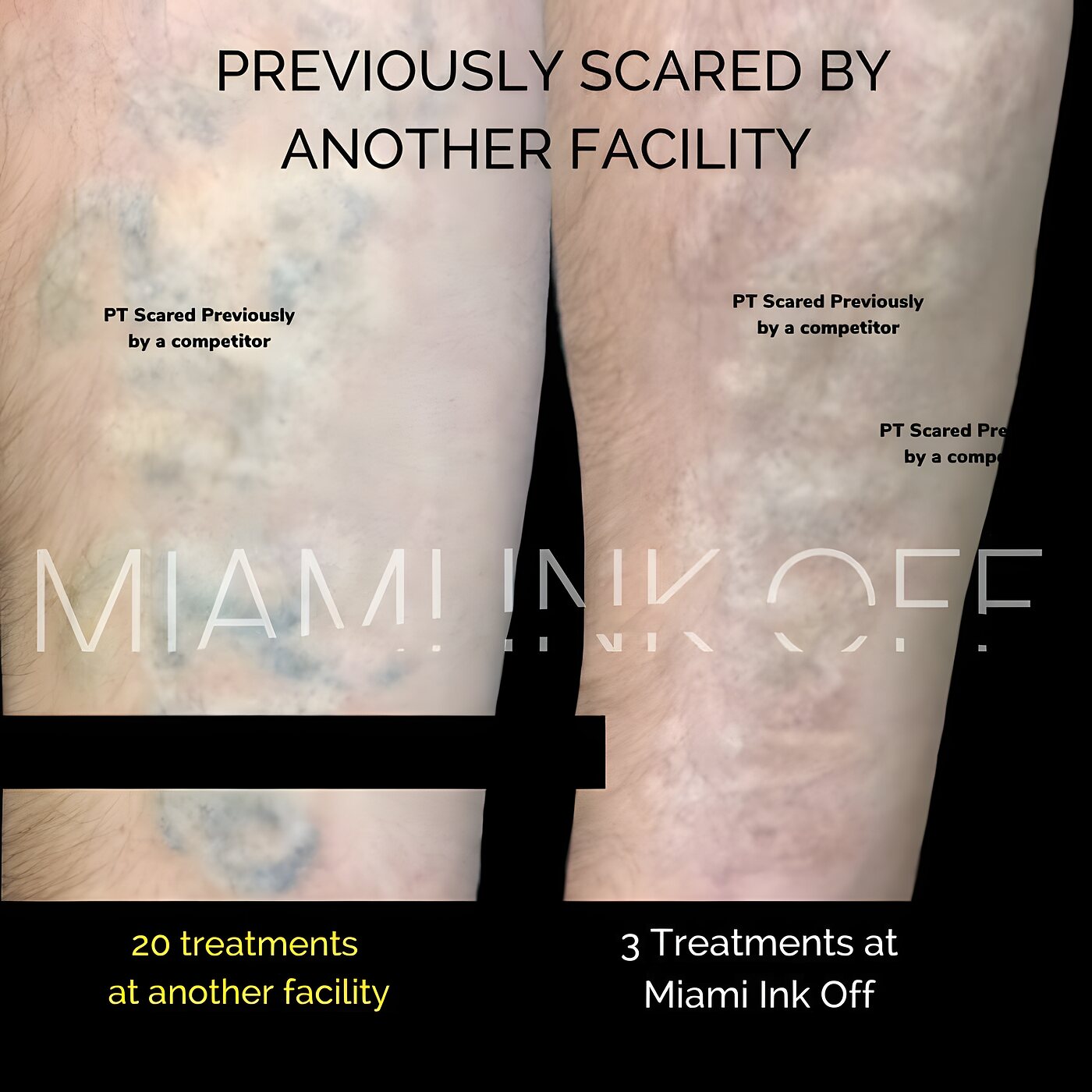
3 Sessions vs. 20 Elsewhere. Comparable clearance in three sessions versus twenty at another facility. After 3 treatments · Courtesy of Miami Ink Off.
Individual results vary depending on ink type, color, depth and number of sessions.
What we know — and what we don't
What the evidence shows
- Picosecond lasers generate a photoacoustic shockwave that shatters ink into finer particles than nanosecond lasers, aiding clearance.2,5
- Both Q-switched and picosecond platforms are FDA-cleared for tattoo removal; picosecond advantages are most pronounced for resistant and multicolored tattoos.4
- Wavelength selectivity is mechanistically established: 1064 nm for black/dark blue (all skin types); 532 nm for red (lighter skin); 670 nm for stubborn green/blue (lighter skin).7,8
- Scarring is uncommon when settings match skin type and ink density; most scarring traces to picking or over-aggressive settings.16
- 1064 nm is melanin-sparing, making it safer on Fitzpatrick IV–VI; the FDA clearance for the enlighten III explicitly covers all skin types at this wavelength.8
What remains uncertain
- One study (Ross) found no particle-size difference between pico and nanosecond on black ink — the photoacoustic advantage may be colour- and density-dependent.18
- Exact session counts cannot be predicted reliably at baseline; the Kirby-Desai scale provides a framework, not a guarantee.12
- Long-term systemic effects of repeated macrophage-mediated ink clearance are not fully characterised in longitudinal studies.
- White and pastel ink paradoxical darkening (titanium dioxide oxidation reaction) is documented but incidence rates are unclear.4
Practice implication: In-person assessment by an experienced laser provider is the only reliable way to estimate sessions and identify high-risk ink colors.
When this is the wrong page. This page covers laser-based tattoo ink removal via photoacoustic fragmentation. It is not the right starting point if you are looking for: scar revision or keloid treatment from previous tattoo removal attempts (→ consult a dermatologist or plastic surgeon); tattoo ink reactions or granuloma management (→ dermatology referral); removing permanent makeup with lower-fluence protocols (overlap, but different considerations — ask at the consult); or treatment of post-inflammatory hyperpigmentation from a prior removal course (→ Pico Genesis or topical management). For the booking and pricing page, go to Laser Tattoo Removal in Miami.
Explore related treatments
Frequently asked — mechanistic answers
Laser tattoo removal relies on selective photothermolysis: a wavelength is chosen that the ink absorbs far more strongly than the surrounding skin. The pulse is so brief — billionths (nanoseconds) or trillionths (picoseconds) of a second — that energy deposits faster than heat can conduct, creating a photoacoustic pressure wave that mechanically fractures the ink particles.2,3 The fragments are engulfed by macrophages and carried through the lymphatic system over the following 6–8 weeks, which is why sessions must be spaced to let immune clearance happen between treatments.12 The process repeats, layer by layer, until the tattoo fades. This is why removal always takes a series, not a single session — each session only fragments the ink exposed to that pulse; deeper particles require multiple passes.
Q-switched (nanosecond) lasers have been the workhorse for decades, generating primarily a photothermal effect. They are highly effective, especially for dense black ink.6 Picosecond lasers pulse ~1,000× faster, shifting the mechanism toward a photoacoustic (mechanical) effect — the energy arrives so fast it shatters ink rather than heating it. This generally produces finer ink fragments, which are more easily cleared by the lymphatic system.2,5 Picosecond lasers show advantages for resistant, multicolored tattoos and often reduce total session counts.4 However, one study (Ross) found no particle-size difference for dense black ink specifically, suggesting the advantage is color- and context-dependent.18 The enlighten III uses both pulse types, letting the operator choose based on ink type per session.
There is no universal answer, but the main variables are known — clinicians use frameworks like the Kirby–Desai scale. Key factors: ink color (black easiest; green, yellow, white hardest), tattoo age (older ink partially degraded, fewer sessions), location (closer to lymph nodes clears faster), ink density and layering (cover-ups have more ink), skin type (conservative settings for darker tones extend the course), and prior removal attempts (residual scar tissue slows progress).7,12 As a general range: amateur black-ink tattoos ~3–6 sessions; professional single-color ~6–10; professional multicolor ~8–12+. These are ranges, not guarantees. According to the AAD, exact counts are not predictable at baseline — in-person assessment is the only reliable approach.12
Most patients describe the sensation as a hot rubber-band snap.13 Sessions are short (≈15–30 minutes for most tattoos) and topical numbing and contact cooling reduce discomfort significantly. The white frosting immediately after treatment is a normal reaction: the photoacoustic effect rapidly releases gas from the ink, which temporarily whitens the treated area. The frosting resolves within minutes and is a sign the laser is working. Normal post-session reactions over days 1–14 include redness, swelling, blisters (which flatten and should not be popped), scabbing, and itching — the same healing cascade as a controlled superficial wound.14,15
The laser targets ink, not the skin's structural collagen and elastin, so intrinsic scarring from the procedure is uncommon when settings are appropriate. The main causes of avoidable scarring are: picking scabs or popping blisters (the single biggest risk factor — they disrupt the epidermal barrier before re-epithelialisation is complete); over-aggressive settings or incorrect wavelength/fluence for the skin type; and infection from inadequate aftercare.16 One caveat: pre-existing scarring from the original tattooing is sometimes revealed once the ink clears — we assess for this at consultation. In South Florida, heat, humidity and UV raise post-inflammatory hyperpigmentation (PIH) risk, so climate-adjusted aftercare (72-hour sweat avoidance, strict SPF) is recommended.16
The core mechanism of risk is melanin competing with tattoo ink for laser energy. If the laser energy is absorbed by melanin (at 532 nm or 755 nm), it can heat the surrounding skin, causing hypopigmentation or hyperpigmentation.7 The 1064 nm Nd:YAG wavelength is melanin-sparing — melanin's absorption at 1064 nm is very low compared to typical tattoo ink, making it the safe choice for Fitzpatrick IV–VI skin. The FDA clearance for the enlighten III at 1064 nm explicitly covers all skin types.8 For darker skin, shorter wavelengths (532, 670 nm) are used conservatively or avoided; session spacing is extended to 8–12 weeks; and patch testing is prudent before full treatment.4
Sources & further reading
Peer-reviewed studies, clinical-trial protocols, device/FDA information and reputable clinical summaries on laser tattoo removal. Where a stable link was available it is included. Links open in a new tab.
- Laser tattoo removal techniques — selective photothermolysis; targeted light fragments ink for clearance by the immune and lymphatic systems; picosecond vs nanosecond pulse durations. 2025. https://myrejuvenate.com.au/laser-tattoo-removal-techniques-explained-for-optimal-results-with-picosecond-and-nanosecond-lasers/
- Medical Applications of Picosecond Lasers — the photomechanical (photoacoustic) effect fragments subdermal ink particles, which are then cleared by macrophages and other phagocytic cells. MDPI, Applied Sciences 2025. https://www.mdpi.com/2076-3417/15/9/4719
- How laser tattoo removal works — rapid energy creates a photoacoustic shock that shatters pigment; macrophages engulf fragments and carry them through lymphatic channels; picosecond pulses shift fragments smaller for faster clearance. 2025. https://www.amendermis.ca/blog/how-laser-tattoo-removal-actually-works
- Tattoo removal lasers — Q-switched vs picosecond clinical effectiveness and safety; both FDA-cleared; picosecond advantages for resistant/multicolored tattoos; wavelengths by ink color; darker skin (IV–VI) favors 1064 nm; FDA warns against removal creams and at-home devices. 2025. https://cosmeticinjectables.com/blog/tattoo-removal-lasers-q-switch-picosecond-clinical-effectiveness-and-safety-data/
- Pattern analysis of picosecond- vs nanosecond-domain 1,064-nm lasers — computational study finding photoacoustic effects the most salient mechanism and shorter pulses more efficient at breaking down tattoo particles. 2017. https://www.ncbi.nlm.nih.gov/pmc/articles/PMC5431496/
- Q-switched Nd:YAG (532/1064 nm) — established treatment of choice; safe and effective but often 6–10 treatments and frequently painful; moving to the picosecond domain replaces much of the photothermal reaction with a photoacoustic one. Lutronic study protocol, ClinicalTrials.gov NCT03415685. https://cdn.clinicaltrials.gov/large-docs/85/NCT03415685/Prot_000.pdf
- Wavelengths by color and histology — 1064 nm and 755 nm for black/blue, 694 nm for blue/black/green, 532 nm for red; shorter wavelengths risk hypopigmentation in darker skin; ink pigment sits intracellularly in macrophages/fibroblasts and is cleared over weeks. Split-tattoo study, ClinicalTrials.gov NCT02912507. https://cdn.clinicaltrials.gov/large-docs/07/NCT02912507/Prot_SAP_000.pdf
- Cutera enlighten III — FDA indications by wavelength: 1064 nm for dark inks and multicolored tattoos containing dark inks (all skin types, Fitzpatrick I–VI); 670 nm for lighter inks including green and blue (II–IV); 532 nm for lighter inks including red and yellow (I–IV). Cutera. https://cutera.com/us-en/products/enlighten/
- Cutera enlighten — dual pulse durations (2 nanoseconds + 750/660 picoseconds) and three wavelengths (532, 1064, 670 nm; the first true red wavelength in the picosecond domain); a strong photomechanical effect that shatters pigment without thermal damage; clears varied ink colors in fewer treatments. Cutera. https://cuteraanz.com/enlighten/
- Cutera enlighten III overview — triple wavelengths plus picosecond + nanosecond pulses to remove a wide range of colors including stubborn blues and greens; numbing/cooling for comfort; results vary by ink type, color, depth and sessions. 2026. https://lasermedicalclinic.com/cuteraenlighten/
- Picosecond laser on multicolored tattoos (preclinical) — a 1064 nm picosecond laser showed effects on non-black colors and produced less tissue injury than nanosecond lasers; picosecond lasers were more effective and safer. 2018. https://www.ncbi.nlm.nih.gov/pmc/articles/PMC6126847/
- How many sessions — a 6–8 week minimum lets the immune and lymphatic systems clear shattered ink; spacing closer than 6 weeks risks blistering, scarring and hyperpigmentation (especially in darker skin); the count depends on ink color, tattoo age and individual immune response (AAD). 2026. https://injectco.com/how-many-sessions-does-laser-tattoo-removal-take/
- Tattoo removal recovery and aftercare — a session takes ~15–30 minutes; sensation is often likened to a rubber-band snap; topical anesthetic for comfort; 6–8 weeks between sessions for healing and fading. 2024. https://affderm.com/tattoo-removal-recovery-and-aftercare/
- Tattoo removal side effects — frosting is a normal, short-lived response; blisters should be left to heal and not popped; scarring is largely avoidable; hyperpigmentation is usually temporary (resolving over 6–12 months). Removery. https://removery.com/tattoo-removal/side-effects/
- Tattoo removal healing stages and spacing — frosting from gas release; redness, swelling, blisters/crusting resolve in ~7–21 days; pigment changes can take months; scarring uncommon with proper technique; sessions spaced 6–12 weeks (dark inks ~6–8, colored/deeper work 8–12). 2026. https://cleanslateink.com/how-long-does-laser-tattoo-removal-take-key-time-factors/
- Scarring from laser tattoo removal — rare when settings match skin type and ink density; almost always from preventable factors (picking, over-aggressive settings); pre-existing tattoo-needle scars can be revealed once ink clears; Miami's heat, humidity and UV raise PIH/infection risk, so aftercare is climate-adjusted (avoid sweating at the site 72 hours, strict sun protection). Perfect B, Doral FL. 2026. https://www.perfectb.com/tattoo-removal-scarring-prevention/
- Tattoo removal aftercare — normal reactions (frosting, redness, blistering, scabbing, itching, gradual lightening over 6–8 weeks) vs infection warning signs; climate-specific guidance for South Florida. Perfect B. https://www.perfectb.com/laser-tattoo-removal-aftercare/
- Picosecond vs nanosecond — a balanced review noting that one experiment (Ross) found no particle-size difference for black ink, while photoacoustic wave generation and correct wavelength selection remain central. TrustedInkAway. https://trustedskincare.org/picosecond-laser-tattoo-removal-vs-nanosecond-laser-tattoo-removal/
Last reviewed June 2026 by Mariana Tolosa, PA-C, Physician Assistant, Cosmetic Injector, Miami Skin Spa · Brickell.