Acne treatment
in Brickell, Miami.
Clear skin is a plan, not a single product. This is your decision hub for acne treatment in Miami and Brickell: what actually causes breakouts, the line between calming active acne and treating the marks and scars it leaves behind, and which of our tools fits — an acne facial or HydraFacial, chemical peels, prescription care, SkinPen, Morpheus8, or laser. Whether you're fighting cystic flares or want acne scar removal, book a consultation and we'll map it.
Medically reviewed by Mariana Tolosa, PA-C📍 1501 South Miami Avenue #201, Brickell🔬 22 cited sources · peer-reviewed, FDA & AAD🗓️ Reviewed 2026
Two problems wearing one name
"Acne" is really two challenges. The first is active acne — the live breakouts driven by four interlocking factors: androgen-fueled oil, pores plugged with dead cells, overgrowth of Cutibacterium acnes, and inflammation.1,2,3 The second is the aftermath — the brown marks, red marks and indented scars that inflammation leaves once a breakout clears. They respond to completely different tools, and treating them out of order wastes time and money.
Here's the framing we lead with at Miami Skin Spa in Brickell: moderate-to-severe active acne is primarily a medical problem, and dermatology guidelines treat it with topical retinoids, benzoyl peroxide, antibiotics, hormonal therapy or isotretinoin.4,5 Our in-office acne facials, chemical peels, microneedling and lasers are powerful — as adjuncts for active acne and as the main event for acne scars and dark marks. We'll always tell you which fight you're actually in.
Four things, one pore
Acne starts inside a single hair follicle and its oil gland — the pilosebaceous unit. Four factors stack up in sequence, and most treatments work by interrupting one or more of them.1,2
It begins when androgens push the sebaceous gland to make too much oil.2 At the same time, dead skin cells lining the pore stop shedding cleanly and form a sticky plug — a comedone, which you see as a blackhead or whitehead.1 That warm, oily, blocked pocket is ideal for C. acnes, which overgrows and builds biofilms.3 The immune system answers with inflammation — the red, sore papules, pustules and deep cysts. That last step is the one that breaks down collagen and leaves scars, which is exactly why getting inflammation under control early matters so much.1,3
Why this matters for your plan
Facials and peels mostly tackle oil and clogged pores; prescription retinoids and benzoyl peroxide hit pores, bacteria and inflammation; the newest sebaceous-gland lasers shrink oil production itself.5,20 Microneedling and RF don't treat active acne at all — they rebuild what scarring took away. Matching tool to mechanism is the whole game.
What are you actually treating?
Pick your main concern and how intense it is. We'll point to the option that usually fits from our menu — and flag when active acne needs medical care before any aesthetic treatment. This is guidance; your consultation confirms the plan.4,5
1 · What bothers you most?
2 · How intense is it?
Moderate inflammatory acne is primarily a medical problem: dermatology guidelines lead with topical retinoids, benzoyl peroxide and short courses of antibiotics or hormonal therapy. Our providers can prescribe and layer in-office salicylic/VI peels to clear faster; a drug-free 1726-nm seboselective laser is an emerging option we can discuss.
The one rule we won't break. We don't resurface skin that's actively breaking out, and we wait several months after isotretinoin before ablative lasers or deep peels — doing otherwise raises the risk of scarring and poor healing.6 Get the acne quiet, then treat the scars. That order is the effective path.
Quiet the fire first
For live breakouts, the goal is fewer lesions, less oil and less inflammation. The strongest evidence sits with medical therapy; our facials and peels are excellent partners, and a new class of laser now targets oil production directly.5,20
Acne facials & HydraFacial
An acne facial in Miami is the gentlest place to start: a medical-grade treatment that deep-cleans, extracts and exfoliates, while a HydraFacial adds hydradermabrasion with salicylic and glycolic acids to clear congested pores gently. In a 12-week study, a HydraFacial series left over 80% of patients with less oiliness, congestion and redness.11 Best for mild acne, blackheads and maintenance — not a stand-alone cure for inflamed acne.
Chemical peels (VI Peel / salicylic)
Salicylic acid is oil-soluble, so it works inside the pore — comedolytic and anti-inflammatory. In trials, a salicylic gel cut sebum by about 24%, and a combination Jessner's + TCA peel dropped inflammatory lesions from 27 to about 8.7,10 A series of chemical peels clears active acne and fades dark marks at the same time.
Prescription therapy (provider-led)
Guidelines lead with topical retinoids, benzoyl peroxide and antibiotics, with hormonal options or isotretinoin for stubborn or severe acne.4,5 Our licensed providers can start or manage prescription care, or coordinate a dermatology referral for isotretinoin. This is the backbone for moderate-to-severe acne — devices and facials layer on top.
Seboselective 1726-nm laser
A newer, drug-free option: a 1726-nm laser selectively heats and shrinks sebaceous glands. FDA-cleared devices (AviClear, Accure) reduced inflammatory lesions by roughly 70% after four sessions, with about 91% of patients at 50%+ reduction by one year.18,19 We'll discuss whether it fits you and where to access it.
A word on facials & "acne facials near me". Acne facials and HydraFacials feel great and genuinely help mild, congested skin — but they won't control moderate or cystic acne on their own, and aggressive extractions on inflamed skin can backfire. If your acne is inflamed or scarring, we'll pair facials with medical treatment.11
The full toolkit at a glance
| Treatment | What it is | Best for | Downtime | At MSS |
|---|---|---|---|---|
| Acne facial / HydraFacial | Hydradermabrasion + gentle acids, extractions | Mild congestion, oiliness, glow before events, maintenance | None | Here |
| Chemical peel (VI Peel / salicylic) | Salicylic / TCA chemical exfoliation | Active comedonal & inflammatory acne, oiliness, dark marks | Light flaking, a few days | Here |
| Prescription therapy | Topical retinoid / BPO / antibiotic; oral options | Moderate-to-severe inflammatory acne (guideline first-line) | None (skin purging early) | Provider-led / referral |
| SkinPen microneedling | Mechanical microneedling, collagen induction | Mild-to-moderate atrophic scars, texture, pores | 1-2 days redness | Here |
| Morpheus8 RF microneedling | RF microneedling, deeper dermal remodeling | Moderate-to-deep atrophic scars, texture, jaw/pores | 1-3 days redness | Here |
| Pico Genesis / Lumecca IPL | Picosecond laser / intense pulsed light | Post-acne dark marks (PIH) and redness (PIE) | Minimal | Here |
| 1726-nm seboselective laser | Sebaceous-gland laser (AviClear / Accure) | Moderate-to-severe active acne, drug-free option | Minimal | Discuss / referral |
Rebuilding what acne took
Once acne is calm, indented (atrophic) scars are treated by rebuilding collagen from below. The right approach depends on the scar type, and expectations matter: acne scars treatment improves them substantially, but rarely erases them.12,15
Ice pick
Narrow, deep, V-shaped pits — the hardest to treat; we lead with RF microneedling, and for the occasional pit that needs focal chemical reconstruction (TCA CROSS) we coordinate that referral and resurface around it.
Boxcar
Wider depressions with sharp, vertical edges — respond to microneedling and RF microneedling that rebuild the floor.
Rolling
Broad, shallow, wave-like undulations from dermal tethering — among the most responsive to collagen-building energy.
SkinPen microneedling
Fine needles create controlled micro-injuries that trigger collagen induction. In a skin-of-color trial, microneedling improved atrophic scars in 73% of patients (vs 33% for a chemical peel), with results independent of skin tone.12,13 Ideal for mild-to-moderate texture and rolling scars; a series of 3-6 builds the result.
Morpheus8 RF microneedling
Adds radiofrequency heat through the needles to remodel deeper in the dermis. RF microneedling is FDA-cleared for acne scarring and effective across skin types — one review cohort saw a two-grade scar improvement in 81% of patients.15,16 Our Morpheus8 reaches moderate-to-deep scars with low pigment risk for darker skin.
What acne scar removal can and can't do
"Removal" is the wrong word — even excellent treatment reduces scars rather than deletes them. Deep, mixed scarring usually needs a combination over several months — we lead with RF microneedling plus laser, and where a focal technique like subcision or TCA CROSS is the deciding factor we coordinate that referral and resurface around it. We'll show you a realistic before/after range at consultation and tell you what's achievable for your specific scars. See our dedicated acne scars hub for the deep dive.15
What the trials actually show
Real published numbers for the treatments we use — for active acne (teal) and for atrophic scars (clay). These come from independent studies with different devices, protocols and endpoints, so read them as ballpark evidence of effect, not a head-to-head ranking.7,11,13,15,18
How to read this. Different studies measured different things — "50%+ lesion reduction," "one-grade scar improvement," "patients reporting less oiliness." Sample sizes are modest and results vary by person, skin type and adherence. The takeaway isn't a winner; it's that each of these treatments has real, measurable effect when matched to the right problem.13,15
The flat marks aren't scars
The brown or red spots a pimple leaves behind are not indentations — they're pigment and blood-vessel changes that usually fade on their own, just slowly. The right help speeds them up; the wrong sun habits keep them around.21,22
Post-inflammatory hyperpigmentation (PIH) — flat brown or tan spots — is common in deeper, melanin-rich Miami skin tones. Post-inflammatory erythema (PIE) — flat pink or red marks — is more common in lighter skin.21 Both respond to a fade-focused plan:
Chemical peels — salicylic and pigment-targeted peels speed cell turnover.
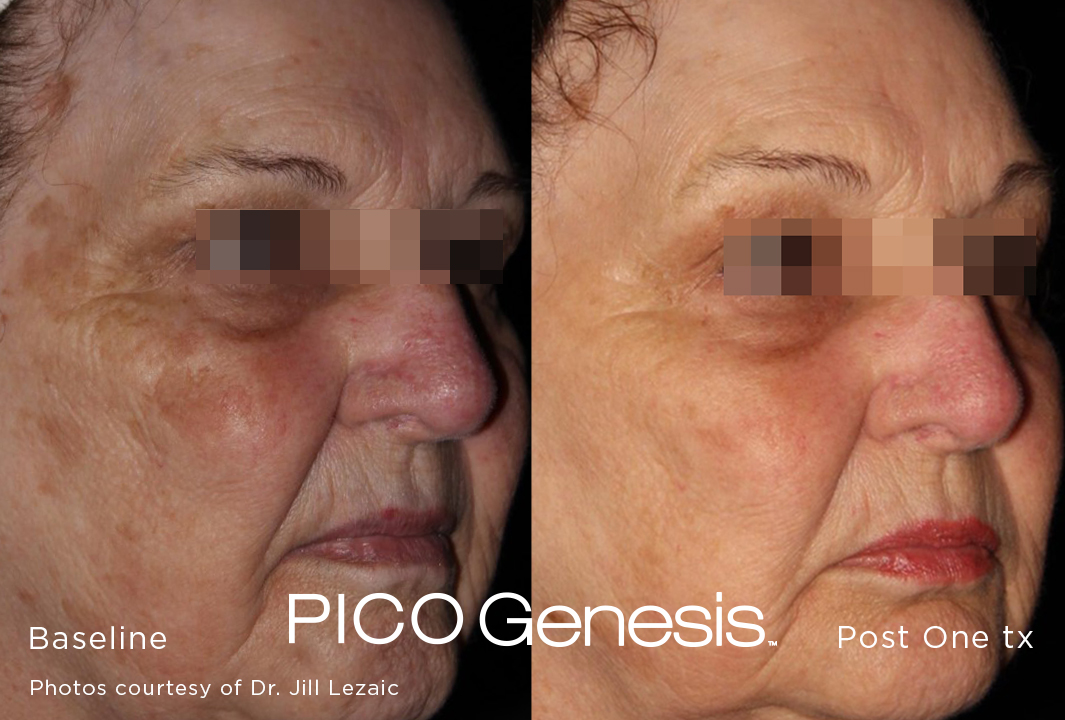
Pico Genesis — picosecond laser breaks up stubborn brown pigment.
Lumecca IPL — targets both red marks and brown spots; studies show IPL improves acne-related PIE and PIH.22
Daily SPF — the single most important step; sun re-darkens every mark.
Patience plus protection
Marks can take weeks to months to fade even with treatment, and the fastest way to clear them is to stop new breakouts forming in the first place. We coordinate mark-fading with our broader hyperpigmentation protocols and insist on sunscreen — non-negotiable in Miami and Brickell sun.21
Clearer in weeks, smoother over months
Acne treatment rewards consistency. Active acne usually settles over weeks (sometimes after a brief "purge"), while scar remodeling and mark-fading play out over months as collagen rebuilds and pigment clears.6
Not sure if it's active acne, marks, or scars?
That's exactly what the consultation is for. Our Brickell team types your skin, sorts the active acne from the aftermath, and builds a sequenced plan — medical, in-office, or both.
Miami Skin Spa · Brickell · 1501 South Miami Avenue #201, Miami, FL 33129 · 305-557-1615
A protocol, not a one-off
Acne and acne scars respond to a planned series — and often to a thoughtful combination of medical care, peels, microneedling and energy, sequenced so each step sets up the next.5,6
Sessions & cadence
Acne facials and peels run as a series every 2-4 weeks with monthly maintenance; microneedling and Morpheus8 are typically 3-6 sessions, 4-6 weeks apart, with results building over months.12,15 Prescription routines run continuously while we monitor.
What it costs
Cost depends on the treatments, the number of sessions and any prescriptions, and procedures are usually offered in packages. We give a clear, itemized quote at your consultation — see pricing and real results.
Combination plans
The best outcomes usually layer treatments: control active acne medically, clear congestion and marks with peels and facials, then remodel scars with SkinPen or Morpheus8 once skin is calm.6 We map the order so nothing is wasted.
The Miami skin-tone advantage
Microneedling and radiofrequency work by depth and don't target melanin, so they carry a lower risk of post-treatment dark spots than heat- and light-based lasers in Fitzpatrick III-VI — important for Miami and Brickell's diverse, melanin-rich skin.17 We always assess your skin type and tailor settings to protect against pigment changes.
The full menu, matched to you
Because we offer the whole range — acne facials and HydraFacial, chemical peels, SkinPen, Morpheus8, Pico Genesis and Lumecca IPL, plus provider-led prescription care — we're not selling one device. Our licensed aesthetician Amy Betancourt (13+ years) leads facials, HydraFacial and Pico work, while our nurse practitioners and PAs handle the medical side and can refer when dermatology is the right call.
Explore the treatments & related concerns
Before & after — our patients
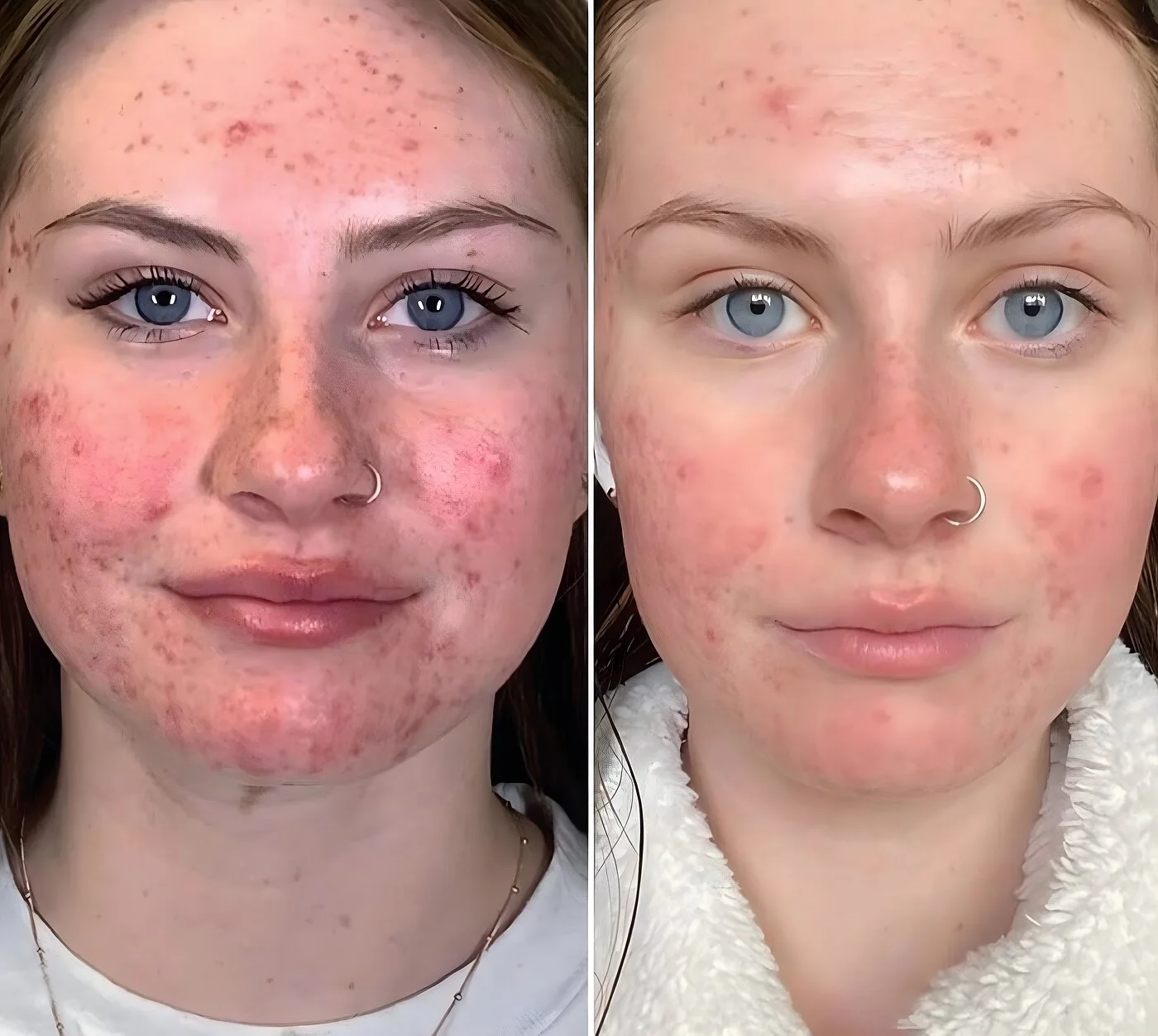
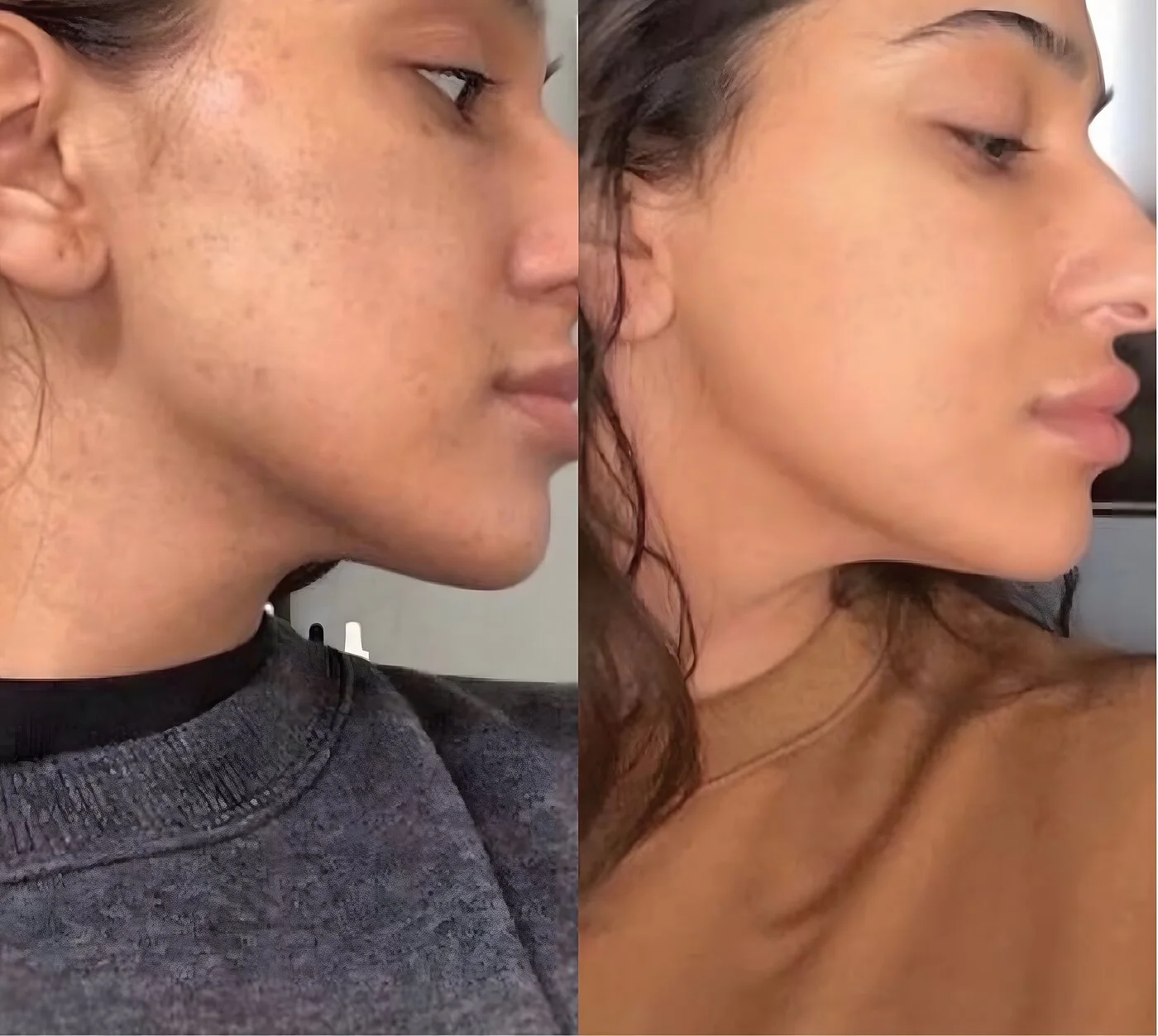
Real before-and-after results from treatments we offer, drawn from our clinical and partner galleries. Individual results vary; we never use stock or AI-generated photos.
Frequently asked questions
It depends on what you're treating. Mild acne and congestion respond to acne facials, HydraFacial and salicylic peels; moderate-to-severe acne is primarily medical (prescription topicals, antibiotics, hormonal therapy or isotretinoin); and scars or dark marks are treated after the acne calms, with microneedling, Morpheus8 or laser. Our decision tool above and a consultation match the right acne treatment in Miami to your skin.4,5
Yes, for the right acne. A HydraFacial uses gentle hydradermabrasion with salicylic and glycolic acids to clear congested pores; a 12-week series left over 80% of patients with less oiliness, congestion and redness.11 It's excellent for mild, congested skin and maintenance, but it won't control moderate or cystic acne on its own.
Peels help more with active acne and dark marks than with deep scars. For atrophic acne scars, collagen-building microneedling outperforms peels — in one skin-of-color trial, microneedling improved scars in 73% of patients versus 33% for a glycolic peel.13 Peels remain valuable for clearing breakouts and fading post-acne pigment.
Yes — it's a first-line option for atrophic acne scars. SkinPen microneedling triggers collagen induction and improved scars by about one Goodman & Baron grade in clinical studies; deeper RF microneedling (Morpheus8) adds radiofrequency for stubborn scars, with a two-grade improvement in 81% of patients in one review cohort.12,15 Expect gradual smoothing over a series, not instant acne scar removal.
Active acne usually clears meaningfully over 8-12 weeks of consistent treatment (sometimes after a short purge), while scar remodeling and mark-fading build over 3-6 months as collagen rebuilds and pigment clears.6 Acne treatment is a planned series with maintenance, not a one-time fix.
Some treatments yes, some no. Acne facials, salicylic peels and prescription care are made for active breakouts; but we do not perform aggressive resurfacing, deep peels or laser on actively inflamed skin, and we wait several months after isotretinoin before ablative procedures.6 We calm the acne first, then treat scars.
Yes, with the right choices. Microneedling and radiofrequency work by depth rather than targeting melanin, so they carry a lower risk of post-treatment dark spots in Fitzpatrick III-VI, and salicylic peels are well tolerated.17 Because Miami and Brickell skin is so diverse, we always assess skin type and tailor settings to protect against pigment changes.
Sources & further reading
Peer-reviewed reviews and trials, dermatology clinical guidelines, FDA clearance information and device data on acne and acne-scar treatment (chemical peels, hydradermabrasion, microneedling, RF microneedling and lasers). Where a stable link was available it is included. Links open in a new tab.
- Acne vulgaris — review of pathophysiology and treatment: acne is multifactorial, driven by four interrelated factors (excess sebum, follicular hyperkeratinization, Cutibacterium acnes proliferation, and inflammation). 2023. https://www.ncbi.nlm.nih.gov/pmc/articles/PMC10709101/
- The primary role of sebum in acne pathophysiology — androgens drive sebocyte sebum production within the pilosebaceous unit; altered sebum, with inflammation, follicular hyperkeratinization and C. acnes, propagates lesions. J Dermatolog Treat, 2023. https://www.tandfonline.com/doi/full/10.1080/09546634.2023.2296855
- Recent advances in inflammatory acne — C. acnes biofilm, loss of phylotype diversity, and the central role of the Th17 inflammatory pathway. JEADV, 2023. https://onlinelibrary.wiley.com/doi/abs/10.1111/jdv.18794
- American Academy of Dermatology — updated guidelines for the management of acne (patient summary): topical retinoids, benzoyl peroxide, antibiotics, oral doxycycline; isotretinoin for severe or scarring acne. 2024. https://www.aad.org/news/updated-guidelines-acne-management
- Guidelines of care for the management of acne vulgaris — 18 evidence-based recommendations; strong recs for benzoyl peroxide, topical retinoids, topical antibiotics and oral doxycycline; isotretinoin strongly recommended for severe/scarring acne. JAAD, 2024. https://www.jaad.org/article/S0190-9622(23)03389-3/fulltext
- 2024 AAD acne guideline summary — topical therapies are the mainstay; multimodal combinations preferred; ablative laser and full-face dermabrasion are avoided within ~6 months of isotretinoin. Guideline Central. https://www.guidelinecentral.com/guideline/21839/
- Medium-depth chemical peels for moderate acne and atrophic scars — combination Jessner's + 20% TCA reduced inflammatory lesions from 27.2 to 7.6 (vs single peel 26.8 to 13.4); comedones likewise improved. 2025. https://www.ncbi.nlm.nih.gov/pmc/articles/PMC12692859/
- 30% salicylic acid vs 50% glycolic acid peel, randomized controlled trial in mild-to-moderate acne — both effective and safe; salicylic acid acted faster on inflammatory lesions. Indian J Clin Exp Dermatol, 2025. https://ijced.org/archive/volume/11/issue/1/article/8008
- 25% TCA vs 30% salicylic acid peel in mild-to-moderate acne — comparable efficacy on lesion counts and Michaelsson score, with better tolerability for salicylic acid. 2021. https://www.ncbi.nlm.nih.gov/pmc/articles/PMC8172016/
- Salicylic-acid gel, 21-day prospective study — sebum fell 23.65%, skin hydration rose 40.5% and trans-epidermal water loss fell 49.26%, with improved acne severity. J Cosmet Dermatol, 2025. https://www.ncbi.nlm.nih.gov/pmc/articles/PMC12274963/
- HydraFacial Clarifying Treatment in active acne — six sessions over 12 weeks; after the series investigators rated 100% of patients clearer/healthier and >80% with less erythema, oiliness and congestion. JCAD. https://jcadonline.com/hydrafacial-treatment-active-acne-vulgaris/
- Automated microneedling device for facial atrophic acne scars — 3 months after four sessions, scars improved by 0.91 of a Goodman & Baron grade (p<0.001), with no difference by Fitzpatrick skin type. JCAD. https://jcadonline.com/automated-microneedling-acne-scarring/
- Microneedling vs glycolic-acid peel for atrophic acne scars in Fitzpatrick IV-VI (RCT, 60 patients) — 73.3% achieved >1-grade improvement with microneedling vs 33.3% with chemical peel. JCAD. https://jcadonline.com/microneedling-acid-peel-acne-scarring/
- Microneedling for atrophic acne scars (prospective, Vietnamese patients) — mean Goodman & Baron grade fell from 3.29 to 1.77; about 53% had excellent and 43% good improvement. 2019. https://pmc.ncbi.nlm.nih.gov/articles/PMC6364723/
- Fractional radiofrequency microneedling (RF microneedling) as monotherapy for acne scars — systematic review of 16 studies / 481 patients; effective across scar types and skin of color (one study, 80.6% with a two-grade improvement). CCID, 2025. https://www.dovepress.com/fractional-radiofrequency-microneedling-as-a-monotherapy-in-acne-scar--peer-reviewed-fulltext-article-CCID
- Bipolar fractional RF microneedling for acne and acne scars — device is FDA-cleared for acne scarring and rejuvenation; in an early series all patients improved (active acne and scars), with biopsies showing reduced scar depth, new collagen and elastic fibers. ClinicalTrials.gov NCT03380845. https://clinicaltrials.gov/study/NCT03380845
- Fractional microplasma radiofrequency for atrophic acne scars (multicentric) — ECCA scar score fell from 107.21 to 42.27 (p<0.05); transient erythema/edema only, favorable in darker skin. 2024. https://www.ncbi.nlm.nih.gov/pmc/articles/PMC11167203/
- 1726-nm sebum-selective laser, prospective multicenter study, one-year data — at 1 year 91.5% of patients had >=50% reduction in inflammatory lesions and 66.2% were clear/almost clear (Fitzpatrick II-VI, three treatments). JAAD, 2025. https://www.jaad.org/article/S0190-9622(25)02900-7/fulltext
- FDA clearance of the Accure 1726-nm laser for long-term treatment of inflammatory acne — trials showed ~70% reduction in inflammatory lesions after four treatments across skin types; AviClear (Cutera) and Accure are the FDA-cleared 1726-nm devices. Dermatology Times, 2026. https://www.dermatologytimes.com/view/fda-clears-accure-s-laser-system-for-long-term-treatment-of-acne
- 1726-nm lasers for acne — review: sebum absorbs preferentially at 1726 nm, allowing selective photothermolysis of sebaceous glands while sparing the epidermis; low pigment absorption makes it usable across skin types. Skin Therapy Letter. https://www.skintherapyletter.com/acne/1726-nm-lasers/
- Acne-induced post-inflammatory hyperpigmentation — grading and treatment: PIH is common in deeper skin tones; prevention (sun protection, early acne control) plus topicals, peels and light/laser are used. Acta Derm Venereol, 2025. https://medicaljournalssweden.se/actadv/article/view/42925
- Intense pulsed light improves acne-induced post-inflammatory erythema (redness) and hyperpigmentation — retrospective study in Chinese patients. Dermatol Ther (Heidelb), 2022. https://doi.org/10.1007/s13555-022-00719-9