Sclerotherapy in Brickell, Miami
Sclerotherapy is minimally invasive spider vein and varicose vein treatment — a sclerosing solution is injected directly into the vein, collapsing it so it fades from view as your body reabsorbs it. Proven, long-lasting, with little to no downtime.
Medically reviewed by Jasmine Vazquez-Mack, APRN-C1501 South Miami Avenue #201, Brickell6 cited sourcesPart of: Body Contouring
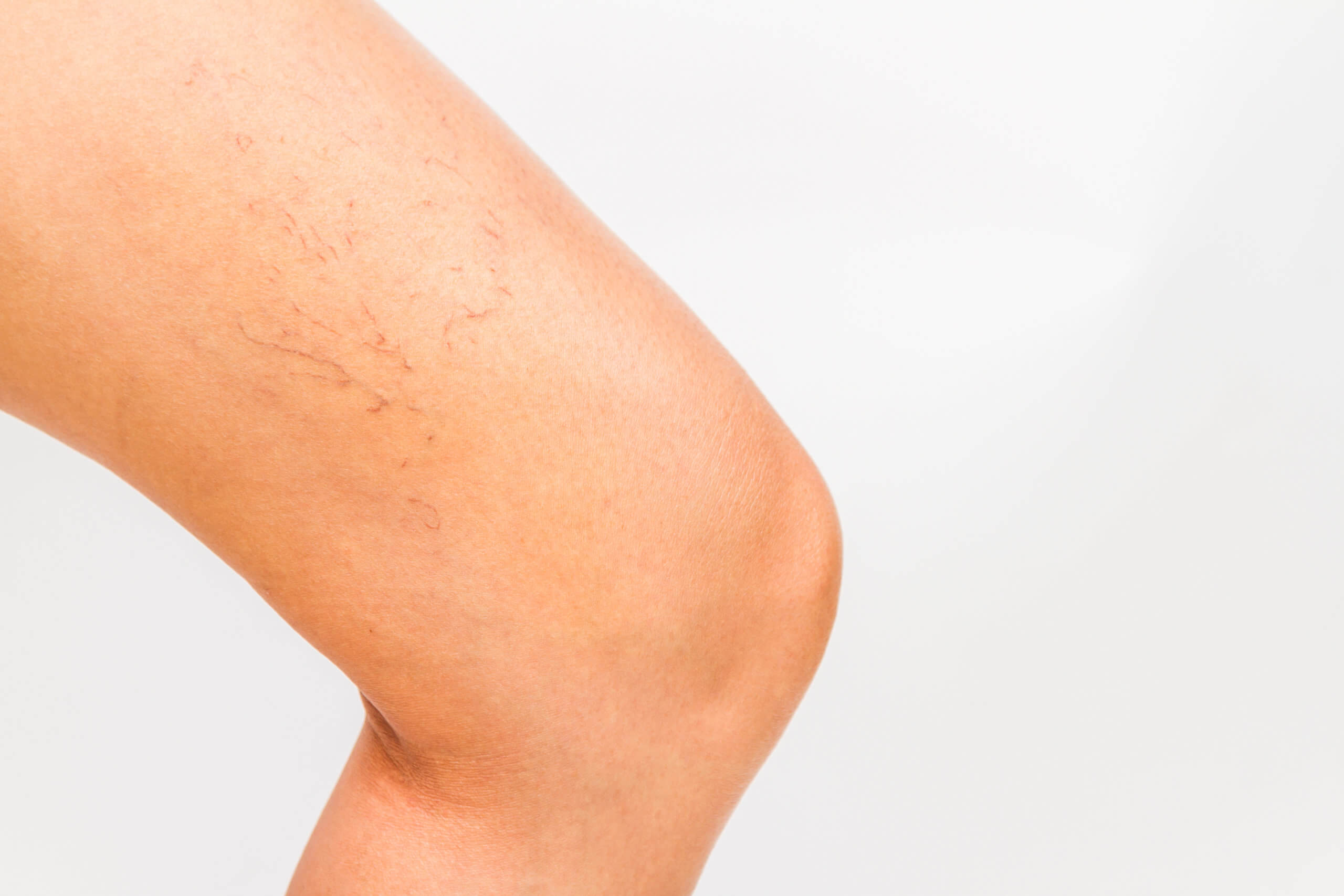
Spider vein removal results
Representative sclerotherapy cases for spider and reticular veins, chosen because they mirror the leg-vein patterns we treat. Individual results vary — see more in our results gallery.

Representative cases shown for the spider and reticular vein patterns we treat — individual results vary, and the number of sessions depends on vein size and density.
What a sclerotherapy session looks like
Everything you'd ask at the consult
A sclerosing solution that collapses the vein
Sclerotherapy is the longest-established treatment for visible leg veins — in use for decades because the mechanism is simple and well-proven. A sclerosing solution — typically a saline-based or detergent-based agent — is injected directly into the target vein through a very fine needle. The solution irritates the inner lining of the vein, causing it to swell shut and seal. Blood flow naturally reroutes through healthy veins nearby, and the collapsed vein is gradually reabsorbed by the body over the following weeks.
The treated vein does not "come back." Once a vein has been sclerosed and reabsorbed, it is gone permanently. New spider or varicose veins can still develop over time in other areas — which is why periodic maintenance sessions are common — but the vein we treat today is treated for good.
Foam vs liquid sclerotherapy
Depending on the size and pattern of the vein, the sclerosing agent can be delivered as a liquid or whipped into a foam. Foam sclerotherapy increases contact between the solution and the vein wall, which makes it useful for larger reticular and varicose veins; finer liquid technique suits delicate surface spider veins. Your provider chooses the technique vein by vein.
What makes our approach different
Rather than chasing individual veins one at a time, our practitioners map the clusters and "feeder" veins that supply them, then treat strategically to clear the most visible areas efficiently. Addressing the source — not just the most visible branches — produces cleaner results in fewer sessions.
Spider veins (telangiectasias)
Spider veins are small, thin veins that sit close to the surface of the skin, appearing as red, blue, or purple web-like clusters — most commonly on the legs, but sometimes on the face. They are primarily a cosmetic concern, though some patients experience mild aching or heaviness. When patients search for spider vein removal in Miami, sclerotherapy is almost always the treatment they mean — the injected vein collapses, seals, and is permanently removed as the body reabsorbs it. It is the most direct path to clearer skin for this surface texture and tone concern, and most patients see significant improvement after just 1–2 sessions.
Varicose veins
Varicose veins are larger, raised, and often twisted or rope-like. They develop when the one-way valves inside veins weaken, allowing blood to pool and the vein to bulge. Varicose veins can cause aching, throbbing, swelling, and fatigue in the legs — and they tend to worsen over time if left untreated. Denser clusters may need 2–4 sessions spaced 4–6 weeks apart.
Leg, facial & reticular veins
We treat leg veins, facial veins, reticular feeder veins, and leg vein discoloration. Clearing veins is often one part of comprehensive leg rejuvenation — pigment, sun damage, and skin firmness on the same area can be addressed alongside vein treatment in a coordinated plan.
What causes them
- Genetics — the single strongest predictor; if your parents had visible veins, you are likely to develop them.
- Prolonged standing or sitting — jobs that keep you on your feet or at a desk for long hours raise venous pressure in the legs.
- Pregnancy — increased blood volume and hormonal changes weaken vein walls.
- Hormonal factors — estrogen and progesterone shifts (birth control, menopause, HRT) can dilate veins.
- Age — vein walls and valves naturally weaken over time.
- Sun exposure — UV damage can contribute to spider veins, especially on the face, where it overlaps with broader pigment and discoloration concerns.
How many sessions you'll need
Most patients see significant improvement after 1–2 sessions for spider veins. Larger varicose veins or dense clusters may require 2–4 sessions spaced 4–6 weeks apart. Multiple veins can be treated in a single appointment, so a session clears a meaningful area at once.
Results timeline
- Week 1–2 — treated veins may look darker or more visible temporarily as the solution works; mild bruising is common.
- Week 3–6 — spider veins begin to fade noticeably; smaller veins often clear completely in this window.
- Month 2–3 — larger veins and denser clusters continue to fade; full results are typically visible by this point.
- Month 3+ — results are considered final; the treated veins are permanently gone.
Before your session
- Pause blood-thinning medications and supplements — aspirin, ibuprofen, fish oil, and vitamin E — for a few days prior, and consult your prescribing physician before stopping any medication.
- Wear loose, comfortable clothing to your appointment.
- Do not apply lotion to your legs on the day of treatment.
- Skip shaving the treatment area for 24 hours prior.
Each appointment
- No anesthesia is required — you remain awake and comfortable throughout.
- The treatment itself takes 30 to 60 minutes depending on the number and size of veins.
- You can walk and move around right away; most patients resume normal activities immediately.
Who's a good candidate
Sclerotherapy is generally well-tolerated. You may be a good fit if you:
- Have visible spider veins or small varicose veins on the legs
- Are bothered by the cosmetic appearance of leg veins
- Experience aching, heaviness, or discomfort associated with varicose veins
- Are in good general health with no history of deep vein thrombosis (DVT) or blood-clotting disorders
- Are not currently pregnant or breastfeeding
- Have realistic expectations about the gradual nature of results
What we screen for
Sclerotherapy is not recommended for patients with certain vascular conditions or clotting disorders. Our team reviews your medical history thoroughly at consultation — including any blood-clotting conditions, current medications, and prior vein issues — to ensure the treatment is safe and appropriate for you.
Worth knowing: in vascular medicine, sclerotherapy is also used to treat venous ulcers and other advanced venous disease. Our Brickell studio focuses on cosmetic spider and reticular veins — if your consultation suggests advanced venous disease, including vein ulcers, we refer you for a vascular evaluation rather than treating it cosmetically. That referral goes to our sister vein practice, Miami Vein Center here in Miami, or Miami Vein and Wellness, Jacksonville for North Florida patients.
Comfort during treatment
Most patients feel only a mild pinch or slight sting with each injection — the needles are extremely small and the discomfort is brief. Mild bruising, tenderness, or cramping at injection sites is normal and resolves within 1–2 weeks. Every treatment at Miami Skin Spa is performed by a licensed medical provider after an individual evaluation — meet the team.
Right after your session
- Compression stockings or bandages are applied and should be worn as directed (usually 3–7 days) to support the treated veins.
- You can walk and move around right away — in fact, walking is encouraged to promote circulation.
- Avoid strenuous exercise, hot baths, saunas, and direct sun exposure for 48 hours.
The first two weeks
Mild bruising, tenderness, or cramping at injection sites is normal and resolves within 1–2 weeks. Daily broad-spectrum SPF on treated legs matters while the skin settles — Miami sun is unforgiving, and protecting the area helps avoid post-treatment discoloration.
Maintaining your results
Treated veins do not return, but new veins can develop over time if the underlying contributing factors remain present. Most patients stay ahead of new vein development with:
- Annual or semi-annual touch-up sessions — addressing new veins before they grow into larger clusters.
- Compression stockings — during long flights, extended standing, or pregnancy.
- Regular exercise — walking, swimming, and cycling promote healthy leg circulation.
- Elevating the legs — when sitting for long periods, to reduce venous pooling.
What we pair it with
For patients who want comprehensive leg rejuvenation, sclerotherapy pairs naturally with other body treatments — many patients fold vein clearance into a broader leg plan that also addresses cellulite and skin tone. Sequencing matters — our team coordinates timing so each treatment supports the next without interfering with recovery:
- Body lasers — clearing veins with sclerotherapy while addressing skin pigmentation, sun damage, or textural issues on the legs with laser treatment. Some surface vessels also respond to laser vein treatment.
- IPL — intense pulsed light for diffuse redness and fine facial vessels that suit a light-based approach rather than injection.
- Morpheus8 Body — for patients with both visible veins and skin laxity on the thighs, treating both concerns in a coordinated plan.
Bring your concern, not a treatment name — your provider maps the right combination at the consultation.
Not sure sclerotherapy is the right tool? Bring your concern, not a treatment name. A consultation maps your veins and skin to the right plan — whether that's sclerotherapy, laser vein treatment, IPL, or a combination.
Sclerotherapy vs the alternatives
Different vessels respond to different tools — the right choice depends on vein size, depth, and location. We offer the alternatives below, so the recommendation is based on your veins, not the device we happen to own.
| Treatment | How it works | Best for | Downtime |
|---|---|---|---|
| Sclerotherapy | Sclerosing solution injected into the vein, collapsing and sealing it | Leg spider veins, reticular feeder veins, small varicose veins | Minimal — compression 3–7 days |
| Laser vein treatment | Light energy targets the vessel through the skin, no needle | Fine surface vessels, patients who prefer no injection | Minimal |
| IPL | Broadband intense pulsed light for diffuse redness and fine vessels | Facial redness, diffuse fine vessels, rosacea-type flushing | Minimal |
| Body lasers | Targeted laser for leg pigment, sun damage, and surface vessels | Combined vein + pigment leg rejuvenation | Minimal |
Why our Brickell providers
Vein clearance depends on accurate mapping and technique decisions made in the room. At Miami Skin Spa every session is performed by a licensed medical provider, and our Brickell practice has served more than 10,000 patients.
Jasmine Vazquez-Mack, APRN-C
Board-certified Family Nurse Practitioner with clinical experience spanning family and vascular medicine. Jasmine performs sclerotherapy for vascular concerns, mapping vein clusters and feeder veins to clear the most visible areas efficiently and conservatively.
Meet Jasmine →A medically supervised practice
Every treatment follows an individual evaluation and medical-history review, including screening for clotting conditions. Conservative technique first, with a maintenance plan built around your specific vein pattern so you stay ahead of new veins.
Meet the team →Meet the whole Miami Skin Spa team — and see the work in our results gallery.
Start from your concern
Clearing leg veins is often one part of fuller leg and skin rejuvenation. Each guide below covers the related concerns we treat alongside vein work.
Sun damage
UV exposure contributes to spider veins and leg discoloration — how we pair vein clearance with sun-damage correction.
Read the guide →Hyperpigmentation
Leg vein discoloration and post-treatment pigment — what works and how to protect the skin while it settles.
Read the guide →Skin resurfacing
Smoother surface tone and texture on the legs once visible vessels are cleared.
Read the guide →Skin tightening
When laxity and visible veins overlap on the thighs, a coordinated firmness-plus-vein plan.
Read the guide →Loose skin
Pairing sclerotherapy with skin-tightening on the legs after weight loss or with age.
Read the guide →From the blog
Sclerotherapy: what to expect
From consultation to compression — a session walkthrough and recovery timeline. Coming soon.
Coming soonSpider veins vs varicose veins
How to tell them apart, what causes each, and which treatments fit. Coming soon.
Coming soonPreventing new leg veins
Compression, movement, and maintenance habits that keep results ahead of aging. Coming soon.
Coming soonFrequently asked questions
Sclerotherapy is a minimally invasive treatment that reduces spider and varicose veins by injecting a sclerosing solution into the veins, causing them to collapse and be naturally reabsorbed by the body.
A typical session lasts about 30–60 minutes, depending on the number of veins being treated.
Most patients can resume normal activities immediately, with minimal recovery time. Some mild redness or swelling may occur for a few days, and compression stockings are typically worn for 3–7 days.
Visible improvements usually begin within a few weeks, with full results developing over a few months as the body naturally absorbs the treated veins.
The procedure is generally well-tolerated. You may feel mild discomfort or a slight sting during injections, but most patients find it very manageable, and no anesthesia is required.
Results can last for several years. While treated veins do not return, new veins may develop over time, especially with aging — which is why periodic maintenance sessions are common.
Foam sclerotherapy whips the sclerosing agent into a foam to increase contact with the vein wall, which is useful for larger reticular and varicose veins. Finer liquid technique suits delicate surface spider veins. Your provider chooses the technique vein by vein.
Pricing depends on the number and size of veins treated and how many sessions your plan calls for, so we confirm it at your consultation. See our pricing page for current rates.
Yes — sclerotherapy can address small facial veins and leg vein discoloration in addition to leg spider and varicose veins. For diffuse facial redness, IPL is sometimes the better light-based option, and your provider will recommend based on the vessel pattern.
Ready for clearer legs — without surgery?
Book a consultation in Brickell. We'll examine your legs, map the veins to treat, set realistic expectations for the gradual nature of results, and tell you how many sessions your pattern needs. Patients come to us for spider vein treatment from across the Miami area, including Coral Gables, Miami Beach, and South Florida.
Miami Skin Spa · Brickell · 1501 South Miami Avenue #201, Miami, FL 33129 · 305-557-1615
Sources
- Leg veins: why they appear and how dermatologists treat them — sclerotherapy as the most common treatment for spider and small varicose veins; the injected solution irritates the vein wall so the vessel closes and fades. American Academy of Dermatology. https://www.aad.org/public/cosmetic/younger-looking/how-dermatologists-treat-leg-veins
- Sclerotherapy and spider vein treatment — what to expect, candidacy, foam vs liquid technique, and recovery. American Society of Plastic Surgeons. https://www.plasticsurgery.org/cosmetic-procedures/spider-vein-treatment
- Guidelines of care for the management of varicose veins and the role of sclerotherapy and compression in treatment outcomes. NIH / National Library of Medicine (PubMed Central). https://www.ncbi.nlm.nih.gov/pmc/articles/PMC6005299/
- Foam sclerotherapy efficacy and safety review — comparison of foam vs liquid sclerosant for reticular and varicose veins. PubMed, National Library of Medicine. https://pubmed.ncbi.nlm.nih.gov/22972410/
- Spider veins (telangiectasias) and varicose veins — causes, risk factors including genetics, pregnancy, prolonged standing, and hormonal influence. MedlinePlus / NIH. https://medlineplus.gov/varicoseveins.html
- Compression therapy after sclerotherapy — duration of compression stocking use and its effect on clearance and bruising. NIH / National Library of Medicine. https://www.ncbi.nlm.nih.gov/pmc/articles/PMC5413295/